Noticed in November, 6 :: “Queen of California”

Here’s the latest; hear the rest here.

For a long time, I had a … “tension” with John Mayer. The guy could play guitar; I mean really play. The guy could write songs; I mean really write songs. 

In a word, I was probably jealous. As someone said once, I felt like Mayer was a version of me, only better.

However, there was something else. Though I had tremendous respect for him as a player and writer, there was something about him that just seemed to rub me the wrong way. He had a certain wry wit about his success, and at times he said all the right things about art and music and humility and respect and all that… but frankly, I just didn’t by it. I opened the door slightly on 2006’s Continuum, largely because I felt like it was slightly more stripped down and more “open and honest” (fuzzy words, I know, but they are the ones who really fit).

Then something happened. First, Mayer fell from grace due to a few really mis-handled interviews (warning: that interview is not very pleasant to read) and very public romantic disasters. These really just seemed to confirm everything I discerned about him.

But then, something else happened. Basically he lost his voice for about two years.

Two years. 

I told everyone I knew that I thought he was done.

But I was wrong.

In 2012, Mayer released Born and Raised, which sounded like some kind of love child between George Harrison, Neil Young’s Harvest, and a whole lot of 70s California rock.

(This is a good thing.)

What’s more, his writing had changed—at least to my ears—a lot. 

He could still turn a phrase without much effort at all, but now there was something else present in his songs…

I call it humility. 

Admittedly, I was going through some pretty tough times during 2012-2013, so I could have just been  hearing what I wanted to, but I heard depths of honesty and humility (again that word: there’s just not a good substitute for it) that, to my ears, weren’t there before. That record—in particular Shadow Days and Born and Raised—became lifelines and inspiration of sorts for me during that time:

I’m a good man, with a good heart
Had a tough time, got a rough start
But I finally learned to let it go
Now I’m here, and I’m right now
And I’m open, knowing somehow
My shadow days are over now, my shadow days are over now…


Then all at once it gets hard to take
It gets hard to fake what I won’t be
Cuz one of these days I’ll be born and raised
And it’s such a waste to grow up lonely…

Those words. Wow. They were my life.

“Queen of California” starts the record off, and it definitely sets the tone for the rest of the release: sonically it’s like a big pleasant pillow of restraint and warmth. Great tones. Lyrically, I hear wonder and gratitude.

I need more of that.

Noticed in November 5 :: Going to the Church

Here’s the latest in my series about music I’m noticing in November.

I have no idea how I discovered the Red Devils. I think I’d read some obscure article about a hard-core blues band in LA that Mick Jagger was watching at some club. At any rate, I bought this CD when it came out, and I’m glad I did because they only made one, a live one that is so raw and joyous. It is certainly one of my top 3-4 blues CDs. It’s sweaty  and smoky.

Here’s what this track tells me:

  1. There’s a difference between going to “church” and going to “church-AH”. I’m not sure what it is, but I know it’s real. In fact, I have been to both, but I’m not always sure how to make the “-AH” happen. Maybe someone should create a conference that teaches churches how to “add the -AH.” Someone get on that. Credit me when it’s done.
  2. You don’t ever need to change chords in a song.
  3. (Guitarists) You don’t ever need effects pedals.
  4. Simple music can be powerful.

I just love this stuff. It’s so stripped and, well, honest. You just don’t hear much music like this anymore. These guys tore it up, and did it about as close to the bone as you could.

There are actually YouTube videos of these guys, but make sure you check out the CD track. They really captured some mojo on that one.


Noticed in November 4 :: “Head On”

The latest song in November is by The Jesus and Mary Chain. Hear it (and the others) on Spotify.

In so many ways, and for better or for words, I “came of musical age” in the 1990s. Even then, my musical tastes were pretty wonderfully diverse: from Pearl Jam to Paul Simon, and lots in between.

Musically, I’m decidedly an anglophile—slap an English accent and sensibility on it, and I’m prone to give it a second listen.

In 1989 or 1990, I picked up Automatic, from The Jesus and Mary Chain, largely on the strength of the music video for “Blues From a Gun”. For some unknown reason, I’ve always been fascinated by music that brings together electronic and decidedly human elements. The Jesus and Mary Chain did just that: they layered loud, distorted guitars over really basic drum machine patterns. From a songwriting perspective, they sounded like they were reinterpreting the Velvet Underground and classic rock and roll melodies and themes through much louder amps.

I was listening to this the other day for the volume and energy of the whole thing, but I also got to thinking about that point of intersection between humanity and electronic elements. It reminds me a lot of my own spirituality, in a way.

“Being human” is always a dance between divine and being, well, “not-so-divine.” That’s an uncomfortable notion for some of us: we’d rather be all of one thing (or the other), but life just isn’t that. We are electronics-meeting-guitars; divinity meeting blood-and-guts. Saints meeting sinners.

(Ironically, my first band didn’t realize that a human drummer doesn’t sound the way a drum machine sounds; we tried to cover a few of the songs on Automatic, and just couldn’t figure out why they didn’t sound right.)

The collision is exhilarating, but sometimes frustrating. I really wish I could just get the whole “saint thing” right and be done with it, or just surrender the “saint thing” and just admit my humanity, giving up on the idea of ever changing.

For some reason I can’t. I have to keep heading back into that tension.

Makes you wanna feel // makes you wanna try
Makes you wanna throw the stars from the sky…


Noticed in November 3 :: Gimme Something Good

My ongoing effort to blog about music I’m listening to in November. You can check out my list on Spotify.

Generally, I don’t like to listen to loud music in the morning. It may seem counter-intuitive, but I actually like to “wake up slow” and start quiet. I don’t usually hit my stride, rock-wise, until about 10:30 or 11:00AM. Early morning drives are usually accompanied by Sigur Ros; maybe The National if I feel like pushing the boundaries.

But the way my week has been—and considering I had to drive an hour to class this week—I decided to bend those rules a bit.

Ryan Adams has long been an inspiration to me. His run of releases—11 between 2000 and 2014—is simply amazing. The man knows how to “to the work.” (In fact, it’s a fairly known fact that he and Stephen King, another guy who knows how to sit down and get to work, are fans of each other.)

I’d venture to say that not one of those records was a flop. Maybe there were some “B-” records, with some C- songs on them, but on the whole the whole catalogue is just solid. 

(BTW, this is no way mean to say that the man cannot turn a phrase; he’s an absolute master at it.)

When I was writing for Maida Vale, Adams was my bar: each year I’d set out to write somewhere between 25 and 30 songs, starting around 5:30 or 6 in the morning and taking advantage of every spare minute. When Maida Vale stopped playing in 2011 (?), I stopped listen to Ryan Adams; the association was too strong.

But I started again when he released his latest, and I haven’t been disappointed. He has a way of making music that I’m convinced I’ve heard before, but really haven’t. Someone once told me that the best music is like that: it simultaneously sounds like classic rock and yet utterly new at the same time. It’s simple, and just solid, and consistent.

I’ve been moved by a couple of his songs—”Dear Chicago” maybe, and “Friends” probably the most—but mostly what Adams does for me is inspire as an artist/creative person to sit down and write. Not care too much about “innovating” or making something radically new. Just get it out the door… 

… And for where I’m at in my life right now, this is healing. Music is still very much my craft, my release, and when I get to make something, to create it, it touches something deep inside me that is still pure and youthful and innocent. It is relatively untouched by all the egoism and self-laden burdens that plague so much of my life.


Noticed in November 2 :: Discipline

Again, inspired by my sister, I ‘m taking a season to write about songs that I am “noticing”. Here’s the Spotify list of the songs (in development).

I think it’s one of the great truths of music and art that the best songs are generally written by folks who are either running firmly towards God or firmly away from God.

(Bono said that, by the way, so you know it has to be true.)

I don’t know really know Trent Reznor, but at the very least he (a) has the reputation of running away from God, and (b) writes some awesome, forceful and violent songs.

Most of them are very much NSFW; police yourselves.

I wrote that I was pretty much in the pit on Nov 3, and on Nov 4 I woke up still fighting a bit of shame and sadness.

But then I got mad.

I’m not proud of my temper; most of the time it expresses itself in hurtful and even embarrassing ways. Nevertheless, it’s there. It’s a part of me.

And on November 4 I decided to get pissed off at the things that drug me into that pit.

Whoever Reznor really is, he writes pretty profoundly about (what I consider to be) spirituality and even health. He kicked a pretty rough heroin addiction back around 2005. Since then he’s created some pretty insightful songs about some of the emotional and psychological demons that haunt some of us.

The chorus of “Discipline” is,

“I need your discipline // I need your help
I need your discipline // I know that once I stop I cannot stop myself…”

Doesn’t get any more real than that.

I cannot and will not vouch for all of Nine Inch Nails’ work, but there are sometimes that I need to hear something that is loud, intelligently aggressive, and also grooving. 

So as I drove around central Florida (still in Orlando for class), I just blasted NIN’s music and allowed some of my anger and frustration to fuel my crawl out of the depths.

Johnny Rotten once sang (well, sort of, Rotten never really “sings”), “Anger is an energy.”

Sometimes our anger can help us fight against the “dark stuff” in our lives.


Into the Desert: Intro

 The Desert

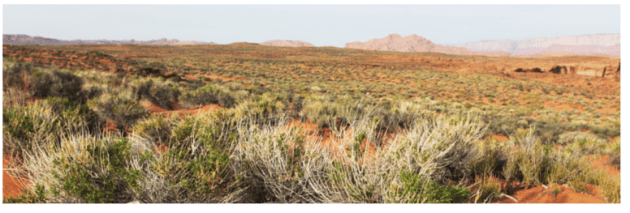
Welcome to “The Dry”…

This spring, I dreamed up a teaching series for my church called, “Fierce Landscapes” (inspired by the book by Belden Lane of the same name). It was a journey through “desert spirituality”, which continues to be a really powerful idea in my life. I thought I’d turn it into a blog series, so for the next few weeks I’m going to explore what Israel’s journey through the desert means to us today. Please let me know how you like it. 

The Exodus is, without a doubt, the central event of the Old Testament. If you remove the actual freeing of Israel from Egypt, pretty much the whole story of God’s people will come unhinged. It is the center, the spoke, that holds Israel’s self-identity together. Remove the fact that God—YHWH—tangibly intervened in history at one point, and you the whole operation is in jeopardy. It’s simply that important.

So it’s worth thinking about.

If you’re not familiar with the story, here’s a brief summary. After God calls this one man—Abram—and his subsequent family to become a part of this great rescue operation, God’s great redemptive plan, at one point (namely, at the end of Genesis the first book of the Bible) that family ends up living in Egypt. Most Genesis 37-50 tells the story of how Israel’s sons—first Joseph and then the rest—end up living in Egypt. Joseph rises from a place of imprisonment to a place of power in pharaoh’s household, and at that point, even though the “rescue operation” isn’t necessarily moving forward, the family is safe and secure and waiting for the next unfolding of God’s plan.

Unfortunately, things veer south, and the book of Exodus opens up with this phrase:

“Now a new king came to power in Egypt who didn’t know Joseph… The Egyptians put foremen of foxed work gangs over the Israelites to harass them with hard work” (1:8, 11a).

Basically, Israel, the descendants of Abraham and thus the focal point of God’s work in the world, has been made captive by the Egyptian empire, and things in no way look good for their release any time soon.

One day, Moses, a Hebrew who has been basically raised as an Egyptian, is out tending the flocks of his father-in-law when he has a supernatural encounter with God. Appearing in a bush that is burning but is somehow not consumed, God tells Moses that He has heard the cries of Israel, and that He is about to act to free them. He is going to step into history in a very real and tangible way, and get the rescue operation back on track. (Along the way he gives Moses the first details of how He is going to do this: “Now the Israelites’ cries of injustice have reached me. I’ve seen just how much the Egyptians have oppressed them. So get going, I’m sending you to Pharaoh to bring my people, the Israelites, out of Egypt; 3:9-10).

Through a series of miraculous and devastating plagues, YHWH forces Pharaoh to relent and release Israel. They are free to head towards a land that God will show them: a place of security, of peace. A place where they will be free.

In other words, the place that every slave desperately wants to get to.

However, in between Egypt and this “promised land” is the desert. The wilderness. The unknown.

And Israel has to go through it. Like it or not, there is no detour, no shortcut around the blistering sands and freezing nights of the desert.

It’s also the same for us.

God promises the same things to us that He promised the Israelites: rest, peace, and mission (note that I didn’t say “a Cadillac, a new house, and a great job”). God absolutely wants us to have, as Jesus puts it, “the eternal life now.” He wants to see His Kingdom come in our lives and in our world.

But only if we are willing to go into the desert and allow ourselves to be shaped by it. 

The desert is decidedly “in between”. It is neither-here-nor-there. It is not slavery, but it is not the promised land. It is not bricks, but it is not rest. It is a wilderness, a frontier.

Why?

Why doesn’t God just take the Israelites straight into Canaan, the place He promises them?

Why doesn’t He just instantly change us into peaceful, compassionate people?

Succinctly, because what God wants most of all is for His children to grow and mature. To be ready for the promises (land, freedom, rest, peace, etc.)

The desert is what’s known as “liminal space.” It is frontier space, borderland. It’s the place where the old no longer makes sense, but the new is not yet realized.

Liminal space is the place of change. The governing image is that of a threshold and an open door. As you stand in the frame of the door, you are between two rooms, or between inside and outside. You are (quite literally) neither here nor there.

It’s the space where things happen, where we are the most open to change and growth (if for nothing else than nothing seems to make sense any more).

Later in Israel’s story, God compares His people to His bride, and says this about her and the desert:

“Therefore, I will charm her,
And bring her into the desert,
And speak tenderly to her heart.
“From there I will give her vineyards,
And make the Achor Valley a door of hope.
There she will respond to me
As in the days of her youth,
Like the time when she came out
Of the land of Egypt” (Hosea 2:14-15)

What this scripture is saying essentially is that in the spiritual life the desert is a place of positive change, of growth, of spiritual encounter.

Of course, this doesn’t mean that it’s comfortable, only necessary. 

Do you want to grow? Do you want to be free? Do you want to change? To mature, to grow up? Then the simple invitation rolls out to you: come into the desert. Come into the “space between”, and get ready. Sure, it’s dusty. And dry. And confusing. And anything but comfortable.

But if you were to be honest, the alternative is simply to stay in Egypt, to stay a slave, the “same old way you’ve always been.”

Most of us don’t really want that. We want what Moses and the children of Israel wanted: a life that’s somehow a bit bigger, a bit more peaceful, a bit more engaged, a bit more “on mission” than what we are currently experiencing.

But to do that, we have to be willing to go through the place where we may really not want to go.

Are you willing?


+e


Jesus Walked

Jesus logged lots of miles.

I started running this year, and I’ve been able to track my progress by using a couple different apps on my phone. Currently I’ve run about 120 miles, which kind of blows mind (no wait, actually it really blows my mind!).

But my progress is not much considering how much Jesus and his disciples must have logged around Palestine and Judea. If you read the gospels, Jesus is forever taking his little band of followers on day trips, teaching and telling stories as they go.

They must have walked for hours every day.

I was thinking this morning about what that says about following Jesus. I think in many peoples’ minds “being a Christian” is something that you do on Sunday morning, or when you’re at church, or in your small group, or whatever. The picture that the gospels show us, however, is a faith that is worked out while you’re walking.

It’s as if Jesus goes to great lengths to show that the spiritual life is infinitely practical: it can be lived out amidst the dusty roads of Palestine, or the cubical walls of your job, or the desks of your classroom.

Unfortunately, this sometimes run counter to how many churches approach the spiritual life. Institutionalized religion says that the spiritual life can only be lived out through “safe places” like Sunday school classrooms, baptism services, or comforting worship services. In this model, Jesus never would have left the Temple or the synagogue: he would have kept his disciples in the safe, “spiritual” places where “God lived.”

But he didn’t. He was constantly saying, “You know what would be awesome right now? To take a walk! Let’s go!!”

(I’m sure Peter rolled his eyes; trust me.)

At this point in my life I’m really not interested in spirituality that has no daily, ground-level expression. Not interested in doctrines that are merely abstract. If there are truths about God (and I believe there are), they should have tangible expression in our lives. Our doctrines and beliefs—the incarnation; the resurrection; a God of mercy, grace and transformation; the Church—don’t belong in seminaries or temples. They belong at our breakfast tables, in our cars, in our meetings, in our workouts, etc. etc.

One of the most challenging questions we can ask ourselves is, “How do my beliefs impact my daily, moment-to-moment life?

  • Am I living as if I have the mind of Christ?
  • Am I truly living out the resurrection?
  • Am I upholding the value of the “called people of God” (the church)?
  • Am I treating my physical reality—creation, my body, etc.—as if God really did come to earth and become a human being just like me?

Jesus didn’t keep his spirituality tucked away in the “God-places.” He brought the God into the every day places.

And yes, this song still rocks.

I Remember…

I remember when I first realized that living in my “faith tribe” might not always be easy.

Though I grew up in the church (good old Methodists! Everyone loves the Methodists!), my faith didn’t really take root until I was in my late 20s, when I was working at Willow Creek Community Church. Because of that church’s resources (and theology), I got to hear (or hear about) some amazing teaching from people like Philip Yancey, Dallas Willard, and Brennan Manning (who eventually became a sort-of guiding light for me).

I thought talk about the spiritual disciplines and hearing about the scandalous love of God was sort of part for the course for my evangelical, non-denominational tribe.

Then I moved south.

I’ve been in north Florida (or southern Georgia,  whichever the case may be) for 8 years now, and though there are plenty of fine folks here (that’s the way we/they say it), I was shocked to find that when my family arrived here to start working at yet another non-denominational, evangelical church, there was practically no awareness of Mr. Manning, or Mr. Willard.

Even more alarming, I was told about how certain people had left our church (before I arrived) because of they were “uncomfortable” with, of all people Philip Yancey. This prompted an internet search, and my naiveté collapsed around me as I read scathing comments about Philip. What’s more, I searched again, and discovered that Dallas Willard was considered practically evil, and associated with something like “typical Fuller seminary theology”. (Um, this was not a compliment.)

This was challenging, to say the least. I thought my “tribe” was full of open-minded tolerant people who sought to know this God of love and grace and mystery and transformation.

What I found instead were people who were interested in dogma and rigidity, close-mindedness and exclusivity.

I found fundamentalism.

I hope it’s clear when I say this is not about the south: this is about just me discovering the reality of the tension that still exists under this umbrella that I share.

(Some of my best friends of fundamentalists.)

Some days I don’t think I live under this umbrella anymore. Some days I no longer recognize my “tribe.” Some days I’m not sure I want to recognize them anymore.

But I keep on seeking. Because my tribe ≠ my God.

He’s bigger, and more loving, and more mysterious, and open-minded than any of us will ever be.

That’s why I follow him.

Channa Masala and the Myth of the Super-Disciple

Here’s what you must know first: I really, really like Indian food. photo-2

So when a buddy of mine forgot about a lunch appointment we were supposed to have at an Indian restaurant in town, I wasn’t about to shrug my shoulders and say, “Oh well, guess I should go on back to my office.”

No way. I was going to stay and enjoy that lunch buffet.

While I sat and enjoyed my tandoori chicken and naan, I started reading a book by one of my favorite authors: Future Perfect by Steven Johnson. Johnson perfectly fits my idea of interesting reading: his work is multi-disciplinary, makes unexpected connections, and is built around what makes ideas great and compelling.

He starts off the book by telling the story of US Airways flight 1549, the “Miracle on the Hudson,” when Captain Chesley “Sully” Sullenberger managed to successfully land a damaged airplane on the Hudson river in New York with all 155 passengers safe. Though it was truly an amazing act of piloting, and “Sully” made a great hero—humble and relatively quiet, and committed to being good at his vocation—Johnson goes deeper behind the story.

You see, Sullenberger (and flight 1549) was indeed a talented and composed pilot. But, as Johnson points out, there was a lot more going on here than just Sully’s grace under pressure. Actually, Sulllenberger’s actions on that morning were the culmination of decades of research and behind-the-scenes engineering, all of which enabled the pilot to make the “in the moment” decisions that saved those passengers lives.

(Hint: it was all about chicken guns and fly-by-wire technology.) 


This just in: none of those engineers were being interviewed on cable news shows.

Instead, decades of men and women simply went to work and thought about little ways to make flight better and safer.

And then when it mattered, it all came together.

Are they any less heroes?

There’s an assumption that the one with the most “face time” is the hero. They are the ones who have done all the right things in order to make things happen (or make things not happen, as the case may be). These heroic mean and women—even truly humble ones like Sullenberger—are celebrated as “just-a-bit-better-than-everyone-else” people.

But are those nameless engineers and manufacturers any less responsible for those 155 passengers still being alive?

Sullenberger is definitely a “hero”, but he is not the only one. Little decisions and efforts get made over months and years and decades that put people like him in position to win.

Sometimes people of faith get hung up on the “super disciples” around us. Whether it’s people from the Bible (like Peter, Paul, or John), or other really, really good people we’ve heard about (like Mother Theresa, or Billy Graham, or Desmond Tutu), it’s easy to get caught up in their stories, or in their charismatic personalities.

Maybe, if you’re anything like me, it’s even tempting to somehow start thinking that somehow they got an “extra dose” of God’s Spirit, something that’s allowed them to do the things they did and think the thoughts they did.

But it’s simply not like that.

Sure Paul looms large in the Bible. But if you just read his letters you know he didn’t do it alone: that he traveled with people, and had key helpers with him as he did his ministry. Some of their names ended up in our pages (Priscilla and Aquila, Junia, Tychicus [my favorite]), but a lot of them probably didn’t. 

Yet they were with Paul. Helping. Doing the work when he had moved on to other cities. Some of them may have even had preliminary conversations with their communities before Paul got there, so that they would have context for what he was talking about.

In other words, they help “set the table” so that Paul could succeed.

What are their names?

I have no idea.

But they absolutely made a difference.

And they are absolutely heroes.

Sometimes the person that gets the most prominent billing is not the only one responsible for the victory, or for averting a disaster. Sometimes there’s another story that is just as critical, just as important to the success as the decisions that are made in the moment.

The point that I’m trying to make is that when faith becomes “big business”, and when we become exposed to all of the gifted and talented Christian teachers, preachers, writers, musicians, etc., etc., we can allow this thought to enter our head that says that somehow they are “just a little bit more” than us. They are Christians, but moreso: somehow they got that extra dose of the Spirit.

That’s simply not true. Paul writes in Romans 8 that the same power that raised Jesus from the dead lives in us: the church.

That means everyone has the same spirit. We may all be at different parts of our journey, and we all have different gifts, but we should never assume that the man or woman doing all the interviews is the “most gifted”, or the only hero.

We are all heroes.

I love Indian food.

And this David Bowie song.


Why I Don’t Give Up

Let’s be honest: there are a lot of reasons to throw in the towel on faith.

  • a book that is thousands of years old that is difficult to penetrate and understand
  • a God that claims to be good in the midst of a world that is torn apart with suffering and hatred
  • my own repeated personal failures (too numerous to mention)

(As Marvin said, “it makes me wanna holler, and throw up both my hands.”)

For a lot of people, that’s just a trifecta of negatives, and I’ve seen them check out of this “faith thing.”

If I’m honest, sometimes I’m tempted too.

So far, I’ve been able to hold on, and though I’m no great apologist, here are a few reasons why:

  • Though I can’t explain why, I know that we are more than “just” flesh and bones. I believe I have some unseen soul, and so I tend to it.
  • Though I have, in fact, failed countless times, I’ve come to the conclusion that only something supernatural can heal the sickness I have: only “letting the light” in (through those pesky cracks) will allow me to be a little less jealous, a little less self-centered, a little more patient, a little more peaceful today than I was yesterday (and we’ll let tomorrow worry about itself).
  • The Bible is, in fact, difficult in places to wrap my head around. That being said, there are some ways to “keep it simple,” starting with this guy named Jesus: he helps me make sense of the Bible.

All in all, I haven’t given up because I have this desperate faith and sense that it is possible to be a better human being, and I think one of the greatest gifts we can give the world is a person that has become as full and complete of a human being as possible.

And only faith gets that job done.


Just because #PeterGabriel