40 Words: “Faith” (02.24.2016)

So we are always confident, because we know that while we are living in the body, we are away from our home with the Lord. We live by faith and not by sight. (1 Corinthians 5:6-7)

Frankly, I confuse sight and faith an awful lot. I know that I’m called to a life of supernatural belief and trust, but what I typically end up craving is some kind of sign that I can trust:

  • a job offer
  • a solid relationship
  • a clear career path

Faith is the reality of what we hope for, the proof of what we don’t see. (Hebrews 11:1)

This passage seems full of contradictions: reality/hope for, proof/don’t see. At first sight, these don’t seems to make sense, and can’t easily be reconciled.

(Kind of like life.)

One thing that’s easy to land on is the fact that faith still involves things that we can’t see or touch.

Let’s be honest: “sight” is so much easier than faith. Faith is fuzzy. It is decidedly not proof. To embrace faith is to embrace stepping into a chasm.

And for most of us, that is never fun.

Lent reminds me that life is a journey of faith. It’s an opportunity for us to separate true faith from the things that tend to prop us up and support us. The things that we can see and feel and touch.

Instead, we surrender those things and embrace the unknown space and silence, trusting instead that God will grow us and change us on His terms and in His time.

40 Words: “Family” (02.23.2016)

Despite what you might think, Lent isn’t only about giving things up. Overall, it’s more about making “space”—spiritually or otherwise—to reflect on our lives and God’s love.

In other words, if all you do is give up chocolate (why do I keep picking on chocolate?) without making that space through service or prayer or meditation or community, you’re only get half of the story.

My particular Lenten journey definitely involves surrendering something, but I also added in reading, and not only reading, but a commitment to read with my wife and family during the evening (whenever possible).

Lent isn’t just about “you and Jesus”; others are on your journey as well. Bring them in; share this with them.

My personal desire is that the space I carve out for God can be filled, not only with my personal spiritual activities, but also with conversation and interaction with people who not only love me but with whom I can have honest conversations.

40 Words: “Humility” (02.22.2016)

Humility is one of the most powerful concepts in English language.

It’s also sorely lacking in most of the world.

As my spiritual director reminds me, “Humility is being right-sized.”

It’s not about thinking of ourselves as a only dirt, or only broken. It’s more about having an accurate view of ourselves: we are created in God’s image, just a little lower than angels…

and we often do really crappy things.

Capable of so much, both good and bad.

My Lenten journey has been such an opportunity for, well, humility.

My fasts are not always perfectly kept.

I’m not always the most peaceful, willing pilgrim.

Right when I think I’m about to scale spiritual heights, I lose my temper (usually in traffic).

It’s a great reminder of what it means to be human.

40 Words: “Dirt” (02.20.2016)

800px-Farm_in_Hainan_01.jpg

Farm in Hainan Province, People’s Republic of China by Anna Fodesiak http://www.wikimedia.org

I’m no farmer.

Nope; I’m no farmer. Though I was born in the country, and spent at least a few spring and summer days with dirt under my nails from weeding a vegetable garden and pulling up carrots and digging for potatoes, ultimately I’m a city boy, more at home strolling down sidewalks than with driving a tractor.

But I do understand the basics.

I understand that in order for things to grow, the dirt needs to be tilled.

To be dug up, turned over, plowed.

It’s easy to wonder why we subject ourselves to Lenten disciplines.

It’s easy to claim that we are focusing “too much” on our brokenness, that we should stay focused on the resurrection life that is ours through Christ.

It’s easy to accuse us of being too morbid, too depressing, too melancholy.

Fair enough.

My only reply to that is nothing grows if the dirt isn’t turned up.

In a way, Lent is about reminding ourselves of what our sin cost God and His Son (and the Holy Spirit as well), but in another way, the disciplines of Lent are about something more grand and long-term.

It’s about digging in the dirt so that we can grow. It’s about tilling the soil of our lives not for the purpose of shame and guilt, but for the purpose of preparing for growth.

So we can heal.

So the light can shine into the broken places.

Lent is certainly somber, but the long-term prognosis is hope, hope, hope.

But it has to start with dirt.

Peter said it so well…


40 Words: “Alone” (02. 19.2016)

Part of the design and purpose of Lent is for us to turn down the noise in our lives so that we can more clearly see and hear God. In turn, part of the purpose of that is so that we can come to terms with possible areas of brokenness and rebellion in ourselves that we need to bring before God in order to get His help.

For better or for worse, this often means getting—and remaining—alone. Sometimes this can be literal (retreating into silence and solitude) while other times this can be more symbolic (such as keeping a private fast).

Most of our culture is trained to treat “aloneness” as something bad, to be resisted and avoided.

We can check messages, Instagram, Snapchat, etc., for the constant reassurance that others are “with us” (thought it often seems as if they are living such extravagant and exciting lives online, while our life is just humdrum and boring).

We are constantly pushed and pulled to “never be out of touch.”

And yet, part of this “being-in-touchedness” is the very thing that is holding back our growth. From seeing the reality of who we are and who God wants us to be.

Being alone is not bad. Far from it, “alone” is exactly the remedy for our hyper-connected, hyper-active world that we inhabit.

There is a saying of the Desert Fathers, that one day someone came to Abba Moses to get a word (of wisdom? of assurance? of connectedness?). Abba Moses said to the man, “Go sit in your cell, and your cell will teach you everything.”

There are two aspects to this:

  1. Your “cell” (silence, solitude, and various ways of being alone) is necessary for you to hear the word you need through the noise of your life. Trust me; this is true. What we think are the answers to our questions are more often than not tapes that we play (from our brokenness, from our upbringing, etc.) in our heads, or they are just glittering images from culture that attract our eyes and ears.
  2. Being alone is often remarkably clarifying in regards to what we think we need the answers to. We get consumed with anxiety, with the desire to know (which is really just the desire to control). So many times, space apart—again, being alone—reveals that we really actually don’t need the answers we thought we did.

“Alone” is a healthy rhythm of life. Embrace it and cultivate it.


40 Words: “Human” (02.18.2016)

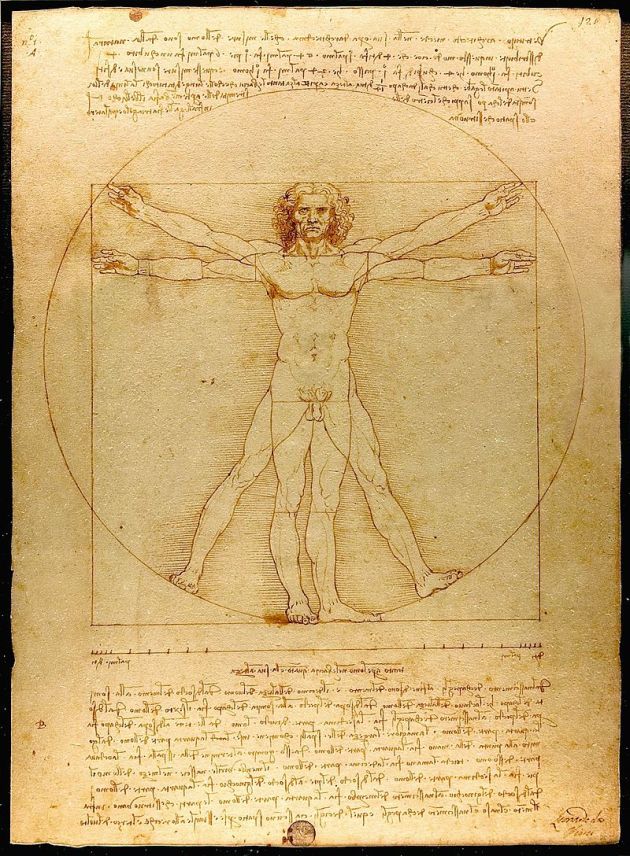
800px-Da_Vinci_Vitruve_Luc_Viatour.jpg

Leonardo Da Vinci, Vetruvian Man 

In a way, this is a continuation of yesterday’s thoughts on hunger.

Jesus, full of the Holy Spirit, left the Jordan and was led by the Spirit into the wilderness, where for forty days he was tempted by the devil. He ate nothing during those days, and at the end of them he was hungry. (Luke 4:1-2)


For we do not have a high priest who is unable to empathize with our weaknesses, but we have one who has been tempted in every way, just as we are—yet he did not sin. (Hebrews 4:15)

As we go through our own 40 day journey, it’s helpful to remember that Jesus did not sail through his time in the desert without hardship. The text clearly says that he was hungry. The writer of Hebrews confirms this thought when she writes that Jesus was tempted in every way, just like we were and are.

I think this aspect of Jesus—his humanity, and the true impacts of that fact—is one of the most explosive and neglected aspects of our faith.

Actually, I daresay we are terrified of it.

Though every Christian creed and central belief of the faith clearly states that Jesus was 100% human and 100% God, and though we see it clearly in Scripture, I think we shy away from the human part because of what it could mean for us.

It’s easier to have Jesus only exist “up there” in his perfection, in his “God-ness”. That means that he’s up there to help us in our times of need.

(And he certainly is.)

But…

He is not just “up there.” He’s “down here” too. He’s walked our earth, breathed our air, encountered our troubles.

This isn’t just so he could get crucified.

It’s so he could show us what a human being is capable of. 

And that scares us.

Because it means that we are capable of more.

The incarnation not only says that it’s okay to be human, it actually says that our humanity—it’s brokenness, unpredictability, it’s fragility, etc.—is where salvation takes place.

Not in heaven.

Here.

Now.

That challenges me.

In a way, I’d rather have Jesus as some kind of distant God that I could never aspire to.

But that’s not what I got.

I got a Jesus—a human being—that was hungry. 

I get hungry.

But the incarnation says, “Don’t wait; God wants to redeem and change and grow you—I almost want to say evolve you—into something more Christlike right now. 

Not when you are “spiritual enough.”

Lent reveals your humanity. Revel in that. And then seek ways to grow to be more like Christ, the ultimate human being, the “2nd Adam,” who has come down in order to raise us up, not only when we die. 

BUT RIGHT NOW. 


+e


40 Words: “Hungry” (2.17.2016)

IMG_3790

If you are fasting, you are going to get hungry…

(that’s kind of how this deal works)…

So we shouldn’t be surprised.

When I fast, I use the hunger pangs to remind me of my brokenness, of how much I don’t long for God. How much I numb my true desires with things like food or entertainment or unhealthy emotions…

Distractions.

But when you fast, you get reminded of what true longing and hunger means.

You, God, are my God,
earnestly I seek you;
I thirst for you,
my whole being longs for you,
in a dry and parched land
where there is no water. (Psalm 61:1 NIV)

We, on the other hand, live in a land that is decidedly not dry and parched.

At least on the surface.

We satisfy every need. Or so we think.

We eat and drink and entertain ourselves into a state of half awake, half dreaming, and then try to convince ourselves that we have found “life.”

Lent—and fasting—brings an opportunity to wake up and discover what true life, true food and water really look like.

Come, all you who are thirsty,
come to the waters;
and you who have no money,
come, buy and eat!
Come, buy wine and milk
without money and without cost.
Why spend money on what is not bread,
and your labor on what does not satisfy?
Listen, listen to me, and eat what is good,
and you will delight in the richest of fare. (Isaiah 55:1-2)

If you are fasting today, don’t dread the coming hunger; the approaching desires for a sandwich.

Welcome them as signs of a truer, deeper hunger and longing that is within you.

Offer your hunger up as a prayer to God.

He listens.

40 Words: “Darkness” (02.16.2016)

“The LORD has said that he would dwell in a dark cloud…” (1 Kings 8:12 NIV)

The Bible is full of “light and dark” metaphors: light is mostly good; dark is mostly, well, you get the picture…

This is so consistent that it can be tempting to make a rule of “light and dark”, and assume that darkness always equals some kind of negative or uncertainty. Then, when we get confronted in your life with something that somehow corresponds to darkness, or unknowing, or a cloud, we can too quickly jump to the conclusion that “this is not God.”

And yet, the Bible is also pretty clear that God is not always to be found in the light; sometimes, God is found in clouds, in darkness, in obscurity.

(The Bible tells me so…)

Following Jesus through Lent sometimes means following him into uncertainty. Jesus gets to the point in the Garden of Gethsemane when he cries out to God to take the impending cup of suffering from him.

God says, “No,” and Jesus faithfully accepts his path, believing that his God will ultimately vindicate him.

But there is that moment where he asks… There is that moment where it’s dark, and not light.

Twilight.

Choosing disciplines like silence and solitude means often to opt for knowing and experiencing less, not more, which is a kind of darkness, and in that darkness of our own we sometimes think that this a time of neglect or punishment or distance from God.

Yet, as Solomon prays in 1 Kings, God dwells in a dark cloud (or “deep darkness”), which means that when we enter the clouds…

…of Lent

… of suffering

… of loss

… of confusion

… of doubt

… God is not less present to us. He actually may be more present, if for no other reason than darkness deprives us of some of our human efforts. 

When we can’t see, we need to trust. 

And in the realm of faith and spirituality, trust tends to be a good thing.

Embrace the cloud. You may be surprised what (and who) you find there.

40 Words #5: “Practice” (2.15.2016)

mcc-basketball06-1jpg-9346e726ae44d1ea.jpgWelcome to Lent Week #2! I hope everyone had a good “feast day” yesterday, and that everyone is now re-engaged and focused on the continuing journey for contemplation and reflection.

Today’s word is “practice.”

“Practice” isn’t a word that is typically associated with my Christian tradition; instead, the Buddhists tend to use this word more closely with their religion.

But over the past few years, I have engaged and used this word more closely. It has resonance for me, because I have learned that (a) Christianity is in fact, a “practice”, and (repeatedly; b) I desperately need a consistent practice in my life.

The past couple of years have been hard ones for me. I came face-to-face with patterns of unhealth in my life that threatened, well, everything in my life.

I was beaten.

What’s more, the fault was not with God; it was with me. The “faith” that I was living out was all in my head, and tended to stay in particular places, like on Sundays, or close to my Bible.

My faith, my religion (in the best sense of the word), was not coming with me. It was “out there,” external to who I was…

… and I needed more.

So I began to own up to my failures, and admit that in many ways I was actually a functional atheist or agnostic: I believed in God, but I sure didn’t trust him with the ins and outs of my daily life. Slowly, over time, I began to simply practice healthy spirituality: meditation and contemplation; silence and solitude. I began to let God have his way with me on a day-to-day (sometimes even hour-to-hour) existence.

I discovered that when you practice your faith, two things tend to happen: first, it reinforces the need for consistency. Practicing is something I’m familiar with, and I know that more gets accomplished in small chunks of repeated, consistent efforts than with “cramming.” Second, you can’t fail at practicing. The concept of a faith “practice” reminds me that there’s no passing grade with Christ: he loves me as a brother and son, regardless of whether I’m soaring or crawling. My job is simply to get up and be present: to not evaluate my prayers or my scripture reading. Just to do it and trust God that He is faithful and moving, whether or not I see or feel it. I have a tendency to evaluate my spiritual performance: did I feel God’s presence?

Do I feel his love?

Am I crying?

“Practicing” spirituality reminds me that the goal is not the feelings during the prayers (no moreso than the point of practice is be “awesome” while you’re running scales in your bedroom or sinking jump shots in the gym by yourself); no… The point of practicing is to perform when it counts.

And the “game” (or “concert”) we are in is one called “LIFE.”

We “practice” our spirituality so that we can perform well—with love and compassion and understanding and presence that somehow resembles Jesus Christ’s—with the world out there that needs us.

Lent is such a good time to learn more about “practicing” faith and spirituality. The 40 days is a “doable” chunk of time to engage in a new practice (or to disengage from an unhealthy practice).

And it’s never too late to start!


+e

40 Words #4: “Silence” (2.13.2016)

Many of the disciplines and practices of Lent revolve around abstaining from various things: media, food, sleep, alcohol, etc. However, not many of us would choose to abstain from speaking during Lent (or a portion of the day). Speaking is something that is too critical for most of us: we need to interact with friends, family members, and/or co-workers.

I know I couldn’t do it.

But to me Lent has an essential “silent” aspect to it (or at least it should). We are called to reflection and contemplation, and these things are not easily practiced while we are running our mouths off about anything and everything.

However, being an introvert, as well as engaging in various practices over the last couple of years, I have begun to get more and more comfortable with silence. At least, so much so that I could go on a silent retreat for a few days and not go insane. For my two-and-a-half days in Conyers, I ate and sat in silence, and opened my mouth only to pray and sing and check in with my family once a day.

(I didn’t go insane. At least not any more than I already am.)

I am increasingly convinced that half of the words I say are simply unnecessary. More often than not, I am not speaking in order to edify or to help, but rather in order to reinforce my false self and make myself look good.

Lent (and the different disciplines that accompany it) remind me that “God’s first language is silence,” and that oftentimes the less I speak the more clarity I tend to have about who I am and who God is.

May God free us all from the need to make noise, and bring us to perfect-yet-unsettling stillness that we find in His presence.


+e