“The Game is On…”

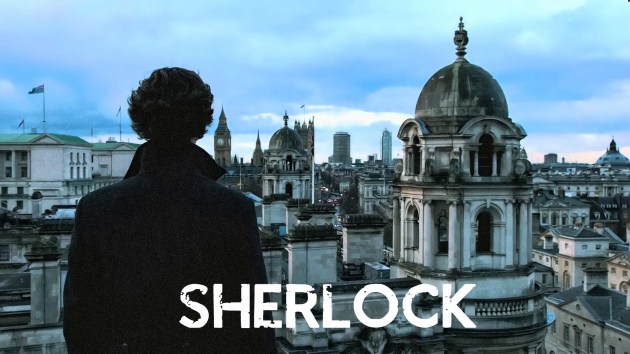
1920x1080-427875-sherlock-background-wallpaper-for-computer-free.jpg

Recently, my son and I have been watching the recent BBC version of Sherlock together (it’s become a bit of a family tradition: we did the same with my daughter a few years back). It’s just excellent in so many ways: innovative directing and camera work, great storytelling, impeccable acting, and enough “Easter eggs” and clever references to keep us all entertained.

In the “old school” Sherlock stories, whenever the detective sprang into action he would declare to Dr. Watson that “the game is afoot!” The modern version updates that phrase to “the game is on!”, and whenever Holmes (played by Benedict Cumberbatch) exclaims it, the action always takes a great leap forward and the characters move into the story, the mystery, and in a variety of ways proceed to confront villains, solve problems, and in a general way bring some justice and resolution to the storyline. It’s a great time, and thoroughly enjoyable.

A few years ago, I was reading Thomas Merton’s autobiography when I ran across an exchange that gave me a pretty significant pause. Merton is talking with his friend Robert Lax. Lax asks Merton what he wants to be, and after Merton replies that he wants to be a “good Catholic,” Lax tells him pointedly, “What you should say is that you want to be a saint.”

Merton protests, declaring, “I can’t be a saint, I can’t be a saint.”

But Lax drives the point home: “Don’t you believe that God will make you what He created you to be, if you will consent to let Him do it? All you have to do is desire it.” 

Does that strike you as much as it struck me?

(For the record, Merton bounces Lax’s idea off of another wise, monk, who verifies the truth of it.”

Forgot all the challenging traditions and baggage you might know and feel about “saints”: the occasional over-emphasis on relics and veneration; the supposed miracles that are associated with old bones and mystical visions. Set all that aside for just a minute and think about what (or who) a saint actually is. 

What images come up?

What names come up?

Francis? Mother Theresa? Paul? Peter? John?

The_Apostle_Paul_-_Rembrandt

“The Apostle Paul” – Rembrandt (courtesy Wikimedia)

Maybe there are some unofficial, modern ones as well: Martin Luther King Jr.?

I always think of “saints” as men and women who had essentially learned to live out of the radical reality of God’s love.

They had grown beyond the masks and identity traps that we fall into, and simply grasped the simple fact that they were/are “The Beloved” of God (just like Jesus).

After that, they just started to work out the implications of that reality in their own context…

“If I truly AM the Beloved… 

… Then I am free to live in poverty

… Then I am free to fearlessly look at my “shadow side” 

… Then I no longer need to hype God up, or scare people into the Kingdom of God

… Then I am free to speak truth to power

… Then I am free to see people the way God sees ME: as broken-but-beautiful; cracked-but-precious

… Then I am free to be compassionate to all 

… Then I am free from the fear of death

… Then I am safest in the arms of my Father in heaven. I have nothing to fear. 

(A note about one of those implications: I used to think that being a “saint” somehow meant that you somehow floated above life, and you no longer had to worry about things like “brokenness” or “sin.” However, the more I learn about the men and women who have achieved sainthood—officially or unofficially—the more I learn that they were actually incredibly in touch with their own limitations and brokenness. However, they were able to relentlessly place those limitations in the context of their Beloved-ness, and therefore resist the guilt and shame that plagues most of us. Rather, that awareness helped to unlock new levels of gratitude, appreciation and understanding of God’s free gift of grace, which in turn spills over into ever-increasing compassionate love for and service to the world that God loves so much.)

So now, think about that: God wants to make a saint out of you (no matter what Mick Jagger might say).

Now, make no mistake: when Robert Lax tells Merton, “All you have to do is desire it,” there is an awful lot packed into that phrase.

Because if we are honest with ourselves and each other, we desire an awful lot before we desire sainthood.

Here’s just a short list of my “desires”:

guitars

chips and salsa

pizza

quality music releases

a richly satisfying marriage

books

safety and maturity for my children

a secure retirement

a good vacation this summer

a healthy church

better leadership out of myself

a better workout habit

a richer prayer life

grass that mows itself

a teenage son that cleans up after himself

a book project that effortlessly writes itself

3 more hours in my day to be productive

3 more hours in my day to sleep

a 24 hour, free, soccer channel

comedy specials that actually make me laugh

a community that governs itself

(… and all that is BEFORE 9AM!)

But make no mistake: there is something that stirs in my heart sometimes, that gnaws at me, and that just sticks with me constantly.

Maybe it’s the growing desire to be MORE. It’s the growing desire to let God “make what me what He created me to be.”

And that thought has begun to stir my soul. It gets me out of bed in the morning (or rather, HE gets me out of bed in the morning), and into the presence of this God, this Love, this mystical and mysterious Presence that wants to grow me into something that He always intended me to be.

So I pursue prayer.

I pursue worship.

I pursue confession.

I pursue submission to a spiritual director.

I pursue service.

I pursue community.

I pursue study.

I pursue meditation.

Yep, as Sherlock would say it, “The game—of growth, of maturity, of spiritual evolution, of transcendence—is on.”

Where are you at with your spiritual growth? Do you believe—and trustthat God wants you to be a “saint”?


Thanks for liking // sharing // commenting.

Under the mercy.



Music From “The Vapor”

6211307788_4722af0ca3_b.jpg

Image via Flickr: https://www.flickr.com/photos/27613359@N03/6211307788

It’s always fun when streams in life start to bleed together.

My church has been journeying through the book of Ecclesiastes for a few weeks now, and one of the key concepts that emerges almost immediately in the book (indeed the first 2 verses) is the Hebrew word hevel. 

Most English Bibles translate the word as “meaningless” (the King James calls it “vanity”) but the Hebrew is more literally “vapor” or “breathe”. In this context, “The Teacher” of Ecclesiastes is not so much declaring that everything is “meaningless” in an absolute way, but that it is vapor: ephemeral, passing, impossible to control (if you want to see and hear of the implications of this idea, you can check out our Vimeo E3 Vimeo Feed or our E3 Church Podcast).

Lately, as I get close to my 50s (WHAT!?!?), I’ve been thinking of some of the music and bands of my 20s, when I was a young and growing musician, learning the basics of my craft and discipline. For a good decade plus, I absorbed everything I could in order to reach “the next level” of my musical development, and during that search I ran across a multitude of bands and artists and songwriters and guitar players who, for a relatively brief period of time, were considered masters of their craft (and therefore, worthy of my time and attention).

But guess what: they were vapor. 

Even more than than other areas of life, music and art can be truly passing, as tastes change and evolve (listening to almost any music produced in the 1980s can show how much entire sonic palettes can dominate briefly, only to sound almost ridiculous—thanks, cocaine—a mere 5 or 10 years later.

But nonetheless, there were a few bright spots in an often dark age of music. The vast majority of these bands never entered the public consciousness outside of their immediate context; put another way,

If you weren’t there, you wouldn’t know. 

I got lucky: I was.

So, since the digital world now makes it easier for us to “grasp the vapor” a bit, I wanted to offer you all just a few sounds from the past—mostly from the 80s and 90s—that you probably wouldn’t know about (but maybe you should).

And now, the introductions:

Hothouse Flowers

For sometime in the late 80s, U2 had a record label. This was one of their first signings. Hothouse Flowers were some strange blend of folk, soul, along with some unmistakably Irish leanings. This is the sound of my freshman year in college (at least until the cassette wore out).

The Call

Immediately, two thoughts enter my mind regarding The Call: the first is the unfortunate …. of …. (WORSHIP SONG>>>>) FLATTENING …. The second is that it must say something about the quality of your music when a young singer from a pretty popular band agrees to sing backup on one of your singles (this is long before “collaborations” became synonymous with “new ways to make more dollars”). In this case, a young Bono from this upstart band called U2 can be heard singing backup on “What’s Happened to You.” What’s more “The Walls Came Down” features Garth Hudson (from The Band) on keys.

The BoDeans

Three things you’d have to know: First, they opened some dates for U2 on The Joshua Tree tour. I saw them on the first of the first of a two night stand in Fort Worth, Texas (On the second night BB King opened the show; that night included the filming of the live footage of “When Love Comes to Town” for Rattle and Hum… it’s all about the stories.)

Second, almost more than any other of these acts, The BoDeans (really just two dudes from Wisconsin whose surname is not “BoDean”) suffered from some of the more unfortunate sonic choices of the era: gated snares, gratituitous reverse reverb, and an overall emphasis on the crystalline high end (again: thanks, cocaine!) at the expense of the guttural visceral mid-range.

Third, in my opinion, this is where some of the more proximate roots of “Americana” can be found: in the late 80s and 90s, various midwestern bands were discovering the beauty of stripped-down production (at least, when their record companies let them have a voice), harmonies, and the beauty of songwriting. In just a few short years, a little band from southern Illinois called Uncle Tupelo would take up the mantle, releasing a few records, and even more importantly eventually breaking up, forcing Jeff Tweedy to start Wilco and Jay Farrar to start Son Volt.

The Jayhawks

I first read about this Minneapolis band in University of Texas at Arlington school newspaper, when they rolled through the Dallas/Fort Worth, circa 1992/93. This band was similar to the BoDeans (sans the phony last names) with one huge difference: Rick Rubin produced their debut record. In other words, gone were the awful sounding drums and studio tricks, and in their place was the raw and very natural recording sound that Rubin would bring to everyone from The Beastie Boys to Johnny Cash. This was a game-changing record that showed a lot of us how music was going to sound in the very near future. They sung amazing harmonies with each other, and just made honest, heartfelt music.

Around 2001 or 2002, I was listening to a Fresh Air interview with the band, and Teri Gross referred to the band’s 2000 release Smile as “the best record of the year.” It’s just full of one concise, pointed, economical song after another.

Ricki Lee Jones

This is some vapor music from a slightly earlier time (her first record came out in 1979), but I still think that Ricki Lee Jones’ 1981 record Pirates may be the best singer-songwriter record that practically no one under 40 has ever heard. Jones was cinematic and dramatic, but the thing that really hooks me about this (and her first record as well) is the studio band. This is the way music sounds to my ears: real, and immediate, like you sense the guys in the room together. It is organic and coiling, and her voice is weaving in and around the rhythm section, and the moment on “We Belong Together” when what you thought was 6/8 was really a deep swing… I mean…

It still catches my breath 30 years later.


No, you can’t hold the vapor… but boy if you have eyes to see and ears to hear, there are some real special moments that come our way.

If you want to actually hear this stuff, the “Vapor” Playlist can be found at: https://open.spotify.com/user/1219088576/playlist/0dVi7R8lqmEXSIBuxuqRWE


Song Stories: “Thank You”

So a few weeks ago I released a record (or whatever they’re called nowadays) called After All(,) This

It was really nothing more than a little exercise in musical creativity and exploration, and it was deeply satisfying to me. What’s more, some of you actually paid money for it, and that was a great blessing to me as well.

One of the songs on that release is actually a cover of a song from the early 1990s by a guy named Dennis Jernigan. On the surface, it may have been an odd choice, but there’s a story and a connection to that song.

In 1995, my wife and I moved from Texas to Chicago, Illinois to begin what was the first of many little “adventures” that we’ve undergone. At that time, I was an electric guitarist in my mid-20s, with some miles behind me as a fairly focused musician from Texas. I played on 6th Street in Austin, in Deep Elllum in Dallas, and a few other places in the Lone Star State. What’s more, I was imbued with the notion that electric guitarists from Texas were a breed apart: our legacy included Stevie Ray Vaughn, Eric Johnson, Billy Gibbons from ZZ Top (not to mention Buddy Holly, Waylon Jennings and Willie Nelson).

I took this legacy seriously, and that combined with a strange gumbo of Duane Allman, the Edge, David Gilmour and even a little 1980s hair metal all produced an attitude that was all about making a statement and making an impact on whatever was going on around me musically.

(Occasionally I even had the chops to pull it off LOL.)

Though I’d grown up in the church, I’d done my share of wandering (and wondering), and by the time we made this move to Illinois, I’d already hit my first of a few (unfortunately it took more than one) “rock bottoms” in my life, and I was beginning to re-explore my faith. I grew up in a strictly “hymns” church, but during this time Shana and I started to encounter something called “Worship Music”, which was (supposedly) Jesus music set in “contemporary” arrangements.

The lyrics were spot on, obviously, and they touched the part of my life that longed for a deep, passionate connection to something or someONE higher.

However, the music was another story.

It was supposed to be “contemporary,” but I often sat wondering, “Contemporary for whom?”

Though the lyrics reached me, the recordings did not: the compressed, chorused, polite guitar sounds left me feeling empty.

When we arrived at Willow Creek Community Church, through an amazing set of circumstances and beautifully serendipitous conversations, I ended up volunteering with the music team there. All of a sudden, I’d gone from clubs in Texas—and an occasional church gig to 75 people—to playing before 5,000 at a pop, 10,000-15,000 total on a weekend. What’s more, the musicians there were mostly killer. Just amazing drummers (always my favorite) and bass players and keyboardists and singers, etc., etc.

(And they were filled with this amazing, joyous, celebratory love and passion as well.) 

And other guitar players too…

But not so many like me.

(NOTE: Sitting here, I know now how damaging it can be to my soul for me to ponder ways in which I am different from other people, but at the time, this seemed pretty real to me…)

  • They were established family men and women … Shana and I had been married for a few years, but were still a few years away from being able to have children (another story for another time).
  • They wore dockers and polo shirts … I had jeans and thrift store t-shirts (or that amazing relic of the 1990s: the gas station work shirt).
  • They played the aforementioned chorused and compressed Stratocasters through multi-effect units … I played a Les Paul through a handful of pedals attached by velcro to a piece of plywood.

In addition, I brought this southern, Allman Brothers approach to what they were doing…

And, sometimes, it just really seemed to work.

What was also fun and helpful was that I really didn’t know any of these records that they were covering. Instead, I played with instinct and improvisation. I listened to what they were doing in rehearsal, and then just started playing “what made sense”.

… And, for their part, they tolerated it.

(NOTE: Musicians and guitarists, if you want to do this, please… well… please be good. This approach is decidedly NOT recommended unless you’ve spent upwards of 4-5 hours a day of “deliberate practice on Wikipedia” for about 7-8 years.)

Anyway, “Thank You” was one of those early songs. I loved it’s simplicity; at its core was something essential and elemental to faith, and what’s more there was a soulfulness that I was able to find underneath the somewhat safe (and overly “white”) production. I remember being on that stage at Willow, tuned to “Drop D” and just hammering that low D against a wailing high slide. I remembered digging down deep, SOUL LEVEL DEEP and trying as hard as a human being could try to MAKE THE NOTES I PLAYED = THE EMOTIONS I FELT.

Looking back, it might have worked. It might have been a disaster. Truth is, it was probably somewhere in between.

There are other songs, and maybe they are for other times.

But that’s why I covered “Thank You.”

(OH: And it’s ALSO because… I’m thankful.)

For all that You’ve done I will thank You
For all that You’re going to do
For all that You’ve promised, and all that You are
Is all that has carried me through
Jesus, I thank You

And I thank You, thank You, Lord
Thank You for loving and setting me free
Thank You for giving Your life just for me
How I thank You, Jesus I thank You
Gratefully thank You
Thank You.

– “Thank You” by Dennis Jernigan (c) PraiseCharts

4 Ways that Life is Like Soccer

If you know me at all, you know that as for me an my house, we watch soccer.

(Oh we like the NFL too, but for us, there’s no football like “futbol.”)

So sit back and enjoy while I show you why this sport is so much more like life:

1. It Doesn’t Stop (Until it’s Done)

Almost all of the major American sports have prodigious breaks in them. Though an entire game lasts well over 2 hours, each individual play takes mere seconds, and over the whole of a game this adds up to about 11 minutes total of play. The rest of the time is taken up with commercials, penalties, and various breaks in the action.

By contrast, there are notoriously really no breaks in the action of a soccer game. Commercials are only broadcast at halftime, and if you risk getting up and going to the bathroom at any point in the 90 minutes of play, you risk missing the play that changes everything.

And just like soccer, life doesn’t really stop. Oh, we can pretend it does by trying check out a little here and there, but like it or not, while we are still drawing breath we are in the flow of time, and learning to be present for all of it is an art.

2. It’s a Lot More Physical Than You Think

Because of #3 below, a lot of people think that soccer is played like ballet, and there is no physical contact. Especially on the youth level, it’s enjoyable to listen to parents unfamiliar with the game complain to referees about how their kids are being pushed around. However, as soon as you watch a game close up, you realize that this game can be brutal: elbows, fists, even teeth(!) are all a part of fighting for position. Players routinely get heads split open (to be stapled up and return to the game), and bruised by well-placed kicks. What’s more, a lot of teams have “a hard man,” or enforcer, who’s job it is to intimidate and generally make the other team’s players miserable. Vinnie Jones (of Lock, Stock, and Two Smoking Barrels fame) was a notorious hard man in the English Premier League, and a  shows the essence of what it means to be an enforcer.

Gazza.jpg

For us, I think a lot of us still adjust to the fact that life is difficult, and struggle to react to pain and challenge. I know for myself, it took a long time for me to get over the fact that life simply isn’t that easy. However, once I was able to start conceptualizing that “in this life I will have trouble”, I was able to start viewing the bumps and bruises that came my way as opportunities for growth, and a “school,” or testing ground of sorts, for my faith. At that point, suffering can become productive, and even redemptive.

3. That Being Said, We “Flop” a Lot More Than We Should

I get it; soccer also has notorious actors and “flops” in it. They are attempts to get fouls called, particularly inside the 18 yard box, so that teams can win a free kick and an easy opportunity to score. There are some hilariously bad flops, when players dive through the air like they’ve been shot with a gun, and then writhe on the ground in excruciating pain, only to have the replay show that they were never even touched by an opposing player.

(Check out, in particular :19)

These type of actions get a lot of ridicule from soccer skeptics around the world, but maybe only until we realize how much we do this as well. 

I know for myself anyway, there are so many interactions that I’ve had that have just seem like the world has ended, and I am “devastated” or “enraged” … friendships have been jeopardized. The heat of the moment takes over. I am metaphorically “on the ground, writhing in pain.” Then, often in what is comparatively a really short time, I’m back on my feet, and I actually realize that what I thought was a really major incident, actually didn’t hurt me at all. In fact, I really didn’t even need to fall over or go down. I over-reacted. I let it get the best of me. (And maybe, just maybe I could have scored if I would have ignore the altercation and just gone on with my life.) 

4. It’s Diverse

Lastly, soccer/football truly is a world sport. Obviously, it’s played all over the world, and the numbers show it: by comparison, whereas the 2014 Super Bowl had 111.5 million viewers worldwide, by contrast the 2014 World Cup boasted 909.6 million.

It’s actually astonishing.

Watch any professional league, and the rosters are truly glimpses of a global community: Africa, Latin America, Europe and the Middle East are all represented (Sadly, North America (minus Mexico) is probably the least represented continent, at least in Europe).

What’s more, even amidst all the diversity, cultures around the world still maintain (more or less) their own brand of play. The English Premier League is a league of speed; Brazilian football still maintains the reputation of being beautiful and creative (in the United States, a lot of our reputation has at times unfortunately been centered on individualism and show-boating). On and on the list goes on. It’s a wonderful blend of cultural identity with diverse influences.

Like it or not, our world is beautifully complex, and it was created that way. Revelation 7 speaks of “every nation and tribe” gathered around the throne of God, worshiping. It’s too easy to think that my Caucasian, North American perspective is all that there is to life, to faith. But it’s not. It’s so much bigger than that. I can learn about life (and about my blind spots) by people who are not the same as me; who share different life experiences and who have different values than me.

When my son was learning to play the game, we used to take as many opportunities as we could to get him playing time, so even when his club team wasn’t in season I would take him to fields around town to see if he could play in pick-up games. Most of the time, the only games available to him (even as a 12 and 13 year old) were games that international grad students from FSU would hold on Saturdays and Sundays. He would say to me, “Dad, I really want to play,” and I would look at the field full of people from Ghana, Argentina, China, Mexico, and Lebanon, and I would listen to the amazing blend of accents and language, and I would say, “Well, then you need to go out there and play.”

And he would wonder into this blend of culture and language and perspective, and he would go play.

And I’m hoping that he’s learning something about the world, and about life: about the joy of diversity, and the gift that other people can bring to us.


It’s Been a Week…


I don’t know what kind of week you have been having, or what kind of words you’ve been encountering, but this is been a relatively rough one for my community.

The words I have encountered this week or words like:

“cancer” 

“overdose”

“suicide”

It goes without saying, but these are not the type of words that we’d prefer to see and hear in a week.

On the other hand, it seems all too common.

So how do I respond? What do I do when those words enter my reality?

I can certainly rail and rage against them. That’s an option that is easy to embrace. But for me, I eventually come up against something that I cannot control, be it other people, disease, (or even broken politics and a pathological culture)

But then again, I am driven back to the simple reality of accepting the things I have no control over, and embracing what I can control (which is mostly my reaction to all of this stuff).

Two thoughts that help me:

First, I am reminded that life goes on. I remember walking the streets of Chicago with my wife on September 11, 2001. everywhere was under silence, exacerbated by the fact that all air planes were grounded, but that reality was shattered when we heard people laughing at a joke. We felt so violated, like that time and space and silence was sacred. Even in the midst of devastating sadness, somewhere a baby will be born; there will be genuine laughter and care in a family somewhere; new, creative work will be done to make the world a better place. When I was younger, as I encountered pain in the world I would expect the whole world around me to stop and be devastated right alongside with me. I always treated it as a grave injustice for there to be laughter in the midst of pain. But now I think I realize that it is both our gift and our struggle that life goes on. What’s more, I know that the cross means that as long as there is suffering in the world, Christ suffers right along with us. Thomas Merton said “Christ remains in agony until the end of time, and in His agony Christ triumphs over all power.”

Second, I find soul-affirming comfort wherever I can. Jesus actually prayed that we would not be taken out of this world (John 17; really, Jesus?). But he also told us that he would not leave us alone (John 14). That means that his presence, and his peace and his love and his compassion is really always available to us. For me, I find it in friends, and in prayer, and also in art.

I stumbled across Bill Fay while I was driving in my car around 2013. Florida State radio station play the song that instantly grabbed me, and also instantly made me think, “boy Jeff Tweedy is ripping this guy off big time.”

(Tweedy appears on “This World, off of Fay’s 2012 record Life is People, and Fay covers Wilco’s “Jesus Don’t Cry” on the same record. Tweedy has also covered a couple other Fay tracks, like “Be Not So Fearful” and “Please Tell My Brothers” in his acoustic shows.)

Ever since then, whenever I need to hear something comforting and gentle, but also full of faith, I turn to Bill thing. I actually even had a friend who, when he did his fifth step in recovery, made sure that he had Fay queued up to play on his drive home from his sponsor’s house.

There are plenty of good tracks, but this is one of my “go-to’s”.

May you be comforted, and remember that “the healing day” is coming sometime for all of us.

https://www.youtube.com/watch?v=DdZzBO_YPJM

What’s In A Number, Anyway?

FullSizeRender 2.jpg

“Ohmygosh what number on the Enneagram are you?”

One of my dear friends was messaging me; her ears were burning after listening to one of the hip, podcasts-of-the-moment where the hosts had introduced the concept of “Enneagram,” a really, really ancient way of understanding our personalities and tendencies.

She was illuminated and enlightened (understandably so), and now she was curious to know where I fell on the 9-number “wheel” of the scheme.

“I bet you’re a FIVE,” she declared.

Fortunately, since the enneagram seems to be hot stuff right now, a guy named Ian Morgan Crone had recently written a book that addresses it, and very helpfully developed an online test to recommend a number for everyone. So I went and took the test, and shared my results with her.

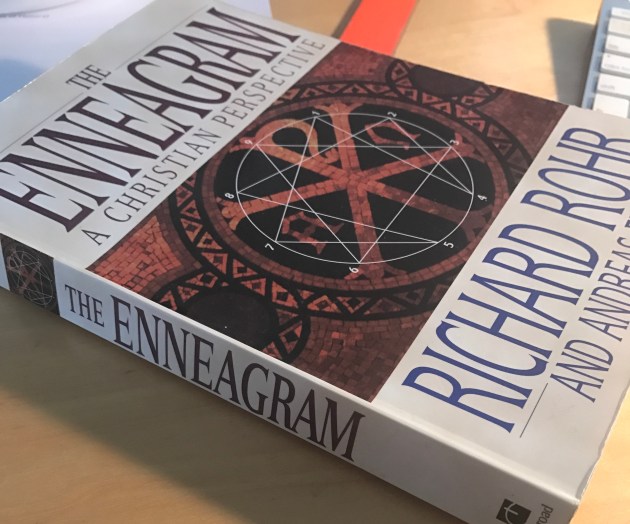
I was just getting ready for my annual silence and solitude retreat at the Monastery of the Holy Spirit outside of Atlanta, so on the spur of the moment, I threw my copy of The Enneagram: A Christian Perspective (by Richard Rohr and Andreas Ebert) in my bag, thinking, “Maybe I’ll skim this while I’m away.” I’d read probably 60% of the book 2-3 years ago, and while I found it interesting, I got bogged down in the descriptions of each number, and eventually abandoned the book.

After I’d arrived and got settled in at the monastery, I still had a couple hours before Vespers (think, “dinner time prayer”), so I decided to sit down on a patio and do some reading and journaling. Call it intuition or the Holy Spirit, either way I picked up the Rohr book and started reading. I wanted to revisit the history and context of the enneagram before I reviewed my results, so I actually went back to the beginning and started reading.

Before I got to the descriptions, Rohr took me back (as he so often does) with this statement:

“In recent years a series of questionnaires has been drawn up so that people can discover to which Enneagram pattern they belong. Nevertheless, we recommend that readers take another approach first: *it makes sense to begin by reading through all nine descriptions. To some it will immediately be clear where they are ‘at home.’ … A good criteria is the following: if in reading the description of a type I get uneasy or am even humiliated, it could be that I’m on home ground.”

<sigh>

So, even though I had my pattern “in hand”, Rohr recommends that I read the whole book and come to conclusions more “organically.” (Part of this is because, according to the authors, the Enneagram is historically related to the seven capital, or “deadly” sins, so rather than *celebrate* my particular pattern, we are on more solid ground when we soberly look at the brokenness of each particular type first.)

So that’s what I did. The good news is that the type that I was drawn to actually reinforced the online questionnaire that I’d taken.

I was a “Nine”. 

Now, this actually shocked my friend because she was convinced that I was a “Five” (go and look these up for yourself if you’d like), but as I read the descriptions I knew without a doubt that I lacked the intellectual detachment that Fives had. I was a visceral, gut reactor to life (not always for the best), and could only detach myself through discipline and prayer.

But that was just the good news; there was some challenging information as well.

According to Rohr, while Nines are peacemakers and good at accepting other people, we (read: “I”) suffer from some critical deficiencies, or brokenness: we lack courage, we lack focus, we prefer the path of least resistance, it takes a long time for us to identify and name (and therefore own) our feelings, we withdraw.

Am I feeling good about myself yet?

What may have hit me the most was that Nines also have a tendency to be lazy and to avoid conflict.

Without going into too much of the detail, let’s just say that (a) I completely identify with these tendencies, (b) they are actually humiliating.

I’ve taken so many personality profiles: I’m mostly an INFP, my strengths are Contextualization, Indvididualization, Intellection, etc., etc.

This seemed somehow different; it hit me harder, where I’ve been “living” for a few years now.

For instance, because of my natural curiosity, I am fairly persistent about sniffing out the “next thing” theologically and/or spiritually (note: a lot of this is also driven by very personal needs and spiritual ambitions).

To be blunt, I’m typically pretty far ahead of the curve when it comes to spiritual trends, whether it’s liturgy, spiritual disciplines, or mindfulness…

… BUT NO ONE KNOWS ABOUT IT. 

My laziness, apathy, cynicism (“nobody will read this anyway”) and introverted nature all combine to make a stew and a gumbo that produces… at times very little.

Meanwhile, I watch people—some of them my friends—who are decidedly NOT NINES (LOL) write, publish, and broadcast much of the same information that I’d processed sometimes years before. I sit and I watch/listen/read, thinking… “Wow… uh. This is actually old news to me. If someone would just ask me, I could have told everybody this stuff two years ago…”

(typical NINE stuff…)

By the way, honest: This is not about how great I am, or how smart I am.

It’s actually kind of humiliating, and I’m also just trying to be honest.

Part of my spiritual journey means that I’m trying to work on accepting myself, in all my glorious limitations and strengths. Also, let me be clear, when Rohr also writes that “in a certain way NINE represents the original and unspoiled human essence,” I have to acknowledge that it’s not all bad to, well, be me.

But since the Enneagram is related to my brokenness, I need to acknowledge that there are still issues I need to work through. I need to get better at productive, redemptive conflict. I need to learn to give to the world what God is giving me. I need to steward my journey, both for myself and for the world.

It’s about giving, not promoting.

As I was thinking about writing this, I was thinking about some of the most powerful words that people can speak about me. My spirit rises within me (even at 48) when I hear people say about me, “Oh man, you really need to meet Eric Case; if you’re interested in (Subject X), he’s someone you have to know.”

Vanity, I know.

So there you go: I’m a NINE. Prone to laziness, conflict avoidance, and cynicism.

But if you’re exploring spirituality, productivity, creativity, or even the Enneagram, I’ve probably been there, and I *do* want to help.


Links:

The Enneagram: A Christian Perspective by Richard Rohr and Andreas Ebert on Amazon.com

The Monastery of the Holy Spirit

Enneagram Test (related to Ian Morgan Crone’s book The Road Back to You)

Blogs related to my monastery trip.


I Sit

I sit.

It is cold.

I sit.

It is cold and dark.

I sit;

it is cold and dark and quiet.

I pick up two “devotional” books, little nuggets of thoughts to “prime the pump.” Reading the daily thoughts would take about 45 seconds (a bit more, if I’m really tired, for re-reading). Living out the thoughts there would take a lifetime.

But that’s what I’m here for.

I put the two books aside, and take a sip of the still-too-hot coffee.

I check my phone timer, and set it to 20 minutes.

A deep breath, a whispered prayer:

“God, I am here, speak to me.”

Then a slow descent into the silence.

My first thoughts are slowly nudged away, using the imagery of a slow lazy river. I know that if I allow them to drift away, they will leave me. More will follow them, but they, too, will leave if I just release, surrender them to the flow of the river.

My mind is active—I have still-officially-undiagnosed ADD—but I slowly and gently introduce the word that I use to signify my intention and willingness to both myself and to God.

“Grace.”

This gentle back and forth will continue for the next 18 minutes or so: my mind will drift, and I will gently nudge it back by a combination of my will and a surrender to God’s work and presence.

I continue to sit.

Thoughts come: some of them “To Do” items that will wait.

I release them.

Thoughts come: amazing ministry ideas, an angle on a conversation I need to have.

I release them too. I trust that they will either be there waiting for me when the time is over, or that they were not important enough for me to retain in the first place.

Either way, there will be time for them later.

“Grace”.

Redirect my mind back.

I sit.

I wonder how much time have I been sitting?

Out of weakness and a deeply ingrained humanity, I steal a peak at my timer.

I sit some more.

The darkness is spacious, inviting, and eternal.

(Much like God.)

I sink deeper and deeper into this place that requires nothing of me but to be still, to simply, well, be. 

I sit some  more.

Occasionally, I touch something, something that is way beyond my human experience, a wonder and a peace and a grace that is simply overwhelming; it’s amazing how uncomfortable it can be to truly confront the wonder.

I’m thankful that God makes allowances for my human limitations.

But even those transcendent experiences need to be released; I am after something different here. I am after the deep mystery and darkness of God, and so I trade the known for the unknown, the trumpet for the silence, the sight for the blindness.

In other words, I’m seeking pure faith. 

I sit.

The timer goes off on my phone.

(Blessedly).

Who knew 20 minutes could feel so long?

Regardless of my experience in prayer, I thank God. This is an important discipline for me, because one of the central truths of my humanity is that I cannot wholly trust my human experience to evaluate and determine the spiritual “success” of an activity. I simply have no way of knowing what God has truly done in my life; I only trust that He is working.

“Trust in the slow work of God,” indeed.

I rise.

Morning.

I woke up this morning at… well, 3:15.

I tried to go back to sleep, but by 3:45, I realized it was pointless, and I went ahead and woke up. One of my mentors has always maintained that we should assume that when we wake up, God wants us awake and we should respond accordingly.

They probably never saw me as a teenager when my parents tried to wake me up.

God may have wanted me awake, but that didn’t necessarily mean I had to be thrilled about it.

MOST of the time, in fact, I am able to stave off God, and you know what? He actually respects that. It’s as if He’s like a child: He pokes and prods me like a 5 year old on Christmas morning. “C’mon, c’mon, c’mon get up, it’s happening! It’s here!” Except “It” is simply just another day, and not the once-a-year mad festival of gifts.

But the metaphor breaks down, because for me most of the time if I simply ignore him once or twice, he leaves me alone and I go back to sleep. If he was truly a child he’d bug me unceasingly until I woke up and got the coffee brewing. But as a spiritual master once said, “God is a perfect gentleman,” and so when he occasionally whispers, “Psssst. Hey: why don’t you wake up? I have some amazing things to talk to you about!” And I respond with disinterested grunts, and then roll over to squeeze another 45 minutes of time out of my night, he actually says (with really no disappointment, but with an amazing, unending disinterested love, “Okay… Maybe next time!”

That’s pretty much God. Always there. Always wanting to meet with me. Always willing. Never disappointed. Never shaming. Never quilting.

Just wants to know that he wants to meet with me. Pretty much any old time.

And then again, that’s pretty much me. Frumpy. Slightly lazy. REALLY, REALLY into what I’m doing at the moment, rather than looking up from my work (or my pillow) to see this bright-eyed child who just wants to sit with me, who really just wants me to know that, “Hey, I love you.”

An Open Letter+

It started with waking up to an alert on my phone:

“20 Dead in Orlando nightclub shooting.”

(I wake up to WAY too many of these alerts lately, but that’s the price of living in the States these days…)

I do my work on Sundays, trying to connect people with God, sometimes through music, words, or conversations. I plan and listen, situate and discern as best I can.

I get to work pretty early on Sundays—6:30AM if possible—and I usually put everything on “Do Not Disturb” so I can keep my head clear and my world quiet as long as possible before it’s no longer possible.

Sometime before the congregation arrived I checked my phone again, and my spirit darkened even more as I read, “Death toll in Orlando at 49…”

What is a pastor supposed to do in these cases?

I took a deep breath, and then I did the thing that, in retrospect, I now regret.

I went ahead with the plan of the day.

It was not malice, or callousness towards LBGTQ people, that caused me to “stick to the message” that day. I just literally neglected to pull my head up above the mire long enough to think about and *really process* what had happened.

I now regret that.

Maybe it’s just a sort of “numb-ness” to it all. A rather sad conviction that this is the world in which we now live. I don’t know.

But I know I think I should have said something.

And so I write this now. Maybe a day late and a dollar short. Who knows?

But here’s what I want anyone who reads this to know:

Any strain of religion—Christianity, Islam, or Judaism—that preaches hate and de-humanization—is really no religion at all, at least in the purest sense of the word. Religion is meant to pull things together (our souls, our communities), not destroy them. I don’t know whether or not the shooter was ultimately motivated by blind, irrational hatred of life in general, some demons that he sees in the West, or something specific in Gay and Lesbian people, but I do know that his targets that night were specifically gay, lesbian and transgender human beings that night. That makes the “Universe” (and in my world the Abrahamic God that is behind that universe) weep with abject sorrow and even bitterness at what is being done “in His name.”

Don’t bring my God into your violence.

Everyone deserves to have a beer, or to dance, or to worship, in safety.

We all deserve to be in a space where we will not be shot at or yelled at because of our lives. Jesus had this way of holding some pretty intense beliefs about God, *and yet not really getting in anyone’s way who wished to hang around him or his message.*

I am so sorry for this tragedy. I don’t know how much guns are to blame (surely a little?), an undiagnosed mental illness (perhaps?), an unreasonable perversion of faith, blind hatred of a people group?

I don’t know.

I just know it’s wrong.

I’m sorry I didn’t pray for the victims and their families. I’m sorry I didn’t cry out to God more for the brokenness of this world.

For me, I share the perspective of Rabbi Jonathan Sacks, who writes that only in religion—true, uniting and life-affirming religion—can we ultimately break the cycle of violence and death in our world.

Economics won’t fix it.

Politics won’t fix it.

Science won’t fix it.

Only the best of faith can give what we all want most, at our deepest and most human levels: a deep sense of meaning and the sense that “every thing is going to be alright.”

Nights like last Saturday night challenge that. But I refuse to (a) give into the despair that would toss faith out with the bathwater, or (b) give into cynical hate that demands a strike back, or a cold shoulder.

I guess I’m opting for messiness, and to be honest, I don’t really need any more mess in my life. It’s not like I don’t have enough of that going on already.

But this is reality.

I’ll opt for hope. I’ll try to opt for love and compassion and acceptance.

You see, I really I have no other choice. I’ve signed on to follow this Jesus guy, because, like his disciples told him long ago, “Where else could we go? No one else has the words of life.”

So I’m sorry. I’ll try to do better next time.

Unfortunately for us in the US, I know there most likely will be a next time.

“Stuck Inside a Saturday Rain”

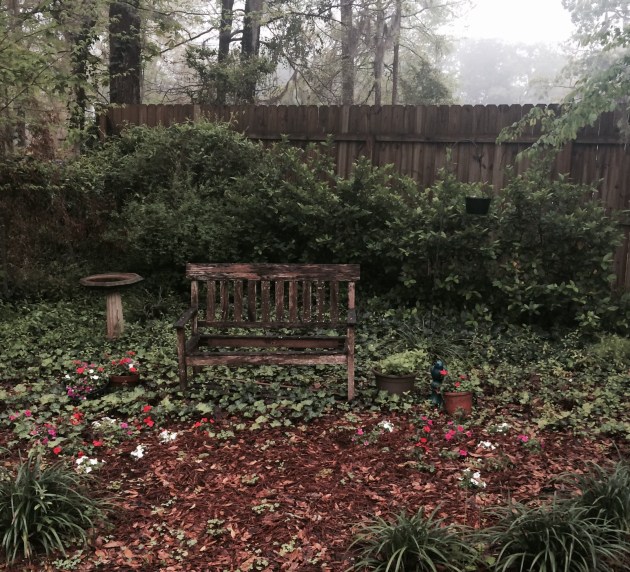
FullSizeRender.jpg

Did you ever think that the resurrection could have gone down in an entirely different way?

In one sense, we didn’t really need Saturday… Jesus could have given up his spirit, then died, and then bounced back to life immediately. After all, God is not all that bound by time so he’s really capable of doing anything he wants in any timeframe that he wants…

But instead we have all of Friday and all of Saturday…

Which means we have doubt.

It’s simply not good enough or even accurate to maintain that the disciples were just sitting around on a Saturday biding their time until Sunday. The Biblical record would show that they were, well, freaked out. Devastated. Maybe they were left with a shred of hope, but overall what they have witnessed—the betrayal, the arrest, the torture, the beating, the execution—had shaken them to their core.

Saturday in Holy Week is a day of anticipation and hope, but it is also necessarily a day of faith and doubt.

Sometimes I think that Jesus left us with a Saturday (and a Friday for that matter) so that we would know that doubt is not only okay but is actually integral to the life of faith. For my part, while I wish I did not have periods of doubt, and that my faith was rock steady and consistent in the face of whatever life threw at me, I know otherwise.

My vision gets blurry. My hope fades sometimes. My trust waivers.

And all this from a pastor?

But here’s the deal: the disciples doubted. They lost hope, at least temporarily.
Sometimes, we fall into the trap that thinking that faith means never having doubts… we think that to believe means that the sun will always shine, and that will never be confused, and that we will never be afraid, that we will never look to the heavens and ask “why God?”

But that’s not really the definition, is it? There’s a distinction between faith and knowledge, and we are called to one and not so much the other.

(Hint: the answer rhymes with “faith”.)
Though the Gospels fairly consistently show that Jesus responds to radical faith, they also consistently show that he understands our human weakness. Somehow, someway doubt is a part of our legacy. Though we are not called to remain in it perpetually, neither are we called to pretend that it does not exist.
God allows for Saturday. Not just once, but over and over and over again.
Here’s to the doubters; Sunday’s coming.