Exile on Faith Street: Rain

monsoon_rain_clouds

I’ve been talking so much about exile lately; it seems like it’s a constant theme with me and my friends. Not only was it a theme for folks in the 1st century, it’s an applicable concept today.

Exile is what happens when all the questions no longer apply; it’s the place where nothing makes sense.”

So we find ourselves in places where everything we thought we knew about the world is no longer important, and we have to simply put one foot in front of the other and trust that somehow we’ll get through it and somehow God has not deserted us in the midst of it.

But surprising things happen in exile.

Life, for instance, goes on (this may or may not be good news to you).

Though it seems like eternity, in most cases “exile” doesn’t go on forever. There is a time when God says, “Come home,” and we enter into rest.

It’s in those times that we realize that exile can prepare us for rest.

I was reading this the other day, and I thought about life in exile:

“When the LORD changed Zion’s circumstances for the better, it was like we had been dreaming.
Our mouths were suddenly filled with laughter; our toungues were filled with joyful shouts.
IT was even said, at that time, among the nations, “The LORD has done great things for them!”
Yes, the LORD has done great thigns for us, and we are overjoyed.
LORD change our circumstances for the better, like dry streams in the desert waste!
Let those who plant with tears reap the harvest with joyful shouts.
Let those who go out, crying and carrying their seed, come home with joyful shouts, carrying bales of grain!” (Psalm 126)


Here’s the deal about exile: rain keeps falling, the sun keeps shining, and that means even when you can’t see it or feel it, things may still be growing.

Exile may feel like a kind of death to you; a kind of barrenness, and it may be tempted to give up hope and embrace nihilism and cynicism. It may be tempting to surrender to the darkness and begin to burn and destroy, since everything seems empty and worthless.

But it also may be a time of planting, so that when you “return home” you find that things have grown up that you can now enjoy.

So what can it look like?

  • Maybe it starts with being able to say at some place in your soul, “The LORD has done great things for us.” Somewhere, sometime in the past God has spoken good things for you. He will again.
  • Ask yourself, “What can I plant right now? Assuming that someday I will come out of this with a harvest, what do I want that to look like?

Maybe the seed is a friendship that you build into or rely on.

Maybe it’s the effort to pray—maybe the Lord’s prayer or something—once a day.

Maybe it’s to read the Bible in some kind of systematic fashion.

Maybe it’s to invest in serving some folks who have really immediate, physical needs.

All of these things are seeds.

And the thing about seeds is that most of the time, you don’t really see any fruit or anything worth harvesting for a long time.

But even while you are in exile, the sun shines and the rain falls.

And someday, someday when you come home again, you’ll find that there’s a harvest to pick up and carry home.

=================================

Gospel Artist :: Enjoy the Silence

photoMaybe we just talk way too much.

It’s not surprising, considering out environment… How quiet is the space you’re in, right now?

How much music is there?

How loud is the traffic?

Is the TV on?

Do we even know what “silence” is? (Never mind what it can actually do in our lives).

A few months ago, I was blessed to be able to spend 2 days in silence and solitude. Don’t get me wrong it was really pretty freaky at times (At times, I was the only person in the entire retreat facility: The Shining, anyone?)

But during those few days confirmed what I’ve been gradually learning more and more in my life:

Sometimes we just need to shut up. 

I just noticed something recently about a familiar story. It’s about a guy named Elijah, and how God reveals himself to him. Through some stuff that happens, Elijah finds himself hanging out by himself in a cave, pretty beat up and at his wits’ end. God decides to show up:

The Lord said, “Go out and stand at the mountain before the LORD. The LORD is passing by.” A very strong wind tore through the mountains and broke apart the stones before the LORD. But the LORD wasn’t in the wind. After the wind, there was an earthquake. But the LORD wasn’t in the earthquake. But the LORD wasn’t in the earthquake. After the earthquake, there was a fire. But the LORD wasn’t in the fire. After the fire, there was a sound. Thin. Quiet. When Elijah heard it, he wrapped his face in his coat. He went out and stood at the cave’s entrance. A voice came to him and said, “Why are you here, Elijah?”

The thing that stood out to me is the description of the voice. In English we miss how small this “small voice” was. The Hebrew for small is a word that references the thickness of a hair or a grain of sand. One Rabbi said that the voice could be described literally as “a voice of silence.”

Easy to miss.

As Elijah is looking for something, the biggest and flashiest events that God can muster roll by him. But God isn’t there. And only when Elijah is quiet enough to hear the “voice of silence” can he come to the edge of the cave and hear what God wants to ask him.

So I have two questions for you:

1. What might God want to ask you? 

2. Can you hear the voice of silence? 

So many of us desire direction. So many of us are hungry to hear that centering Spirit, that voice. We are in caves, and we don’t want to be there.

We are waiting to be called.

But we also just won’t. stop. talking. 

We muster our own wind, and earthquakes, and fires by the things we say about God, about what we want from him, when all the time He is waiting for us to just be quiet, so that we can hear that “grain-of-sand voice”.

Are you willing to be silent to hear God? Are you willing to trade your “earth, wind and fire” (never gets old, but just try to watch that video without smiling) for the voice of silence?

Oh yeah, and THIS.

=======================================

Why Not Become a Professional Christian?

I’d like you to think about becoming a professional Christian.

Do those two words even belong together? What does that look like? A televangelist? A faith healer? A church shopper? A person who takes faith and turns it into something legalistic and dead?

It seems like a far cry away from the idea of loving God with all your heart, soul, mind, and strength and loving others as yourself.

A far cry from the Good Samaritan; from the Father running after his long lost son; from the powerful images pulled from the BIble. Rather it seems dry, dead, almost crass.

I’ll actually allow that it’s really easy to think about it like that; in fact, that’s very much the way I used to think about it.

A year or so ago, a little book was recommended to me, and it has revolutionized my way of thinking about a lot of things.

In The War of Art, writer Stephen Pressfield sets forth powerful insights into the nature of creativity, but as I read the book a thought started to form in my head…

What if these same creative principles apply to living the “Spiritual Life”? 

What if our primary call is to create our own Gospel-shaped life? 

Pressfield says that the key to the creative life is to “become a professional.” Here’s how he describes it:

The amateur plays for fun. The professional plays for keeps.

To the amateur, the game is his avocation. To the pro it’s his vocation.

The amateur plays part-time, the professional full-time.

The amateur is a weekend warrior. The professional is all there seven days a week.

The word amateur comes from the Latin root meaning “to love.” The conventional interpretation is that the amateur pursues his calling out of love, while th epro does it for the money. Not the way I see it. In my view, the amateur does not love the game enough. If he did, he would not pursue it as a sideline, distinct from his “real vocation.

The professional loves it so much he dedicates his life to it. He commits full-time.

So many people are hungry for something different.

So many people ask themselves, “Can my life really be different? Can it look at all like some of these stories I read in the Bible or church history?”

So many people even want it to be different.

But they aren’t willing to “turn pro” as Pressfield defines it.

They may be willing to give their life to God, but they’re not willing to give their life to the process of God’s work in their lives. They’re not willing to give their life to it, to show up every day in order to create their “work of art”—their Gospel-life.

You can hunger all you want, but most of the time it—life change, or spiritual growth—is simply not going to magically happen. We have to commit to going beyond being “amateur Christians” and actually choose to do the work—not in the sense of earning our salvation, but in the sense of arranging our lives for spiritual growth. 

Letting God do the work, but making sure we show up and give His Spirit the space to do so.

What would it look like if you decided to “turn pro”?

What would have to change?

What would you gain?

What would you lose?


more thoughts to come….


=======================================


Six Ways to Deepen Your Corporate Worship Experience

Sorry it’s been a while. I’ve been busy getting reacclimatized to ministry after a 3-month Sabbatical.

In the upcoming weeks I want to start unpacking my vision of how to create a Gospel-shaped life.

This week’s installment is about how we might deepen our corporate worship experience.

  • I’m assuming here that you share my belief that worship is a spot where heaven meets earth.
  • I’m assuming here that you believe that God indeed inhabits the praises of his people, and that He wants to meet with us, to speak to us, to “do stuff” in us during worship.
  • I’m assuming that you think that worship (not just the musical kind) is probably the most important thing you can do on earth.
  • I’m assuming that you think God is more important than you are, that is, that He belongs on the throne of your life, not you.

So is it possible to learn to worship better?

Should “learn” or “better” even be part of the conversation?

I think they should. I think to the degree that we want worship to be rich and meaningful; to the degree that we want to meet with God and to hear Him speak and feel Him in our presence, we should own up to our end of the bargain. 

We should do our best; we should come to worship with best, not so that we can work our way into God’s presence, but so that we can make the most room for Him—and His Spirit—that we can.

Too often we show up to worship in order to receive only. Doesn’t this turn things around? Doesn’t this make worship about us? About God giving to us? Worship begins when we recognize who God truly is and who we truly are; once that relationship is clear, God tends to then speak and do His business with us in the best possible sense.

So how do we get better at worship? I’d like to suggest six very practical suggestions to helping all of us come to God better prepared to meet with Him.

  1. Get a good night’s sleep. Most of us roll out of bed at the last possible minute on Sunday, scurry to church, get adequately caffeinated (if that’s an option at your church), and then wander in, greeting people as we go, eventually settling down just in time to start singing the third verse of the second song. And then we wonder why the band seemed a little “off” that week, or why worship was a little “dry”. If God is truly worth it, and if the Sabbath is truly the joy that we say it is, maybe Sunday worship should begin on Saturday night. 
  2. Engage in the “worship before the worship.” Before you come to church, read Scripture and pray. Thank God for another day of life, and tell Him you are excited to worship Him today. As you get in your car to come to your gathering place, take time to center down into God’s love. Pray for yourself and for the worship team of your church. Pray for your pastor. Prepare your heart individually in order to engage corporately. 
  3. As you sing, engage deeply with the lyrics. Connect the words to your own life. It’s only thing to sing, “He loves us, oh how He love us” passively and absent-mindedly. It’s another thing entirely to connect those words with your own story.
  4. Be willing to worship “from the outside in”. We talk a lot about “inside-out” worship, and having the inward state of our hearts match the words we are singing. But this ignores a basic truth of how the body occasionally works. The truth of our existence is that our physical postures and expressions can affect our emotional states. This means that sometimes if you want to experience worship more deeply, you should be willing to engage your body. I know there’s lots of different worshiping traditions, some more expressive than others. I also understand that Paul calls us to not be distractions in our corporate gatherings. But within those parameters, I believe we should experiment with physical expressions of worship—raising our hands, clapping (I won’t even mention movement… yet), kneeling, etc.—that can unleash deeper realities for us.
  5. Look Around. We don’t merely worship as private individuals; we worship as a body. Occasionally, take your eyes off of the screens (no really, please take your eyes off the screens) and look around the room. Who is mourning? Say a prayer for them. Who is rejoicing? Celebrate with them. Allow yourself to be shaped by the way your brothers and sisters are worshiping with you.
  6. Offer a sacrifice. Worship isn’t about you. It’s not about the band. It’s about God. It’s easy—so easy—to show up on Sunday morning with an attitude of “Give something to me, God.” Indeed, sometimes life beats us down and it’s all we can do to limp into our gatherings on Sunday.But our job during worship is to offer a sacrifice to God. It’s His job to heal us, to comfort us, to give us faith, to remind us that we’re loved and valued as His children. So consciously make a switch in your mind to give rather than receive. Or at the very least, commit to giving first and receiving second. 

I hope that these six suggestions might equip you to bring a deeper offering to God on Sundays. Ironically, I also think they’re the key to receiving more from God during worship as well.

But it’s still not about that.

peace

Living the Resurrection :: The Calling God

As I’ve written before, contrary how most of us experience Easter, it’s actually a season of the Church, and not merely a day. It’s not meant to be blown by and then remembered in the rear view mirror by its exhaustion (hello, church-workers), chocolate consumption (or Peeps), and communal meals.

Just as Lent prepares us to think about the Cross, Easter now prepares to live the Resurrection Life…

… The reason that it’s a season is that this not as easy as it seems.

So over the next few weeks, I’m going to offer some thoughts on “Living the Resurrection”, and maybe we can figure this out together.

….

In contemplating the empty tomb yesterday morning, I was struck by Jesus’ activities after he is raised.

Assuming that the resurrection was a pretty big deal in those (any?) days, did you ever wonder why Jesus doesn’t just set up shop in the tomb and wait for everyone to come and see him?

Instead, he hits the road.

Matthew tells us he goes up to “the mountain” (one of his favorite places in Matthew) to give some final instructions to the Twelve.

Luke tells us that he joins some disciples on the road to Emmaus, then shows up later at dinner.

John says he crashes a (really, really depressing) party that the disciples are having, and then later to Thomas, and eventually has a really important conversation with Peter before departing.

Paul tells us,

He appeared to Cephas, then to the Twelve, and then he appeared to more than five hundred brothers and sisters at once—most of them are still alive to this day, though some have died. Then he appeared to James, then to all the apostles, and last of all he appeared to me, as if I was born at the wrong time. (1 Corinthians 15v5-8)

In other words, even after the Resurrection is still really busy. 

Rabbi Abraham Joshua Heschel says that one of the essential characteristics of God is that He pursues us:

This is the mysterious paradox of Biblical faith: God is pursuing man. It is as if God were unwilling to be alone, and He had chosen man to serve Him. Our seeking Him is not only man’s but also His concern, and must not be considered an exclusively human affair. His will is involved in our yearnings. All of human history as described in the Bible may be summarized in one phrase: God is in search of man.

Jesus—even after Easter—continues this tradition of the calling, seeking, pursuing God.

He is not content to only wait and allow people to seek Him out; He goes in search of folks.

… Of Mary, who loved Him but could not save him…

… Of the Twelve, who couldn’t stay awake with him or stay loyal to him…

… Of Thomas, who wasn’t even sure he believed he was really alive…

… Of Peter, who denied that he even knew him…

In other words, not only is Jesus on the move, searching people out, but the very folks who let Jesus down, who weren’t sure about him, who deserted him, who were helpless: those are who he goes to find. 

The Resurrected Christ is looking for you. No matter what you’ve done, no matter what you “lack”, no matter how you think you may have betrayed him, he is still seeking you. He’s not afraid of you. He’s not ashamed of you. He’s not embarrassed.

So maybe this Easter, stop running. Or just slow down.

*e

Eleven Things About Resurrection

What the resurrection means (at the very least)…

  1. That Jesus was/is the Christ, the Messiah
  2. That love really does win
  3. (Relatedly) That evil, death, and violence do not have the last word
  4. That doubt on Saturday is a part of life, but can give way to faith on Sunday
  5. That God is almost always unexpected
  6. That life with God is not just a resuscitated life, but a resurrected life—simultaneously a part of our current existence but radically reordered
  7. That wide-eyed wonder—and even a mild freak out—is a perfectly acceptable reaction to God’s work
  8. That I’m not “stuck” where I’m at; I can grow and change
  9. That God hasn’t abandoned humanity or this world
  10. Consequently, there is work to be done. Redemptive, resurrection work.
  11. That whenever I—or you—think “this is really all there is”, I’m wrong; that life and possibility can spring up in the deepest darkness

He’s alive, folks. Let’s dig in, drink up, and roll up our sleeves.

*e

===========================

Basics

What he liked about his brother, he said, is that he made people become what they didn’t think they could become. He twisted something in their hearts. Gave them new places to go… His brother believed that the space for God was one of the last great frontiers: men and women could do all sorts of things but the real mystery would always lie in a different beyond.

(Colum McCann, Let the Great World Spin)

Just this: if we who follow Jesus would just set our hearts on helping people find the new places to go, the “different beyonds” in their lives, we would be doing some solid work in the world.

==================

Lent Reflection #6 :: Jesus Uncomfortable Healings

I’m probably alone in this, but sometimes I feel like Jesus has a funny way of healing people.

To my eyes and ears, Jesus’ healings have a hard edge to them.

For instance, we are told that one time Jesus heals a man with a “withered hand” on the Sabbath, and the religious experts are pretty ticked off about it (Mark 3v1-6). There are some interesting aspects to the story:

  • according to the text at least, the man hasn’t asked Jesus to heal him; in fact, Jesus initiates the whole process (in front of the community in the synagogue)
  • the man’s life isn’t at stake (even for Pharisees, saving life on the Sabbath was actually permitted)

There’s a sense in which Jesus is standing there, and commands the guy (who is not supposed to be in the synagogue), “Get in here and stand up in front of everyone so they can see what’s wrong with you.”

Can you sense the social awkwardness?

What begins to emerge is the possibility that Jesus is essentially using this man’s affliction and subsequent healing as an example, as a way to push the religious authorities into a corner (and to begin to plot Jesus’ death).

And all of this happens very publicly, in front of everyone. The man is healed, but first the man has to stand up in front of his community.

To me, it’s very tense. Why couldn’t Jesus have privately healed the man? Why couldn’t he have pulled the Pharisees and the Herodians aside and performed this act of political theatre in front of them alone?

Why subject the man to this public scrutiny?

A few chapters later, Mark relates the story of a woman who has been suffering—”bleeding”—for twelve years. Without going too deeply into social laws of the time, the cultural laws maintaining purity at this time were quite strict; this poor woman would have been strictly and severely ostracized.

So in a way you can understand her desperation to get to Jesus; to be made whole again. She reaches out her hand and grasps the edges of his cloak (or prayer shawl) and, “immediately”, we are told, her illness is gone.

Awesome. And then she goes away and is restored to life and community, right?

Almost. Not before Jesus very publicly calls attention to her. 

Before her ultimate restoration, Jesus makes sure the entire group of people knows that she is there, and that she has received a healing.

Again, part of me wonders why Jesus didn’t pull her aside, privately bless her and then restore her to the life.

Why the public display?

The last healing story actually comes out of John’s gospel. Jesus finds a man by a pool believed to have healing properties. The man had been there for thirty-eight years. Jesus asks him, “Do you want to be made well?”

The man explains why he can’t get into the pool in time, and Jesus responds by saying, “Get up! Pick up your mat and walk.”

For some reason, on top of all the very public displays of Jesus’ healings, this one has been sticking with me.

And it’s all because of the mat. 

I don’t know the mat looked like. If it was comfortable; if it was threadbare and worn; if it was donated. I don’t know any of the details.

But I do know what it represented.

It represented the man’s weakness.

It represented his brokenness.

It represented his need for restoration; for health.

And Jesus tells him to pick it up and take it with him. 

If I put myself in the man’s place, I would have longed so deeply to leave the mat behind. Who wants to carry around the reminder of our past? Our brokenness? Our shame?

But instead, Jesus tells him, “No: actually this is the thing you have to bring with you. I know you’d like to leave this part of your life behind, but people need to see this. They need to ask, ‘Hey what’s with the mat?’ And you have to tell them your story.”

Looking back over these three stories, Jesus’ there’s always another agenda operating around Jesus’ healings. They are never “the endpoint.” If they were, it’s possible for Jesus to be considered more of magician—a first century “House”—than the Messiah. The healings are there to make theological points, to tell stories, to point people towards God’s restoration agenda for the entire world. Not to say that it’s great to be healed, but we need to remember that God’s (and Jesus’) agenda is always bigger than our own individual situations, and the healings are always a part of that agenda.

So maybe Jesus has done something for you. Maybe there’s some brokenness in your past (gosh I know there’s some in mine).

And maybe what you really want to do is to leave your mat behind. 

But instead Jesus is telling you, “Pick it up; pick up your past. Pick up your brokenness, the things you’ve seen, the things you’ve done, and even though I have restored you, tell others about them.”

Obviously, just because you carry your mat with you does not mean that you’re still crippled. But somehow you still have to tell people about it.

Live your life in such a way that people go, “Hey what’s with the mat?”

What does your mat represent? Have you left it behind? I think in so many ways Jesus is saying to us, “Go back and get it; carry it with you. Not in a shaming way, but in a way that helps others.”

peace

*e

================================

Lent Reflection #5: The Cross Creates Communities

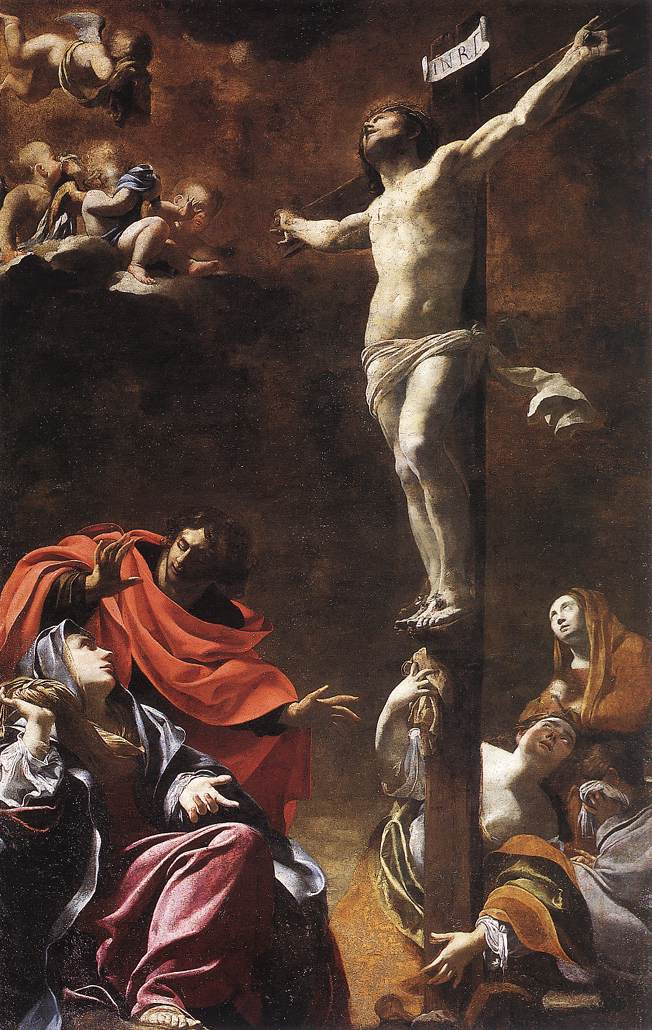
 (1622) by Simon Vouet; Church of Jesus, Genoa

The Crucifixion (1622) by Simon Vouet; Church of Jesus, Genoa

Jesus’ mother and his mother’s sister, Mary the wife of Clopas, and Mary Magdalene stood near the cross. When Jesus saw his mother and the disciple whom he loved standing nearby, he said to his mother, “Woman here is your son.” Then he said to the disciple, “Here is your mother.” And from that time on, this disciple took her into is house.

Mary is watching her son die. In his final moments, as a small community gathers around him, Jesus commends his mother to the care of one of the Twelve (possibly John, the author of this Gospel). He has to do this because at this point none of the rest of his family—not even his brother James—believes in him.

God has always had a people. From the beginning of his ministry, Jesus doesn’t just heal individuals, but he creates a community around himself. Even at the cross, we see Jesus gathering people and creating networks of care.

For some reason—and I really don’t know why—we resist so much of this. We pull away from community, sometimes because of time or priorities, sometimes because of hurts, sometimes because we don’t like what we’re hearing about ourselves.

But we really need to fight against this isolating tendency.

Because someday there will come a need: a phone all that changes everything; a meeting that dries up the future; an email that shakes the foundation of everything you are.

Someday, it’s going to be dark, not just outside, but maybe inside your spirit as well.

And then where will you turn?

We like to think that we exist in some glorious vacuum: some of us alone as individuals; some of us as nuclear families.

But the truth of the matter—even revealed at the Cross—is that we are in desperate need of other human beings.

So,  this Lent:

  • are you gathered around the cross of Jesus with other folks? are you committed to them, and they to you?
  • if not, is there something you need to do to restore yourself to that community?

This is one of the most beautiful songs I’ve ever heard about the Church, and this deep need that we have for community. Watch it and think—really think—about these words.

 "Shelter" by Jars of Clay
To all who are looking down, holding onto hearts still wounding

For those who’ve yet to find it, the places near where love is moving

Cast off the robes you’re wearing, set aside the names that you’ve been given

May this place of rest in the fold of your journey bind you to hope
You will never walk alone 
In the shelter of each other, we will live, we will live

In the shelter of each other, we will live, we will live

Your arms are all around us 
If our hearts have turned to stone there is hope, we know the rocks will cry out

And the tears aren’t ours alone let them fall into the hands that hold us
Come away from where you’re hiding set aside the lies that you’ve been living

May this place of rest in the fold of your journey bind you to hope
that we will never walk alone

If there is any peace, if there is any hope 
We must all believe, our lives are not our own
We all belong
God has given us each other
And we will never walk alone
© 2010 Bridge Building / Pogostick Music (BMI). All rights for the world on behalf of Pogostick Music administered by Bridge Building.

peace

*e

=============================

If You Want to Be a Disciple, Learn to Dance

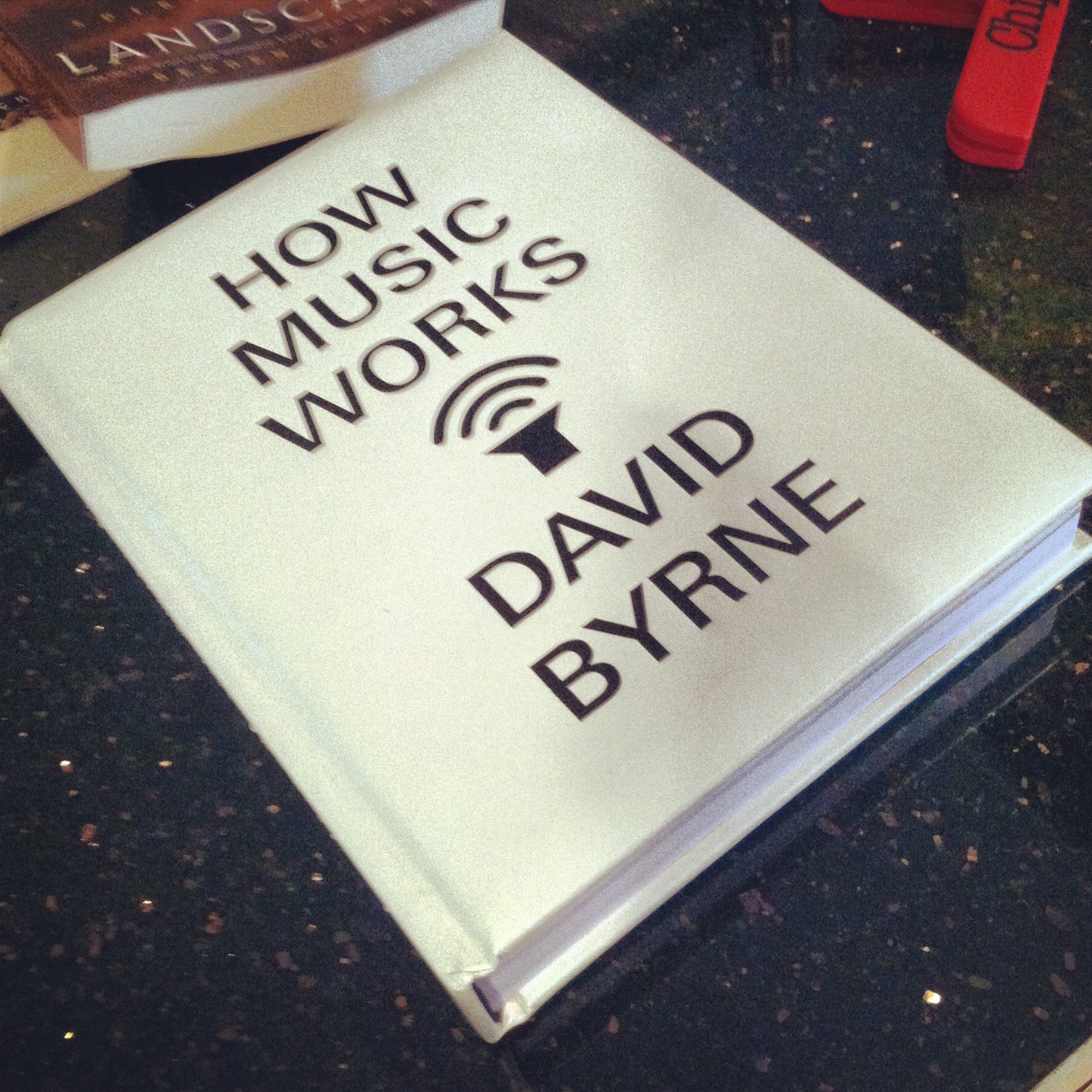
How Music Works

How Music Works

I’ve been so excited to get this book, and so far it’s been pretty rewarding. I’m actually not a huge David Byrne fan, but I just love people who pursue—and think and write about—creativity with few borders and labels. Byrne’s career has been awesome to watch, while he veered from New Wave and Alternative with the Talking Heads into some kind of Latin/dance explosion and then beyond.

Typical for me, I read something that struck me as related to spirituality. He describes preparing for a tour with a choreographer:

“Noémie began with an exercise I’ve never forgotten. It consisted of four simple rules:

  1. Improvise moving to the music and come up with an eight-count phrase. (In dance, a phrase is a series of moves that can be repeated.)
  2. When you find a phrase you like, loop (repeat) it.
  3. When you see someone else with a stronger phrase, copy it.
  4. When everyone is doing the same phrase the exercise is over.”

I think this is a great way to pursue a spiritual, Gospel-shaped life.

God sings this song; it’s a song of redemption and restoration. A song of absolute love and acceptance.

Music is meant for response. The best songs grab something inside of us.

For Believers, this Gospel-song is the highest form of musical expression we could hear.

All of us are called to this melody, this tune that has been sung through the ages.

But after responding, our job is not yet done.

Two things cause an exercise like what Byrne describes to fail:

  1. When you take no notice of anyone else’s dance.
  2. When you refuse to acknowledge the strength of someone else’s dance.

We do not do this dance alone. It’s not enough to celebrate our own response; we are knit together in these communities where others are responding, where we can notice and celebrate their responses as well as ours.

If we don’t notice other people’s response to the Gospel, it can become too easy to think that our dance is the best (only?) response to the Gospel-song.

We lose our perspective. Our dance is all we know, and we may be convinced that it is the only way to respond to the Song, but we also start to notice or suspect that something is not quite right: our sense of joy, or peace, or love seems lacking. Maybe we’ve noticed that it has become difficult to admit failure, or to ask for forgiveness from people we’ve hurt.

It’s times like these we need to maybe lift our heads and notice that others are dancing too.

They are dancing through consistent and fervent prayer; through passionate worship; through diligent study; through compassionate service; through committed community.

But even then job isn’t done, because we also have to be willing to—in the words of the exercise—notice the “strength” of someone else’s dance, and then submit to the strength of their dance. 

So often our ego gets in the way of our growth. We desire growth, but aren’t always willing to sacrifice our ideas of “how life works”—our dance—to someone else’s, even when we recognize the strength and success of that dance. 

As people of faith, we recognize that Jesus has the strongest dance of all, and we need to adopt his movement into our lives. But more immediately there are people in our midst who are responding and moving to the Gospel song, and we should readily recognize when their dance is stronger than ours, and then adopt it.

We think we know how to pray/worship/study/serve, but maybe we notice that someone else’s dance in this area is stronger than ours.

Are we willing to set aside our “dance”—the way we pray, or worship, or study, or serve—and adopt theirs? 

To admit that maybe we’re not as strong as we think we are in this area?

To say, “I want to know more. TEACH ME.” 

As we learn from each other, we respond to the Gospel Song in an organic dance of discipleship. It may not always be in unison, but it stems from the deep place of community. \

Who can you learn from this week?

… and now the multi-media portion… here’s some footage of David Byrne with some of the choreography…

… Here’s another track. Tacky fire suit, but great track; great energy.

… and lastly, classic Talking Heads