My First Lesson in Creative Sermon Prep

I am an unapologetic geek when it comes to certain things. For instance, when I got called for jury duty, I spent half the day marveling at the privilege of participating in “trial by peers”, and thinking about how unique this experience was to the rest of the world.

I know, it’s that bad.

Well, I got picked, and we heard our (short,civil) trial and began our deliberation.

(As an introvert, this is where it got awkward for me: putting me in a room full of people I don’t really know and then asking me to work and speak with them for hours on end… ugh.)

There was an older gentleman there, and during a break he started talking about how he’d worked in newspapers (remember those), and how he was a news junky. Then he asked us a question:

“Do you guys know how to find out what’s really going on in the United States?”

Let’s face it, we knew that we were not supposed to say “Yes.” So we all shook our heads.

He said, “You find out what’s going on in the United States by reading the news from Europe. Want to know how to find out what’s going on in Europe?”

“Sure.”

“You read the Russian news.”

He then lead us all around the world: Russia, Asia, etc. (I can’t remember the entire sequence, but you get the point.)

The point he was trying to make was that only when you got a little objectivity could you really see what was going on in a country. The best way to find out about a “thing” is not necessarily to read about the thing from people who know it best, but to read about it from people who aren’t really as connected to it. 

I think it’s a little like that with sermon prep.

I know there’s lots of websites out there that help with sermon prep, but I think a little more objectivity is required.

So to think about teaching the Bible, I go to “Europe”: which (for me) means

I collect and distill ideas and stories into Evernote, and then tag them and store them until they are needed.

Since I feel like the gospel touches all of life, it’s not always a huge chore to connect our inability to walk in a straight line to discipleship, or Nine Inch Nail’s record The Downward Spiral to the story of Samson.

Or, I suppose, to connect jury duty to sermon prep.

The Grammies and Satanic Goat Statues: Not Surprised

So I spent last week in a seminary class on Christian Ethics. The class began the morning after the grammies, and not surprisingly the class opened with some alarmed comments about the shenanigans of the night before.

(Disclosure: I declared the Grammies dead and irrelevant after the 1991 “Jethro Tull/Metallica” debacle, though I showed a brief revived interest with 2007’s “duets” idea.)

At any rate, some folks in the class were “shocked” and “appalled” at some of the performances.

Which made me think of satanic statues.

(As you do)

Lately, some pagan—and even straight up satanic—groups (I’m not using these terms pejoratively: they are self-identified pagans and satanists) have petitioned to have monuments and statues placed on courthouse and state lawns alongside “Christian” symbols (you can read the story here).

Ahem.

So I know that I’m supposed to be angry and indignant at this outrage, but I’m really not.

(Well, excepting the fact that the statue is actually quite hideous and ugly… THAT is quite disappointing.)

You see, I like it when people and institutions “show their cards.” When they take off the masks they wear and just declare, “This is who I am: deal with it.”

I like it because then I know a little more of the truth, and I can choose to accept it or walk away from it.

But at least I know.

In these two cases—the Grammies and these petitions—the music industry and our culture—are “showing their cards.”

Church (and I mean everybody): they are not our friends. We should not be surprised.

I don’t mean in a “get-scared-they’re-coming-to-take-me-away-and-oh-please-Jesus-come-back-it’s-the-Left-Behind-series-starting-where-is-Kirk-Cameron” way.

I mean a little more in the “raise-eyebrow-roll-your-eye-turn-off-the-TV-and-read-a-good-book-or-better-yet-have-a-conversation-with-your-actual-family” way.

Let me be really blunt:

  • The Grammies—and the music industry—exist for pretty much one reason: to make money. While they occasionally make a reference to “values”, and while people may occasionally thank God during an acceptance speach, if the industry has to choose between a dollar and Christian values, they will choose the dollar. They are obligated to.
  • The state exists to be a political entity. It has to perpetuate that system. If you know history—at least anything besides recent North American history—you’d discover that the “State” is no friend to faith. Because of the unique era of history that we’ve lived in, it’s easy to believe that our (awesome) political system is an ally of our faith, but that’s an illusion that most of the world does not live in (for that matter, it’s an illusion that most of the history of the Church doesn’t share, but see below).

(This is probably the time that I’d say I don’t believe in a “Christian nation.” I believe in Christians who may be part of shaping a nation, (but really, have you seen the “Jefferson Bible”?) but largely Christianity and politics have been disasters (#Calvin’sGeneva #Rwanda).

Now, in regards to the State, there is some good news:

This is not new.

Our New Testament was written in an era where the State and Roman culture dominated the landscape. But there are repeated reminders that culture, and in particular the State, do NOT have the same interests as Jesus (and His church).

Here are three of my favorites:

1.
In Matthew 2, the magi show up and tell Herod that the KING OF THE JEWS has been born. “When King Herod heard this, he was troubled, and everyone in Jeruslam was troubled with him.” (2v3) Why? Because if someone else (namely, Jesus) is King, it means Herod is not. It means that there’s a new king, and he’s coming to Jerusalem to shake things up. Things are about to change. You have to understand that the Jews (and the Christians) of the 1st century didn’t hear “King” like we do, as a private, faith-filled term. They knew their king ruled. Like really. Externally. Visibly. (It goes without saying that we should realize that Jesus is a real, ruling, living King.)

2.
Mark begins his gospel like this: The beginning of the good news about Jesus Christ, God’s Son…” (1v1) The Greek word for “good news” is euangelion which, oddly enough, was used by the Roman state to announce a military victory. It seems that what Mark is saying is that Jesus as the Messiah means that a visible, military victory is going to be one. It means that Jesus’ “kingdom” (state) is going to be the new reality.

3.
Saint Paul probably knew this more than any of the writer of the New Testament. He was a Roman citizen, after all, and so he was quite aware of its agenda, and he knew it was not Jesus’ agenda. In 1 Thessalonians he is writing to a church about the time when all things will be resolved, a final time when Jesus will bring all things visibly together. He writes this odd phrase: “When they are saying, ‘there is peace and security,’ at that time sudden destruction will attack them, like labor pains start with a pregnant woman, and they definitely won’t escape.”

Here’s the thing: “PEACE AND SECURITY” WAS A ROMAN SLOGAN. It was meant to remind people, “Hey, your peace, security, and well-being all come from Rome. (So keep supporting us.)” Paul is saying though, “Actually the folks—the state—who are saying we will provide your peace and security are deceived, and they are not your friends.”

For Paul, Rome was no friend of Jesus Christ and His church (though Paul was not above giving sensible advice to living under authority: see Romans 13).

I think the same is true for us today. We shouldn’t be shocked when we see ridiculous behavior on the Grammies, or ugly public art (though I’m sure we Christians have created our share).

To me it’s just those institutions showing their cards.

They are not my friend, and their agenda is not the Church’s agenda.

So get over the shock, and keep on walking, folks. We still have work to do.
+e
Gospel Artist and Rainer Maria Rilke

I picked up Rainer Maria Rilke’s Letters to a Young Poet, and I quickly stumbled across this:

I know no advice for you save this: go into yourself and test the deeps in which your life takes rise: at its source you will find the answer to the question whether you must create. Accept it, just as it sounds, without inquiring into it. Perhaps it will turn out that you are called to be an artist. Then take that destiny upon yourself and bear it, its burden and its greatness, without ever asking what recompense might come from outside.

Seen through the eyes of a Gospel Artist, and one who is called to change, this is a great quote. I actually we believe we are all called to create a gospel-shaped life. We take the destiny of Christ-likeness (or at least we do, if we choose), and begin our pilgrim path of change and evolution.

Have you ever considered that change is possible? That you are called to create (along with God through the Holy Spirit) a life that is shaped by God?

What would it look like if you were called? What could your life look like if you decided to create something wonderful and beautiful?

What would it look like if you chose to be an artist? 

2013 in Review: Music

Since I laid out my books, I thought I’d briefly go through some musical purchases that I enjoyed this year.

*NOTE 1: These aren’t necessarily 2013 releases; they are 2013 discoveries

*NOTE 2: I don’t listen to quite as much music as I used to, so don’t expect to be wowed. I just thought I’d share.

*NOTE 3: I still listen have a steady list of “older” favorites that were in heavy rotation in 2013 (though not purchased):

  • Live at Leeds. The Who.
  • El Camino. The Black Keys (one of Levi’s favorites)
  • Sevastapol. Jay Farrar (one of my top 5 driving CDs)
  • Most of Emmylou Harris’ catalog
  • Most of Sigur Rós’ cataglog
  • High Violet. The National

But anyway… here’s 2013 music:

  • Ode to Sunshine. The Delta Spirit. Maida Vale shared a stage with these guys in 2008 or 2009, and they blew us away with their raw intensity and musicianship. Reminded me of a much more angsty version of  The Band.
  • Sea of Cowards. The Dead Weather. When I first heard this band, they were just too creepy for me. Either they have gotten less creepy, or I’ve gotten moreso. Either way, Jack White and Alison Morehart are a potent duo, and they write killer riffs and haunting songs. Scary, but good.
  • Wise Up Ghost. Elvis Costello and the Roots. Oh my: this is virtually required. There’s not a super-catchy pop song on this collection, IMO, but just by virtue of the fact that it’s Costello (one of the most well-respected songwriters in this era) and The Roots (they should be declared a national treasure, the way Brazil declared Pele a national treasure back in the 70s), you should be listening to this. 
  • More Than Just a Dream. Fitz and the Tantrums. This was part of the summer soundtrack of the Case household. We collectively love these guys. Best if listened to loudly, while dancing.
  • Love in the Future. John Legend. I pretty much love everything John Legend does. So there.
  • Born and Raised. John Mayer. If there was a soundtrack to my sabbatical, this was it. This record just broke me down, and helped me heal. The title track also served as the inspiration for “My Redeemer Lives”, from my little release this summer. I haven’t been pierced by lyrics like this in a long while, and it felt good.
  • The Invisible Way. Low. This is “Where have I been?” Part 1. These guys are simply amazing. Gentle, rainy music. I found these guys through “Silver Rider” from Robert Plant’s Band of Joy disc, but boy I’m sure glad I found the rest.
  • Trouble Will Find Me. The National. Oh yes. Just as subtle, melancholy, and “New York” as the previous ones. Thank you.
  • Hesitation Marks. Nine Inch Nails. After Wilco’s Sky Blue Sky came out, a friend of mine remarked, “You know, I think that lyrically I like addicted Jeff Tweedy a little more than sober Jeff Tweedy.” Insensitive, I know, but I think I can relate: I like angry Trent Reznor a little bit better than married and content Trent Reznor. However, everything is relative: “content” Trent Reznor is still pretty dark and twisted. Hesitation Marks isn’t my favorite NIN record by far, but it still has its darkly groovy moments.
  • Woman. Rhye. This is another summer soundtrack in our house. This record is gently and sensuous. Definitely a cool, mellow, evening music. (P.S. the singer’s a dude!)
  • Kveikur. Sigur Rós. Creepy. Just creepy.

Well, there you have it. No links or anything, so if you want it … go snag it.

2013 in Review: Books

I’ve been out of pocket. Sorry.

Honestly, I’ve been in a funk, and haven’t been focused on writing so much.

(As I’m writing this I’m listening to Rush for crying out loud!)

But that being said, I’ve been kicking around a few ideas, and I figured I’d start by doing a somewhat haphazard book and music review of 2013.

I’m just going to list everything that I’ve bought and read/listened to, and throw out some notes where something strikes me.

Enjoy, and feel free to ask me questions about anything you see on the list.

Books

  1. Leadership Jazz. Max DePree. I’ve had this a long time, and just decided to review it for the heck of it.
  2. The War of ArtStephen Pressfield. If you do anything creative (and let’s face it: it’s all creative, isn’t it?), this is a must read. I’ve read it twice already, and I only bought it in 2012.
  3. Sabbath. Dan Allender
  4. Spiritual Direction and Meditation. Thomas Merton.
  5. Catching Fire. I have a daughter; deal with it.
  6. New Seeds of Contemplation. Thomas Merton. Very impactful book. God broke me down, grew me and stretched me in unbelievable ways in 2013, and this was one of the things that “primed the pump.”
  7. Giving Church Another Chance. Todd Hunter. An evangelical-turned-Anglican describes the impact of the liturgy on his spiritual life.
  8. Mockingjay. I still have a daughter; deal with it.
  9. Life of the BelovedNouwen. This was the first book I read when I started in vocational ministry. It still hits home with me every time. Highly recommended.
  10. Slam. Nick Hornby. Great fiction by my favorite modern English writer.
  11. Getting Things Done. David Allen. My approach to productivity; I try to read this once a year.
  12. Courageous Leadership. Bill Hybels. A great overview of leadership in ministry.
  13. Bread & Wine. A devotional for Lent. Variety of writers.
  14. The History of Christianity, Vol 2 (Gonzalez). Read it for Asbury, but it’s a great book.
  15. Reason and Religious Belief. Read for a philosophy of Christian religion class. Made my brain hurt.
  16. Philosophy of Religion. Same. Brain hurt more.
  17. The Wounded Healer. Nouwen. Another tiny book with heavy truth in it. Addresses empathy and openness in pastors.
  18. Last Argument of Kings. Joe Abercrombie. Fantasy/fiction.
  19. The Illumined HeartMathews-Green. This tiny book will rock your world if you let it. If you are looking for practical ways to make your faith a day-to-day (moment-to-moment?) experience, grab this and open your heart and mind.
  20. Born to Run. A great book on running. It inspired me to actually commit to a 5k.
  21. Ruthless Trust. Brennan Manning. I always make sure I read one Brennan Manning book per year. This is a brilliant, challenging book on trusting Jesus to love us in spite of brokenness.
  22. Open Heart, Open Mind. Thomas Keating. A game changer. Given to me by a spiritual mentor, and it’s changed the way I view prayer, and my spiritual journey. This is deep, deep stuff.
  23. The Way of Men. Martin Buber. I went through a brief fascination with hasidic writing. This is a very short book, but a good introduction.
  24. King Leopold’s Ghost. Inspired by a conversation with a good friend, combined with an episode of Anthony Bourdain’s Parts Unknown. It’s a recounting of the tragedy of the Belgian Congo. Millions of Africans murdered in the name of … well, nothing. Genocide. Sad, but necessary reading.
  25. Sacred Treason. Historical fiction.
  26. The Creative HabitTwyla Tharp. I’m always up for a good read on creativity, and this book is spot-on. Great, practical advice on developing habits for creativity.
  27. Introduction to Christian Doctrine. Lawson. Seminary reading.
  28. Introduction to Christian Theology. Gonzalez and Perez. Seminary reading, but a great basic intro to theology and doctrine.
  29. Leonardo and the Last Supper. Ross King. Ross King is a great historian and story-teller. Good study of Di Vinci’s efforts to paint the last supper. (Ross King’s book Michelangelo and the Pope’s Ceiling is a big inspiration for my on-again, off-again book on spiritual disciplines).
  30. Facing East. Mathewes-Green. This is about a family’s journey into the Orthodox faith.
  31. David and Goliath. Malcolm Gladwell. I’ve always been a fan of Gladwell’s, and this book is more of the same. Not quite as many brilliant insights as in some of his previous works, but great stories all the same.
  32. The Solace of Fierce LandscapesBeldon Lane. I really enjoyed this book. It’s about desert spirituality, and really impacted me this year. A lot of my reading came together around common themes, and desert monasticism loomed large for me. It was very healthy and healing.
  33. Managing Your Day-to-Day99U. This is a great collection of essays on creative productivity. Full of tips and strategies to stay focused on “getting stuff done.”
  34. Breathing Underwater. Richard Rohr. This book on recovery and 12-step spirituality had a deep impact on me. Rohr really has a grasp on spiritual growth.
  35. The Gospel of Mark: A Socio-Rhetorical Commentary. Ben Witherington. Witherington’s New Testament commentaries are really good and useful. Challenging, but also pretty solid scholarship.
  36. Divine Therapy. Thomas Keating.
  37. Spirituality of ImperfectionJust wow. A new perspective of life, and what it means to be human. One of my main influences this fall.
  38. 11/22/63. Stephen King. An odd book for me, but King is a great writer, and I decided to take a chance. About Kennedy’s assassination. And time travel. And creepy buildings.
  39. Gone Girl. Another odd choice, but a thriller. Well written.
  40. Heroes and HereticsThomas Cahill. I pushed to get this read before Jan 31. Cahill is a brilliant writer, and this is another book in his “Hinges of History” series. It’s all about identifying turning points in history—including social, spiritual, cultural, artistic movements—and showing how they came about and what kind of influence they had. I highly recommend any of them, but if you want to start somewhere, look at either The Desire of the Everlasting Hills or How the Irish Saved Civilization

Sunday Spine

I’ve been reading Twyla Tharp’s book The Creative Habit, and it’s really great: practical productive ideas on creating from a long-time practicer. She talks about the need for every creative work to have a “spine”, something which knits the whole work together. It answers the question, “What am I trying to say?” with ruthless clarity and conciseness.

What’s interesting to me is that the spine is not necessarily the same thing as what the audience/public/congregation sees or hears or experiences. That’s the story; the spine belongs to the creator or team of creators that orchestrate it.

For those of us who work on Sunday, I think we have the opportunity to think about spines as well. We already know our story (and it’s a good one); but we don’t always think about our particular spines. In my context, a spine may be anything that holds a set of songs together besides the obvious (a journey towards God). For better or for worse, this past Sunday my “spine” was a musical one: it was the concept of a power trio. Could I (a) have no acoustic guitar; (b) play slide in open tuning; (c) re-arrange some familiar songs to have a heavier, bluesier feel to them; and (d) do all of this without it becoming distracting or prideful?

In regards to the spine, “What am I trying to say?”

I am trying to say that worship music can be bluesy and soulful and still congregational. 

That was my thinking, but a spine can be just about anything: it may be a stylistic approach to the songs; it may be a progression of musical keys; it may be a subtle facet of spirituality—meditation or contemplation, say—that’s not overtly being discussed but that I’ve been working with.

Now, here’s the deal: First, in Sunday worship “business”, spines are not necessary. We’ve been handed a story to tell, and it’s up to us to tell it clearly and compellingly. In a sense, we don’t need spines.

(I hope I don’t need to tell you that spines should never detract or distract from the story. People shouldn’t notice that all your songs were in the key of A; they should notice this God that we believe in.)

But spines enrich our stories. They give us the opportunity to make our Sunday stories multi-layered and rich.

They also infuse our creative lives with fresh wind.

(I daresay they make it fun.)

What some of us need is a dose of creative energy, a breathe of fresh air to engage our thinking and give us the strength and focus to run another leg of the ministry race that we’re in. Ultimately, I think that spines are a useful tool to keep us engage over a period of time with the work we do.

(By the way, I also use the concept of a “spine” when I’m developing a sermon; it governs what stays in and what goes out. In this sense, sermon prep for me is like poetry. It’s about editing down to the essentials and trusting that what is left over after the process is sufficient and essential.)

What spine can you insert into your work this week? What would give you energy?

++++++++++++++++++++++>

With Teeth

I am a musician.

I am a Christian.

(Even a sort-of “evangelical one.”)

I play “contemporary worship” music.


All that said, I will only quote Bono this one time: “Great music is written by people who are either running toward or away from God.”


<whew>

This may or may not be widely known, but I’m a Nine Inch Nails fan; I’ve even used them in a sermon.

(If you don’t know who they are, please go read something about them or Trent Reznor before you go mindlessly buy a record; it’s really jarring, even unsettling music.)

Ultimately, I don’t know if Trent Reznor is running to God or running away from Him, or running at all, but here’s what I know…

… Reznor is honest; brutally so.

I suppose the reason I gravitate to Trent Reznor is this honesty. He is simply unafraid to say things that make us cringe and squirm.

In 2005 they released the record With Teeth. Aside from the concert film And All That Could Have Been, this was my first in depth exposure to what they did. I’d read plenty about the infamous Downward Spiral sessions, and had frankly shied away, but something grabbed me about the first single, “The Hand That Feeds.”

The record was recorded just after Reznor decided to get sober, and the record reflects a lot of his experience. Similarly, I listened to this record constantly from 2005-2007, when I was going through some particularly difficult times in my life.

The title track in particular grabbed me. What I hear is a description, not just of heroin, but of anything that can take over your life and go from being an indulgence to a habit to an addiction.

I heard Reznor preaching a stronger word than I’d heard from a preacher about the dangers of addiction—to alcohol, porn, drugs, people. He laid it out square, and the music just brought it home.

Listening to it recently, I was struck again with the power of addiction. I’ve been battling my own demons recently, and now I hear the song from a new place; as I’ve been able to get some perspective on life, I can actually recognize the power of addiction even more clearly in the lyric.

It’s death.

It wants to kill you; if not physically, at least spiritually.

I can’t write like Trent Reznor, but I can just speak plainly for a moment.

If you are struggling with something, and can’t stop, you need to take it seriously. 

Get help.

The entire nature of this thing is that you can’t get on top of it. You need to get help.

And get this as well: it (whatever “it” is for you) wants to destroy you. 

It DOES have teeth, and it wants to gnaw your life down to the bone. 

It wants to burn it all down. 


You have to stop.

Ask for help and start the work.

This isn’t nearly as subtle as the studio track, but it gets the point across:

“With Teeth”

She comes along
She gets inside
She makes you better than anything you’ve tried
It’s in her kiss
The blackest sea
And it runs deeper than you
Dare to dream it could be

With teeth …

Wave goodbye
To what you were
The rules have changed
The lines begin to blur
She makes you hard
It comes on strong
You finally found
The place where you belong

With teeth …

I cannot go through this again …

With teeth …

She will not let you go
Keeps holding on
She will not let you go
Keeps holding on
This time, I’m not coming back
She will not let you go
This time, I’m not coming back
She will not let you go

+e
———————————————

Actually, Cover Bands DO Change the World…

via Wikipedia

via Wikipedia

One of the great slogans in the Seth Godin/Linchpin world (which I actually enjoy poking around in) is, “Cover bands don’t change the world.”

It’s a call to be unique to seek to strike out to do something bold and new in the world, to be disruptive, to reach for something that’s never been done.

It’s also obviously a bit of a slap in the face to anyone who may be a feeling slightly more conservative or iterative. Folks who are not as “disruptive.”

(It’s also an insult to cover bands, but who’s counting?)

As usual, the truth behind the slogan is a bit more cloudy, because in a sense cover bands have changed the world, and actually continue to do so, primarily because many of the most iconic and world-changing bands in rock history started out as cover bands.

Beatles? Cover band.

Stones? Covered blues.

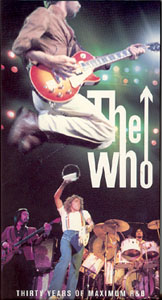
The Who? They called their versions of Motown songs they covered, “Maximum R&B”.

The Band? Started out playing rockabilly covers in honkey tonks all over the midwest.

James Brown? yup.

(Now, I get that these artists are all “old guy” bands, but I’m taking the approach that the verdict is still out on how much Arcade Fire, The National, Coldplay, etc. are going to change rock and roll. That being said, I know the Black Keys at least know blues really deeply, and I’ve heard at least a couple covers from them.)

Now,I get what Seth is saying: you really do need to find your own unique voice. But here’s the deal: all these artists who later changed the world were cover artists for a significant and formative time in their career.

So what’s the point? Well, I’m not just being contrarian. Being in a cover band has its advantages, and in fact provides critical experience for working your craft.

Because when you’re in a cover band, you get to learn

You get to learn what makes a great song…

You get to learn how to work in a group with others…

You get to learn how to work a crowd…

What gear works in a bar, versus in your bedroom…

What outfit looks ridiculous on you…

Don’t get me wrong: aspiring to something great is absolutely critical and something to be encouraged.

But before you change the world you might want to be good at your craft. Lots of bands start out wanting to change the world, but their ambition greatly (and almost tragically) outstrips their ability.

So maybe you’re in a “cover band” right now…

… Maybe the organization you’re in isn’t as wildly creative as you’d like;

… Maybe the position you’re in isn’t the perfect fit;

… Maybe your platform isn’t in front of the “right people” yet.

If this is the case, than here’s what you do:

  • You get better. 
  • You dig in and learn. 
  • You figure out how to with others (particularly a drummer who doesn’t keep time well and a singer who doesn’t always sing on pitch).
  • You learn what “excellence” looks and feels (tastes and sounds?) like. 

Your “cover band moments” are not wasted. They can be the crucible, the workshop that helps you develop and hone your craft for the moment when the world comes calling, and needs you to give something to it.

… Now go practice.

=============================================

Basics

What he liked about his brother, he said, is that he made people become what they didn’t think they could become. He twisted something in their hearts. Gave them new places to go… His brother believed that the space for God was one of the last great frontiers: men and women could do all sorts of things but the real mystery would always lie in a different beyond.

(Colum McCann, Let the Great World Spin)

Just this: if we who follow Jesus would just set our hearts on helping people find the new places to go, the “different beyonds” in their lives, we would be doing some solid work in the world.

==================

If You Want to Be a Disciple, Learn to Dance

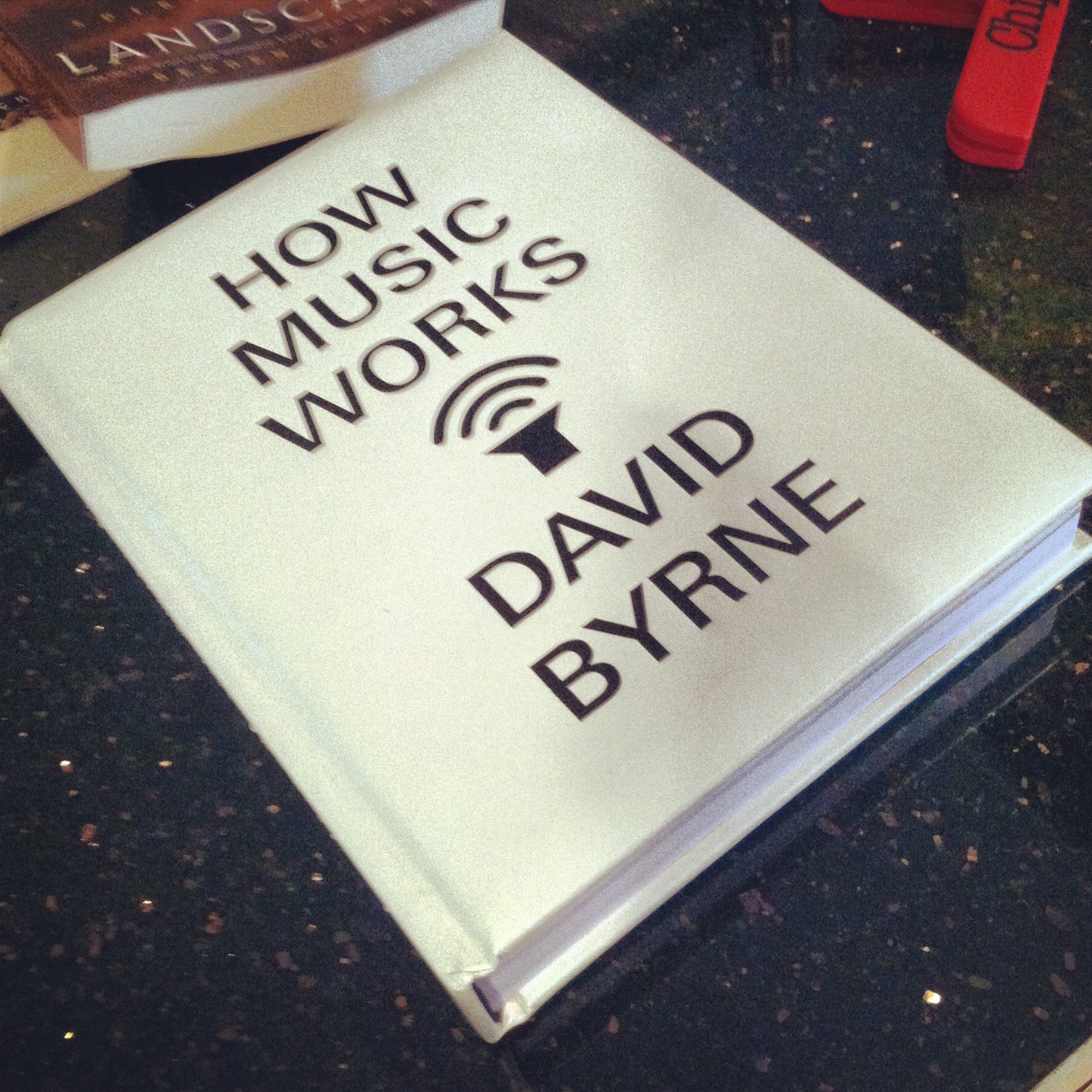
How Music Works

How Music Works

I’ve been so excited to get this book, and so far it’s been pretty rewarding. I’m actually not a huge David Byrne fan, but I just love people who pursue—and think and write about—creativity with few borders and labels. Byrne’s career has been awesome to watch, while he veered from New Wave and Alternative with the Talking Heads into some kind of Latin/dance explosion and then beyond.

Typical for me, I read something that struck me as related to spirituality. He describes preparing for a tour with a choreographer:

“Noémie began with an exercise I’ve never forgotten. It consisted of four simple rules:

  1. Improvise moving to the music and come up with an eight-count phrase. (In dance, a phrase is a series of moves that can be repeated.)
  2. When you find a phrase you like, loop (repeat) it.
  3. When you see someone else with a stronger phrase, copy it.
  4. When everyone is doing the same phrase the exercise is over.”

I think this is a great way to pursue a spiritual, Gospel-shaped life.

God sings this song; it’s a song of redemption and restoration. A song of absolute love and acceptance.

Music is meant for response. The best songs grab something inside of us.

For Believers, this Gospel-song is the highest form of musical expression we could hear.

All of us are called to this melody, this tune that has been sung through the ages.

But after responding, our job is not yet done.

Two things cause an exercise like what Byrne describes to fail:

  1. When you take no notice of anyone else’s dance.
  2. When you refuse to acknowledge the strength of someone else’s dance.

We do not do this dance alone. It’s not enough to celebrate our own response; we are knit together in these communities where others are responding, where we can notice and celebrate their responses as well as ours.

If we don’t notice other people’s response to the Gospel, it can become too easy to think that our dance is the best (only?) response to the Gospel-song.

We lose our perspective. Our dance is all we know, and we may be convinced that it is the only way to respond to the Song, but we also start to notice or suspect that something is not quite right: our sense of joy, or peace, or love seems lacking. Maybe we’ve noticed that it has become difficult to admit failure, or to ask for forgiveness from people we’ve hurt.

It’s times like these we need to maybe lift our heads and notice that others are dancing too.

They are dancing through consistent and fervent prayer; through passionate worship; through diligent study; through compassionate service; through committed community.

But even then job isn’t done, because we also have to be willing to—in the words of the exercise—notice the “strength” of someone else’s dance, and then submit to the strength of their dance. 

So often our ego gets in the way of our growth. We desire growth, but aren’t always willing to sacrifice our ideas of “how life works”—our dance—to someone else’s, even when we recognize the strength and success of that dance. 

As people of faith, we recognize that Jesus has the strongest dance of all, and we need to adopt his movement into our lives. But more immediately there are people in our midst who are responding and moving to the Gospel song, and we should readily recognize when their dance is stronger than ours, and then adopt it.

We think we know how to pray/worship/study/serve, but maybe we notice that someone else’s dance in this area is stronger than ours.

Are we willing to set aside our “dance”—the way we pray, or worship, or study, or serve—and adopt theirs? 

To admit that maybe we’re not as strong as we think we are in this area?

To say, “I want to know more. TEACH ME.” 

As we learn from each other, we respond to the Gospel Song in an organic dance of discipleship. It may not always be in unison, but it stems from the deep place of community. \

Who can you learn from this week?

… and now the multi-media portion… here’s some footage of David Byrne with some of the choreography…

… Here’s another track. Tacky fire suit, but great track; great energy.

… and lastly, classic Talking Heads

http://www.youtube.com/watch?v=I1wg1DNHbNU