Stop Worrying…

Atheist Bus Campaign , via Dan Etherington from London, UK

Atheist Bus Campaign , via Dan Etherington from London, UK

An atheist organization started this bus campaign in England.

Frankly, I’m not too hung up on arguing or “evangelizing” them (how can you make “good news” good to those who don’t want to hear it?!?)

For those of us who’d claim some faith, however, I’d recast their slogan this way:

There is a God, now stop worrying and get on with your life.

Though God’s ways are sometimes strange and difficult to understand, I am coming to believe that God’s love somehow overflows to us, for us.

Consider Moses’ words in Deuteronomy 30:

Now listen! Today I am giving you a choice between life and death, between prosperity and disaster. For I command you this day to love the LORD your God and to keep his commands, decrees, and regulations by walking in his ways. If you do this, you will live and multiply, and the LORD your God will bless you and the land you are about to enter and occupy.

But if your heart turns away and you refuse to listen, and if you are drawn away to serve and worship other gods, then I warn you now that you will certainly be destroyed. You will not live a long, good life in the land you are crossing the Jordan to occupy.

Today I have given you the choice between life and death, between blessings and curses. Now I call on heaven and earth to witness the choice you make. Oh, that you would choose life, so that you and your descendants might live! You can make this choice by loving the LORD your God, obeying him, and committing yourself firmly to him. This is the key to your life. And if you love and obey the LORD, you will long in the land the LORD swore to give your ancestors Abraham, Isaac, and Jacob.

All Wham! references aside, Moses seems to practically beg Israel to “get it right”… The tone in this passage is such that you get the feeling that God (through Moses) is just cheering on his people to make the right decisions so that they can have a life of fullness and peace. Even when Moses cautions the people, he doesnt’ say, “God will destroy you; he says you will be destroyed.

What does it mean that God is inclined towards us, cheering us on to obedience and life?

Tools for the New Year: Rails

The concept of a train is simple: wheels on rails. The rails constrain the wheels and prevent them from wandering, but they also give the wheels a smooth the path to travel. Unlike a car, a train can’t go

wherever it wants—it has to travel the path that the rails follow—but a train can trust the rails, and as long as they haven’t been destroyed or damaged, the rails will take the train where it needs to go.

A few days ago I wrote about how humility is the key to growth, and one further aspect of humility is admitting our need for “rails” in our lives.

If you’re anything like me, I’d prefer to think of myself as a free-ranging vehicle (a Jeep 4×4, especially): I can go anywhere and do anything I’d like, and I will continue to grow into the person that I need to be and that God wants me to be.

Nothing can be further from the truth.

After 40-something years on this earth, I am able to say with a fair amount of certainty that left to my own devices I will wander to and fro, and “growth” will remain far from the top of my “to do” list.

I don’t make such a good Jeep.

I need rails, things that keep me on track.

Maybe I make a better train.

Now, rails have other words too:

  • systems
  • routines
  • habits
  • disciplines
  • rules

These “rails”, as long as I follow them and choose to stay on them, tend to take me to the places I want to go spiritually. (To extend the metaphor just a bit, it’s important to remember that the point of a train is not to just “ride the rails”; trains go places; the destination is what’s important. When the rails become the point of everything, we’ve lost the point.) At first, they feel odd: constrain you; they cramp your “style”; they stretch you, and may challenge you to do things that aren’t in your “nature” (“Well, I’m not really a Bible reading person, ya know?!?!”). But, after a while, they don’t feel as odd or forced. You find yourself moving with them, anticipating their turns. You’re working with the rails now.

Specifically, here are some of the rails and “constraints” that I use:

  • a regular habit of focused prayer and mediation each morning
  • a discipline of regular Scripture reading and studying
  • a commitment to regularly (1-2 times a month) sit down with 1-2 older spiritual mentors and humbly submit to their leadership and suggestions (again with the humility)
  • a system of managing my time, projects and energy (I use both electronic and paper calendars, and a combination of OmniFocus and Apple’s Reminders)
  • a method of examining the overall direction and theme of my life

As some of these rails have become cemented into my character, I have had to rely on the externals a bit less, but the principles remain the same: I submit to the rails.

Because I have somewhere to go; a person to be; a redemptive movement to play a part in.

And I trust the rails to take me there.

Do you have any rails? What are they? Do you need to reevaluate any of them?

+e

The Key to Everything: Humility

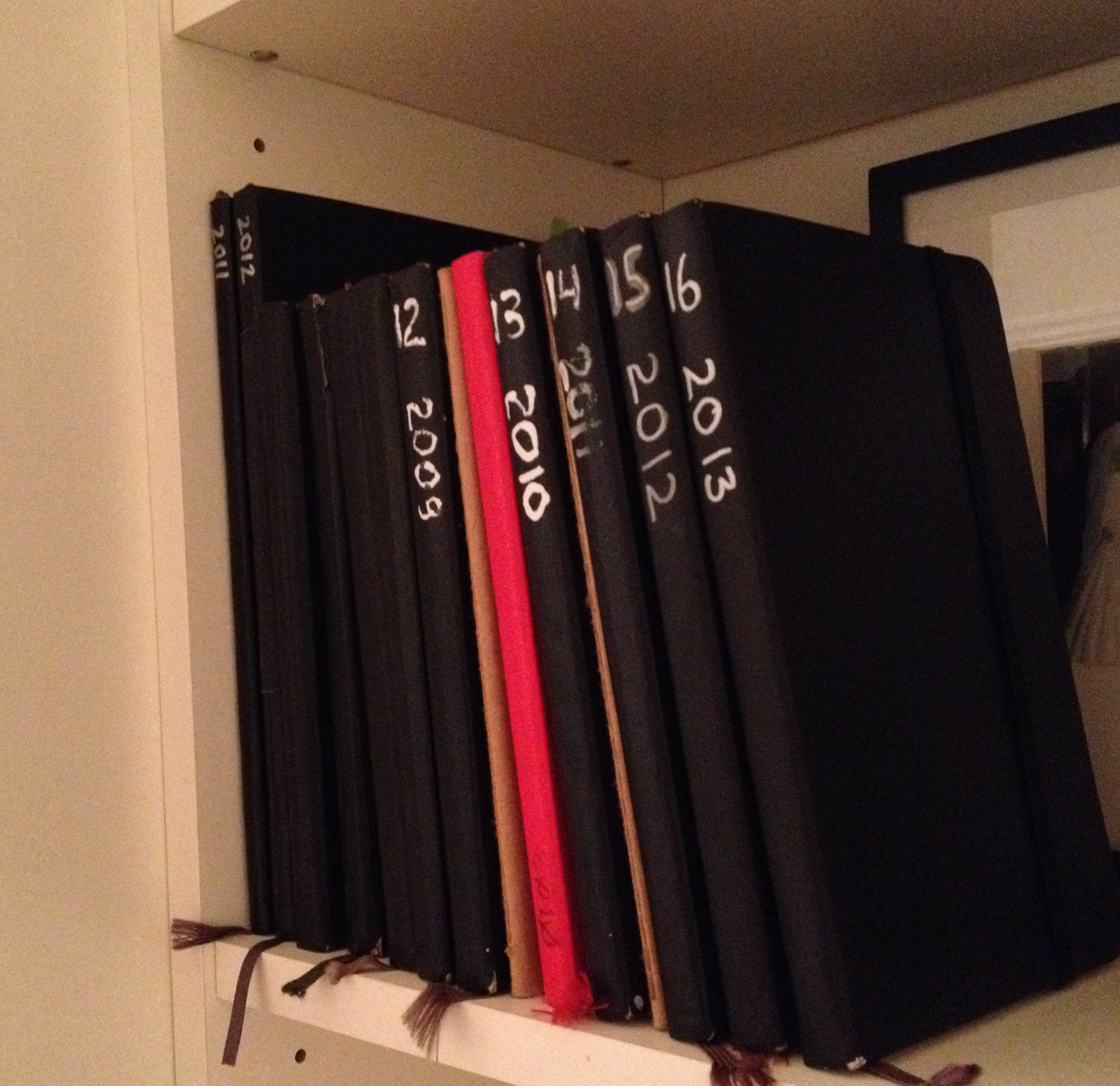
journalsYesterday, I took part in a panel discussion at church about “resetting” for the New Year. We talked about some of the rituals and systems we use to try and get ourselves for the New Year.

It was fun to talk about my journals and such, and some of my approach to this season of the year, but I was left wondering if anyone “got it”.

At one point I said from the stage, “If you don’t expect anything more out of 2014 than what you did in 2014, I’d challenge you to examine what you expect out of your faith.” 

Do people really believe in transformation?

Do you?

Do you believe you can change?

Do you believe you’re called to?

I think it actually boils down to some very basic beliefs, so let me ask you:

  • In John 4, Jesus says that he offers water that will become a spring of water that bubbles up (inside us) into eternal life…
  • In 1 Corinthians 2, Paul says that we have the mind of Christ…

Were they liars? 

Were they only talking to “super-Christians”? 

As one of my spiritual mentors says, “Either it is, or it isn’t.” 

So, if Jesus and Paul knew something about life; if they really meant what they said, then we are left to wrestle with their statements.

The burden is on us.

Question 1: Do you want to have the mind of Christ? to have a constant stream of living water inside you? 

Question 2: What are you prepared to surrender in order to gain it? 

This is the point where many of us get snagged, if for no reason than this: we have our lives, our systems of existence, and we don’t like to think that they maybe aren’t working. 

So where do we start?

We start with humility. We start with the admission that we actually don’t know what’s best for us. We declare as best we can, “I believe that there’s something more for me, but my life isn’t set up to obtain it. God help me.”

He wants to.

Someone asked a desert hermit once, “What is the way to make progress?” The hermit answered, “Humility. The more we bend ourselves to humility, the more we are lifted up to make progress.”

Humility declares, “I don’t know the way.”

Humility opens the door to learning. To growth. 

Humility says, “There must be more, and I am open to it.”

Humility says, “I cannot save myself.”

(By the way, humility is not merely self-deprecating or a way for us to belittle ourselves; it is a way to open ourselves up to growth and change. Feeling sorry for ourselves can actually merely be another way to be arrogant and self-centered. True humility is accompanied by a desire and willingness to change, to move, to reconsider.)

So, as 2013 begins, where are you with humility? Have you figured it all out, or are you still willing to acknowledge that you need to make more “progress”?

If you’re still learning, still growing, still changing, what are you doing to continue to learn and grow this year?

Grab Bag: Do Evangelicals Really Understand Judaism? Do Evangelicals Really Understand Jesus?

Recently I’ve gone back to reading a lot of Abraham Joshua Heschel. He’s written a few books that have had a fairly profound impact on me (and quite a few others, I’m sure), including The Sabbath, The Prophets, and God in Search of Man : A Philosophy of Judaism (which I’m reading now).

One of the things that I’m continuously struck with when I actually take the time to study Judaism (and not just what I’m told about Judaism) is how much more faith-oriented and devotional it actually is.

I grew up Methodist, but I started getting involved in more “evangelical” expressions of Christianity in my 20s, and that’s when I began to regularly hear about how Jesus came to rescue us all from captivity to the “Law,” and how Judaism (usually represented by the poor pharisees; taking the brunt of our jabs for centuries) was a religion of “works” that failed to understand what God REALLY wanted Somehow they’d missed all the writings in the prophets where, um, JEWS had reminded each other of what God really wanted, like in Isaiah 1:

13 Stop bringing worthless offerings.
Your incense repulses me.
New moon, sabbath, and the calling of an assembly—
I can’t stand wickedness with celebration!
14 I hate your new moons and your festivals.
They’ve become a burden that I’m tired of bearing.
15 When you extend your hands,
I’ll hide my eyes from you.
Even when you pray for a long time,
I won’t listen.
Your hands are stained with blood.
16     Wash! Be clean!
Remove your ugly deeds from my sight.
Put an end to such evil;
17     learn to do good.
Seek justice:
help the oppressed;
defend the orphan;
plead for the widow.

18 Come now, and let’s settle this,
says the Lord.
Though your sins are like scarlet,
they will be white as snow.
If they are red as crimson,
they will become like wool.

But somehow we made it all work out; Jesus came to set us free from “dead religion.”

But it’s funny, when you actually read what a lot of Jews say about their faith (that’s right, I used that word), the math begins to break down. (Even Paul’s view on the Law is not quite so monochromatic as what we might think, but that is perhaps for another post.)

For instance, read this from Heschel:

The world needs more than the secret holiness of individual inwardness. It needs more than sacred sentiments and good intentions. God asks for the heart because He needs the lives. It is by lives that the world will be redeemed, by lives that beat in concordance with God, by deeds that outbeat the finite charity of the human heart.

Does that sound like a “dead, works-based religion”?

Trust me: there’s lots more where that came from.

If I had to boil it down, I’d start perhaps with these statements:

  1. Judaism has many different strands to it; some are more focused on the Law than others.
  2. On the whole, Judaism is as Spirit-focused as Christianity; conversely, it’s possible to find some strands of Christianity that are as works/law-focused as our (incorrect) vision of Judaism.
  3. In essence, this is what Paul is condemning: He doesn’t condemn the Law, per se, he condemns trusting the Law for salvation.
  4. Jesus still came, lived, died and was raised to set us free from sin.
  5. A huge (and still woefully overlooked) implication of this is that the Gentiles (that’s me) could be included in the people of God.
  6. Which is the Church.

Should this shape the way we live? Absolutely. We should take the Law (which we really should understand as, “The Instruction“) seriously, not just as the prequel to Jesus.

Should this shape the way we understand Judaism? Yes. Though we still disagree in regards to who Jesus was/is (and this is no small thing), we are closer in our faith (there’s that word again) than perhaps we’d like to believe.

Should this shape the way we preach? Yes, yes, and yes. In my opinion, Christians—and Evangelicals in particular—are constantly inventing “enemies” to preach against. Whether it’s the law, the liberals, the conservatives, or the fundamentals, we seem to thrive on false enemies. We need to release the Law from our expectations, and try to understand it more from a wider perspective. Though we’d lose this “enemy” we may actually find ourselves free to pursue a more constructive agenda in the world (though one that requires much more work and creativity).

Spiritual Growth Isn’t Sexy

I like new things. Curiosity is pretty hard-wired into my being, and I like it; it drives me to new subjects, to new perspectives, to a broader understanding of God’s world.

But there’s a point at which “new” starts working against you, particularly in regards to growing.

Over my years of following God, I have dabbled in charismatic faith, liturgical faith, post-modern worship, and more recently centering prayer and Eastern Orthodoxy.

Some of these movements—the more ancient ones in particular—are particularly attractive to me because they seem so alien. They use a language that I’m unused to, and that wakes me up and draws me in. The way monks and Orthodox folks refer to the spiritual world is compelling to me, and I respond by buying books and beginning to experiment.

Historically, however, I get bored; after a time the newness wears off. The words don’t seem as fresh anymore.

This is when curiosity becomes a problem.

I’m learning lately to work through the “boredom”, to stop looking for new words and language and concepts, and to merely accept the forms that God has given me (and millions of others) to find Him.

It’s really not that exciting, in the end. Words can’t stay new forever. Eventually you have to get to the thing-behind-the-words. That’s the thing that really matters.

Don’t get me wrong: Manning, Merton, Keating, John of the Cross can certainly turn a phrase. I will always appreciate that part of their gifting.

But the hard lesson I’m learning is that even when the phrases have been emptied of their “magic”, even when they are less poetic and more pragmatic, I still have to grow.

Ultimately, it’s not the poetry that makes me grow. It’s the Spirit behind the poetry that is the real thing.

What about you? Anyone else out there struggle with always pursuing the new? What have you sought out?

Professional Faith 2: Have a Plan

I thought I might unpack what a “Professional” Faith might look like in everyday terms.

There are so many options out there, but there are some things that I’ve tried and/or heard about, so maybe they’ll help you get started if you want to get serious about doing the work of becoming a “Gospel Artist” (i.e., partnering with God to create a gospel-shaped life).

NOTE: I believe in the power of a positive secret, so I won’t share exactly what my daily practices are, but if you want to know, contact me directly and I’ll walk you through them. Otherwise, I’ll speak in general terms here and give some resources that have worked for me in the past, some of which I still engage with.

 FIRST A WORD ABOUT TIME…

Martin Luther said somewhere that he was so busy he simply HAD to devote 2-3 hours of every day to prayer.

I think it’s pretty obvious that most of us don’t think that way…

It seems to me that we allow busy-ness to take over, to give it the priority.

To put it succinctly, this puts first things second and second things first. A professional knows his priorities. I was looking through a “productivity system” that was designed by a writer, and at the bottom of every day of his calendar was a place where you write your “Life’s Theme”—the spine that your life is wrapped around. It’s so you constantly know what the most important thing in life really is. A professional faith knows owns up to the fact that the most important creative work we have is the one that produces the gospel-shaped life that God is calling us to produce.

For me that doesn’t just take time; it takes the first, significant portion of my best time.

For myself, I’ve found that I need somewhere between 30 and 70 minutes of focused spiritual time in the morning to maintain my sanity for the day.

I honestly don’t know if that sounds like a lot or a little; to me it’s just what is required.

As I got serious about being professional, I realized that I had these daily needs for the things that the spiritual life offers me—I constantly craved more peace, more humility, more sanity, more love—but that I seldom owned up to my part of the equation. I really just expected that God would swoop in like Superman and magically make my heart more peaceful. The time I offered him was in fits and starts: I’d say prayers in crisis, or a hurried line or two as I sat in traffic, or on my lunch break.

That’s like a professional writer expecting to write a brilliant novel by writing for 4 minutes every morning and then in 30 second spurts throughout the day: it may get done in 40 years, but it may have little consistency and excellence. Furthermore, when you consider how quickly the novel could have been written had the writer just sat down and done the work consistently and faithfully, it seems a bit tragic.

Poet Sylvia Plath used to wake up at 4:30 every morning to write because that’s when she could get her work done. Writer Haruki Murakami wakes up at 4am to get in five or six hours’ worth of work. When I was writing for Maida Vale, I’d wake up at 5:30 to do my songwriting exercises before the kids stirred for school.

An artist’s commitment to his or her work drives her time.

We have to really decide how important this God—and this life He offers us—really is, and then adjust our schedules accordingly. You’ll be amazed at the change you can feel when you can stretch out and REST a bit.

NOW A WORD ABOUT TOOLS…

After we manage to get our time sorted out, the bigger question remains: what do we do with it? This, in itself, is daunting because of the sheer number of options available: devotions, prayers, books, music, etc. The Bible itself is 66 books and a thousand pages of stories, prayers, instructions, letters.

Where do you start?

As I said, without necessarily telling you exactly what I do, I’ll just throw out some examples of what I’ve DONE in my journal towards becoming a professional. These are simple tools that the church has historically used. They are the “hammer and nails” of building a spiritual life—they may not be sexy, but they’ve been proven to work over time.

BIBLE

In so many ways, it all starts with scripture. Our spiritual life is one of RESPONDING to God, and in so many ways God’s first word to us comes through scripture. But where and how to begin with such an overwhelming book? In a way, the worst thing we can do is to sit down with this Book (or rather, these books) and simply start reading. There are a few options.

1. A reading plan. If you’ve never read “the whole story”, I’d say start here. Read the whole thing, preferably in chronological order so that you get a sense of storylines and history. I try to do this every 5 years or so, just to remind myself of how grand God’s work is.

2. One book at a time, one question at a time. This was one of the key pieces of advice I heard from a theologian. Anything else can lead to (a) being overwhelmed or (b) getting crazy answers from the text. So consider what questions you have of God and the Bible (“Who was Jesus?” “What does Paul have to say about living in community?” “How did the first followers of Jesus behave?”). Then pick a book and start reading with those questions in mind. Honestly, sometimes you won’t get an answer, but at least the processs is manageable.

3. Lectio Divina. This “Divine Reading” is a method of approaching scripture that the church developed over time. It’s a way of closely listening to the scriptures that can speak to your heart in a highly personal, intimate way. It involves using small chunks of scripture, reading slowly, and imagining yourself in the story. You can find additional resources on lectio here, or contact me for more info.

PRAYER

For me, prayer is the thing. It is the mechanism for communion and fellowship with the Father. There are tons of different ways to pray, but here are just two resources to get you started:

1. Common Prayer. This is the prayer that liturgical churches pray every day. You can find it online here, and there’s also an app. What I love about Common Prayer is that structures your prayer time with scripture and some prayers that have been written and tested, while leaving time for our own prayers and words during intercession. One thing that can be difficult about using this resource is that it’s meant to be done in community; when I use it I just read everything out loud. Many of us are predisposed to think that “reading prayers” is somehow less spiritual, but I actually find it very useful. I just direct my thoughts and words towards God as I read, and this has turned into a strong backbone for my morning time with God for a long time.

2. The Lord’s Prayer. I’ve mentioned this before, but one way to start structuring your prayer life is to use the prayer that Jesus taught his disciples to pray. The trick is to savor the words and to speak them slowly with meaning, occasionally “unpacking” a word or phrase as you pray. In truth this prayer could make up the whole of your prayer time in the morning, but it’s up to you how thoroughly you use it.
The point of all this is to have some kind of plan, to shrink the change that you’re trying to undergo. You don’t have to use these tools exactly, but as we begin to embrace a professional faith the point is to help ourselves with structure and tools.

Next up: Make It Easy.

Coming Down the Mountain

“Mountaintop spiritualilty has perhaps been one of the most destructive things in my spiritual life.”

The words were really out before I had a thought about them. They emerged in a morning devotion with a group of people high up (ironically) in the Guatemalan hills, at a morning devotion time before we went out to build houses.

For me, it was a typically melodramatic overstatement, but in this case it was also pretty true.

Everest North Face toward Base Camp Tibet Luca Galuzzi 2006 (via Creative Commons)

Everest North Face toward Base Camp Tibet Luca Galuzzi 2006 (via Creative Commons)

I am certainly no mountain climber, but I’d spent a season reading and learning a lot about climbing Mount Everest through books like Jon Krakauer’s Into Thin Air and a Discover Channel series called, “Beyond the Limit”, about a professional guide at Everest who helped people with their final ascent.

It is an absolutely brutal and a very real you-can-really-die-in-an-instance type of experience. The altitude and brutal conditions take a horrendous toll on your body, making taking even ONE step an excruciating experience. Some people end up being able to put one foot in front of the other about once every thirty minutes. In the last couple of ascents (it takes many days to get from “base camp” at Everest up to the top), the oxygen is so thin that your body is literally incapable of getting enough nourishment, so it begins to essentially “eat itself.” The caloric requirement is so huge, that your body goes into hunger mode, and starts devouring muscle protein in order to survive.

Every move, every stop must be highly scheduled and coordinated or you will literally die on the mountain (many bodies are left frozen on the mountain; you can see them as you climb).

All for thirty minutes.

Due to oxygen requirements (and the schedule that keeps you alive), you can only spend about 30 minutes at the top of Everest.

Now, that thirty minutes may be wonderful; the experience is absolutely magical and unmatched; the time there may even be transformative; but it does not last.

You have to descend.

THAT, essentially, is how I lived my spiritual life for decades: a quest to get from “mountaintop” to “mountaintop”, fixing on spiritual highs like a drug. I would climb the mountain, dwell in the heights for a time, and descend like Moses, full of optimism and reflecting the Glory of God.

But it always faded. It always does.

And so I’d climb again.

And again.

And again.

Is this what Jesus meant by a stream of living water, welling up inside me to eternal life?

This didn’t feel like abundant life to me; it felt like experience addiction.

Lately I have decided to “come down the mountain”, and approach my spiritual life with a different metaphor.

Sinai Desert, via Creative Commons

Sinai Desert, via Creative Commons

The desert is not like the mountain. Where the mountain apexes into a specific peak, the desert drones on and on in a sort of monotony. There is a definite sameness to the landscape (though it’s certainly no less dangerous than climbing; the desert can just as easily kill you with thirst or a rattlesnake).

The desert leaves you alone with yourself. It forces you to face our most difficult challenge: OURSELVES.

On the surface, the desert is the same, day after day, but if you look more closely and have eyes to see and ears to hear, you can encounter amazing life and variety.

But it’s not easy.

You have to be attentive.

You have to watch and listen.

You have to be silent.

For me, this is the way I have to live in order to stay sane in this world. Mountaintop spirituality was simply turning me into a “religion junky”, and the fix NEVER seemed to hang around long enough. The desert, on the other hand, is a consistent, day-to-day walk that continually forces me to find beauty in the apparent normalcy of my life. It makes me work out my salvation in a very consistent, low key manner.

I don’t think it’s any accident that after the “light show” of Mount Sinai took place in the midst of Israel’s long desert experience. It’s as if God wanted to emphasize the fact that the occasional mountain may show up (though you may not even get to ascend; you may just get to watch Moses walk up), MOST—if not ALL—of your life is going to be spent walking through the desert. You have to get the desert right in order to keep the mountain in perspective.

Keep on walking.
+e
Perry and Jane’s gets it… (WARNING: If you know Jane’s Addiction, you know that this video is probably, well, CRAZY, and even a bit NSFW)

Why I am Still a “Seeker”

(I promise the “Jesus” series will start soon!)

My faith became vital and alive to me in the late 1990s. At the time, it was fashionable to label people who were spiritually curious as “seekers”. The church that I was at (and eventually worked at) was actually known nation-wide as a pioneer in the “seeker-movement”, meaning it designed its weekend worship experiences for this particular demographic of people.

Years later, you can still find churches who use these labels to describe themselves:

… “seeker-friendly”

… “seeker-driven”

… “seeker-sensitive”.

Whatever you may think about the “seeker movement”, it was helpful for at least a season.

Lately, however, I’ve begun to think about the term differently. When we first started using the term in the late 90s, the unspoken implication was that eventually you would go from being a “seeker” to being a “finder”. Eventually your search would be over.

You would be “home.”

But I wonder if that’s truly accurate.

To seek something is to be actively pursuing it; to look for it; to crave it. To find something means to cease looking; to rest; to sit.

For better or worse, this has NOT been my story. My story (at least) has been characterized by an active pursuit of not just salvation but LIFE CHANGE (two fancy, spiritual words would be “sanctification” or—my personal preference—”theosis”).

The end of my “seeking” only triggered another phase of seeking.

In the eastern religions (in my primitive understanding of them) the notion of a “seeker” carries with it the idea of being a spiritual master. For many other faiths, “seekers” were those who remained pre-occupied with deeper and deeper levels of spirituality. They were contrasted with people who were merely content to dabble.

When did we turn “seeking” into something that was done before you were certain about your faith?

Why couldn’t our spiritual “arrival” to Christianity trigger an even greater level of seeking?

This is what I am pursuing.

I am not content.

My master (his name is Jesus) is still moving. So I have to keep on moving too. I have to keep seeking and following.

Do you have a seeker service for me?

Under the mercy…

====================================

If You Want to Be a Disciple, Learn to Dance

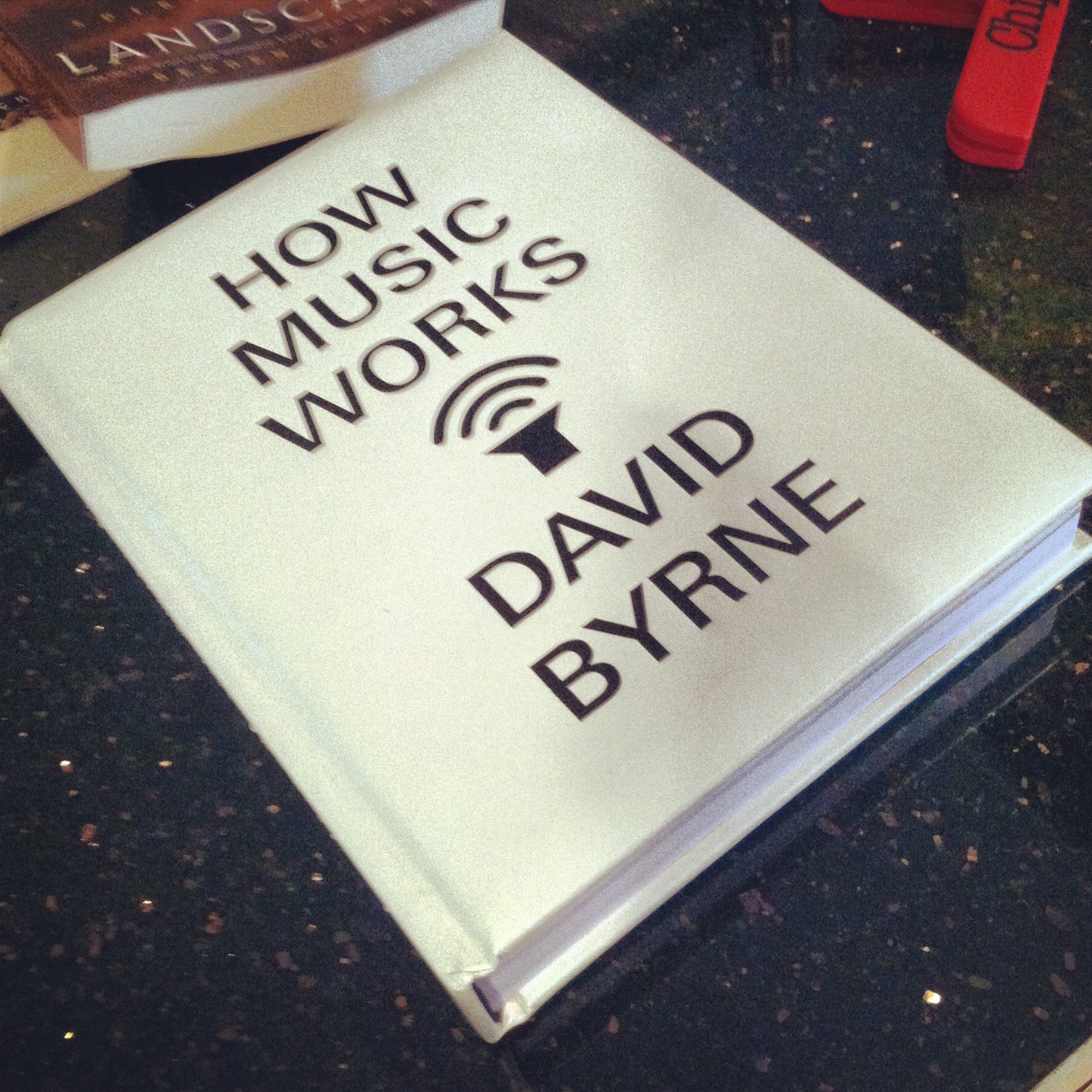
How Music Works

How Music Works

I’ve been so excited to get this book, and so far it’s been pretty rewarding. I’m actually not a huge David Byrne fan, but I just love people who pursue—and think and write about—creativity with few borders and labels. Byrne’s career has been awesome to watch, while he veered from New Wave and Alternative with the Talking Heads into some kind of Latin/dance explosion and then beyond.

Typical for me, I read something that struck me as related to spirituality. He describes preparing for a tour with a choreographer:

“Noémie began with an exercise I’ve never forgotten. It consisted of four simple rules:

  1. Improvise moving to the music and come up with an eight-count phrase. (In dance, a phrase is a series of moves that can be repeated.)
  2. When you find a phrase you like, loop (repeat) it.
  3. When you see someone else with a stronger phrase, copy it.
  4. When everyone is doing the same phrase the exercise is over.”

I think this is a great way to pursue a spiritual, Gospel-shaped life.

God sings this song; it’s a song of redemption and restoration. A song of absolute love and acceptance.

Music is meant for response. The best songs grab something inside of us.

For Believers, this Gospel-song is the highest form of musical expression we could hear.

All of us are called to this melody, this tune that has been sung through the ages.

But after responding, our job is not yet done.

Two things cause an exercise like what Byrne describes to fail:

  1. When you take no notice of anyone else’s dance.
  2. When you refuse to acknowledge the strength of someone else’s dance.

We do not do this dance alone. It’s not enough to celebrate our own response; we are knit together in these communities where others are responding, where we can notice and celebrate their responses as well as ours.

If we don’t notice other people’s response to the Gospel, it can become too easy to think that our dance is the best (only?) response to the Gospel-song.

We lose our perspective. Our dance is all we know, and we may be convinced that it is the only way to respond to the Song, but we also start to notice or suspect that something is not quite right: our sense of joy, or peace, or love seems lacking. Maybe we’ve noticed that it has become difficult to admit failure, or to ask for forgiveness from people we’ve hurt.

It’s times like these we need to maybe lift our heads and notice that others are dancing too.

They are dancing through consistent and fervent prayer; through passionate worship; through diligent study; through compassionate service; through committed community.

But even then job isn’t done, because we also have to be willing to—in the words of the exercise—notice the “strength” of someone else’s dance, and then submit to the strength of their dance. 

So often our ego gets in the way of our growth. We desire growth, but aren’t always willing to sacrifice our ideas of “how life works”—our dance—to someone else’s, even when we recognize the strength and success of that dance. 

As people of faith, we recognize that Jesus has the strongest dance of all, and we need to adopt his movement into our lives. But more immediately there are people in our midst who are responding and moving to the Gospel song, and we should readily recognize when their dance is stronger than ours, and then adopt it.

We think we know how to pray/worship/study/serve, but maybe we notice that someone else’s dance in this area is stronger than ours.

Are we willing to set aside our “dance”—the way we pray, or worship, or study, or serve—and adopt theirs? 

To admit that maybe we’re not as strong as we think we are in this area?

To say, “I want to know more. TEACH ME.” 

As we learn from each other, we respond to the Gospel Song in an organic dance of discipleship. It may not always be in unison, but it stems from the deep place of community. \

Who can you learn from this week?

… and now the multi-media portion… here’s some footage of David Byrne with some of the choreography…

… Here’s another track. Tacky fire suit, but great track; great energy.

… and lastly, classic Talking Heads


Faith Not in the Prayer, but in the One Behind It.

The issue of prayer is not prayer. The issue of prayer is God. (Rabbi Abraham J. Heschel)

I read that this morning…

That’s a heavy way to start the day.

How much do the words we speak (or sing, for that matter) reveal our true beliefs about God?

I think more than we realize.

Or how about this: how much do the words we avoid speaking reveal our true beliefs about God?

Same.

My wife and I are constantly debating this, but when I read the Bible—and especially the Old Testament—I see people boldly praying to God, even to the point of arguing and bartering with Him. At the very least, they aren’t afraid to be honest. Some of my favorite “honest” prayers are recorded in the Psalms, like this one:

O God, do not be silent!
Do not be deaf.
Do not be quiet, O God.
Don’t you hear the uproar of your enemies? (Psalm 83:1-2)

This is a gentle one, but Asaph isn’t afraid to basically tell God to wake up and see what’s going on.

At first glance, we tend to think that these words are more pious than they appear to be; that Asaph is calmly reciting words that don’t really mean what we think they mean.

But then we read some of Jesus’ words on prayer:

‘There was a judge in a certain city,’ he said, ‘who neither feared God nor cared about people. A widow of that city came to him repeatedly, saying, “Give me justice in this dispute with my enemy.” The judge ignored her for a while, but finally he said to himself, “I don’t fear God or care about people, but this woman is driving me crazy. I’m going to see that she gets justice, because she is wearing me out with her constant requests!”

Wow.

Jesus said that.

The implication is that we are free to be honest, passionate, and even a little bit brash in our prayers.

Where does this passion come from?

  1. belief in our cause
  2. belief in the character of the judge

Jesus goes on to ask that if this judge—who was lacking in love and justice—could eventually respond to this woman, how much more would God respond to us? 

Returning to Psalm 83, it’s easy to see the tension we live in. Though we might be afraid that God is being silent, or not hearing, or even somehow unaware of our situation, we don’t need to be afraid of His character that invites us to persevere in coming to Him.

The upside-down logic in this is that if I stop asking someone to act on something that is important to me, it’s because

  • I no longer believe that it’s important
  • I no longer believe that the person cares
  • I no longer believe that person is capable of acting on my behalf

Wow.

When you think about it this way, the brash honesty of Asaph, or Abraham, or Jesus is actually a radical statement of faith in the capacity of God to care for His children (not to mention His graciousness to allow them to come in honesty and freedom).

Are there areas in your life where you have “stopped knocking”? 


======================================