Eugene Peterson on Spiritual Direction

For a season now, I’ve been pursuing a spiritual direction, and trying to be a better “director” of people’s souls myself.

I was recently going through Peterson’s Working the Angles: The Shape of Pastoral Integritywhich has shaped me as a pastor as much as any other book I’ve ever read—with a friend, and re-read what he has to say about giving spiritual direction.

(Incidentally, I think that “spiritual direction”—or mentoring, or whatever you’d call personal, spiritual influence—is one of the most desperately needed activities in our culture. I think much of 21st century North American culture has no need for a bigger, better, faster worship gathering. We need a more sober, consistent spiritual direction and discipleship for God’s people).

So here’s what Peterson says:

  1. Cultivate an attitude of awe with and for every person you meet with. Every meeting is a privilege, and an opportunity to see God work.
  2. Cultivate an attitude of ignorance. We can make assumptions about peoples’ motives and feelings. Most of the time they are wrong. We do better to assume nothing and ask questions. (This is something I’m trying desperately to grow in.)
  3. Cultivate a predisposition to prayer. Prayer is the furnace, and oftentimes what people really want from us is to learn to run the furnace for themselves. They don’t want our advice; they want to learn how encounter God for themselves.

Professional Faith 2: Have a Plan

I thought I might unpack what a “Professional” Faith might look like in everyday terms.

There are so many options out there, but there are some things that I’ve tried and/or heard about, so maybe they’ll help you get started if you want to get serious about doing the work of becoming a “Gospel Artist” (i.e., partnering with God to create a gospel-shaped life).

NOTE: I believe in the power of a positive secret, so I won’t share exactly what my daily practices are, but if you want to know, contact me directly and I’ll walk you through them. Otherwise, I’ll speak in general terms here and give some resources that have worked for me in the past, some of which I still engage with.

 FIRST A WORD ABOUT TIME…

Martin Luther said somewhere that he was so busy he simply HAD to devote 2-3 hours of every day to prayer.

I think it’s pretty obvious that most of us don’t think that way…

It seems to me that we allow busy-ness to take over, to give it the priority.

To put it succinctly, this puts first things second and second things first. A professional knows his priorities. I was looking through a “productivity system” that was designed by a writer, and at the bottom of every day of his calendar was a place where you write your “Life’s Theme”—the spine that your life is wrapped around. It’s so you constantly know what the most important thing in life really is. A professional faith knows owns up to the fact that the most important creative work we have is the one that produces the gospel-shaped life that God is calling us to produce.

For me that doesn’t just take time; it takes the first, significant portion of my best time.

For myself, I’ve found that I need somewhere between 30 and 70 minutes of focused spiritual time in the morning to maintain my sanity for the day.

I honestly don’t know if that sounds like a lot or a little; to me it’s just what is required.

As I got serious about being professional, I realized that I had these daily needs for the things that the spiritual life offers me—I constantly craved more peace, more humility, more sanity, more love—but that I seldom owned up to my part of the equation. I really just expected that God would swoop in like Superman and magically make my heart more peaceful. The time I offered him was in fits and starts: I’d say prayers in crisis, or a hurried line or two as I sat in traffic, or on my lunch break.

That’s like a professional writer expecting to write a brilliant novel by writing for 4 minutes every morning and then in 30 second spurts throughout the day: it may get done in 40 years, but it may have little consistency and excellence. Furthermore, when you consider how quickly the novel could have been written had the writer just sat down and done the work consistently and faithfully, it seems a bit tragic.

Poet Sylvia Plath used to wake up at 4:30 every morning to write because that’s when she could get her work done. Writer Haruki Murakami wakes up at 4am to get in five or six hours’ worth of work. When I was writing for Maida Vale, I’d wake up at 5:30 to do my songwriting exercises before the kids stirred for school.

An artist’s commitment to his or her work drives her time.

We have to really decide how important this God—and this life He offers us—really is, and then adjust our schedules accordingly. You’ll be amazed at the change you can feel when you can stretch out and REST a bit.

NOW A WORD ABOUT TOOLS…

After we manage to get our time sorted out, the bigger question remains: what do we do with it? This, in itself, is daunting because of the sheer number of options available: devotions, prayers, books, music, etc. The Bible itself is 66 books and a thousand pages of stories, prayers, instructions, letters.

Where do you start?

As I said, without necessarily telling you exactly what I do, I’ll just throw out some examples of what I’ve DONE in my journal towards becoming a professional. These are simple tools that the church has historically used. They are the “hammer and nails” of building a spiritual life—they may not be sexy, but they’ve been proven to work over time.

BIBLE

In so many ways, it all starts with scripture. Our spiritual life is one of RESPONDING to God, and in so many ways God’s first word to us comes through scripture. But where and how to begin with such an overwhelming book? In a way, the worst thing we can do is to sit down with this Book (or rather, these books) and simply start reading. There are a few options.

1. A reading plan. If you’ve never read “the whole story”, I’d say start here. Read the whole thing, preferably in chronological order so that you get a sense of storylines and history. I try to do this every 5 years or so, just to remind myself of how grand God’s work is.

2. One book at a time, one question at a time. This was one of the key pieces of advice I heard from a theologian. Anything else can lead to (a) being overwhelmed or (b) getting crazy answers from the text. So consider what questions you have of God and the Bible (“Who was Jesus?” “What does Paul have to say about living in community?” “How did the first followers of Jesus behave?”). Then pick a book and start reading with those questions in mind. Honestly, sometimes you won’t get an answer, but at least the processs is manageable.

3. Lectio Divina. This “Divine Reading” is a method of approaching scripture that the church developed over time. It’s a way of closely listening to the scriptures that can speak to your heart in a highly personal, intimate way. It involves using small chunks of scripture, reading slowly, and imagining yourself in the story. You can find additional resources on lectio here, or contact me for more info.

PRAYER

For me, prayer is the thing. It is the mechanism for communion and fellowship with the Father. There are tons of different ways to pray, but here are just two resources to get you started:

1. Common Prayer. This is the prayer that liturgical churches pray every day. You can find it online here, and there’s also an app. What I love about Common Prayer is that structures your prayer time with scripture and some prayers that have been written and tested, while leaving time for our own prayers and words during intercession. One thing that can be difficult about using this resource is that it’s meant to be done in community; when I use it I just read everything out loud. Many of us are predisposed to think that “reading prayers” is somehow less spiritual, but I actually find it very useful. I just direct my thoughts and words towards God as I read, and this has turned into a strong backbone for my morning time with God for a long time.

2. The Lord’s Prayer. I’ve mentioned this before, but one way to start structuring your prayer life is to use the prayer that Jesus taught his disciples to pray. The trick is to savor the words and to speak them slowly with meaning, occasionally “unpacking” a word or phrase as you pray. In truth this prayer could make up the whole of your prayer time in the morning, but it’s up to you how thoroughly you use it.
The point of all this is to have some kind of plan, to shrink the change that you’re trying to undergo. You don’t have to use these tools exactly, but as we begin to embrace a professional faith the point is to help ourselves with structure and tools.

Next up: Make It Easy.
Professional Christian Redux

I’ve written before about becoming a “Professional Christian.” To reiterate, most people think that a “professional” refers to someone who is remote, and only committed to something—a business, a movement, a faith—because of what they can get out of it, particularly monetarily speaking.

A lot of folks think that a professional is defined only by the payoff.

However, as great writers and thinkers like Seth Godin and Stephen Pressfield point out, a true professional isn’t defined by the payoff she might get; rather a professional is defined by their commitment to their craft.

A professional isn’t governed by their feelings; they show up, day after day, to do the work that they’ve been called to do. They stay in it when things get difficult, and they don’t deviate until the job is done, the book is produced, the art is finished.

A professional is faithful.

Doesn’t that sound like a disciple?

As part of my job, I spend time with a variety of different people. I’ve recently been hanging out with a nineteen year old guy who is pretty talented at a variety of different things—music, programming, sports, etc.—but who is having a difficult time focusing his efforts.

His life lacks a little momentum.

We started going through (of all things) Stephen Covey’s Seven Habits of Highly Effective People. I told him, “We’ll mutually agree on reading chapters. If you show up and you haven’t done the reading, you have to buy me lunch. Otherwise, I’ll pay.”

(So far, he’s doing fine.)

Two weeks in, however, he set aside his book and told me, “Hey, I need to talk to you; I’m kind of struggling spiritually… I’m just not ‘feeling it.'”

We talked about all of the things that could be behind this situation, but essentially it boiled down to the fact that he simply wasn’t “showing up.”

His spirituality was governed by how he felt, rather than his commitment to putting himself in front of God (and to putting God in front of himself) frequently and consistently enough to allow God to grow and mature his faith.

This, my friends, is what “amateur spirituality” looks like.

It’s governed by emotionalism, by whether or not we “feel like” praying, worshiping, meditating, serving, etc., etc.

The long-term results are a shallow, lukewarm faith, and ultimately apathy.

Rather, I think we need to learn to cultivate a spirituality that shows up, day after day to do our part in allowing God to form His Spirit in us. It’s not easy; it’s not automatic; it’s not quick.

But professionals don’t care about any of those things.

Professionals are committed to the long-term “win”.

They’re committed to the project.

To the art.

To the vision.

Here’s the thing: God wants you to grow. He intends for you to become Christ-like.

This is no far-fetched, strange notion; it’s actually the entire point of our existence. IF we take seriously the fact that God created us as icons—images—of Himself (Genesis 1v27); if Jesus really meant that we are supposed to “greater things” than he did (John 14v12); if we really are meant to grow up into the fullness of Christ (Ephesians 3v19), then we have to take seriously the idea that we have work to do (even as God does His work in us).

So why not commit to it, as a professional?

How can you become more “professional” in your spiritual life? In what ways do you need to simply start showing up, day-in and day-out?

+e

Footsteps :: Intro

I was talking with some folks the other day about Jesus, and I had a curious thought: if we are Jesus’ disciples, what exactly are we supposed to do

At our most pure state, it seems that we are supposed to be Jesus’ disciples. In Mark’s gospel, Jesus makes it (almost troublingly) clear that being a disciple means doing what he did.

In Mark chapter 6, we’re told that Jesus called the Twelve, and subsequently, “sent them out in pairs. He gave them authority over unclean spirits… So they went out and proclaimed that people should change their hearts and lives. They cast out many demons, and they anointed many sick people with olive oil and healed them” (vv7, 13).

The curious thing about this statement is that the things that Jesus sends the disciples out to do are the very things that he has been doing in Mark’s gospel. In Jesus’ mind, there’s no difference between the things that he does and his expectations for the Twelve.

This is pretty amazing when you think about their track record at this point. Rather than being the star pupils, at this point in the story of God the disciples are a little bit more like the odd kid in the back of the class who may or may not have been eating paste. They’re not exactly hitting it out of the park…

… And yet Jesus does not hesitate to send them out to…

  • have authority over unclean spirits
  • proclaim repentance
  • cast out demons
  • heal people.

The profound implication for this story is simply this:

Being a disciple of Jesus means doing the things that he does…

Whether or not you think you’re good enough… 

These things constitute the short list of what Jesus expects us to do.

But then I got to thinking: what else did Jesus do? Maybe he expects us to do those things too.

So I took a brief survey of the gospels and just tried to look at the things that Jesus did. Some things he did in order to serve people; some thing he did in order to stay connected with his Father.

Over the next few weeks, I’m hoping to lay out some of those things, and see what we can learn from the way our master arranged his life.

Oh THAT Kingdom….

Some manuscripts contain a postscript to Matthew’s version of the Lord’s Prayer. It reads:

“For Yours is the kingdom, power, and the glory forever. Amen.”

When I pray the Lord’s prayer, I often think about God’s strength and power, and how He is Lord of all the kingdoms on earth, and has unending power. However, recently I stumbled across an interesting passage in the Old Testament that prompted my thinking. In 1 Chronicles, King David is telling everyone that his son Solomon is going to build a temple for God. He ends with this pretty cool prayer that has some interesting echoes:

“Blessed are you LORD, God of our ancestor Israel, forever and always.
To you, LORD,
belong greatness and power, honor, splendor, and majesty,
because everything in heaven and on earth belongs to you.
Yours, LORD, is the kingship, and you are honored as head of all.
You are the source of wealth and honor,
and you rule over all.
In your hand are strength and might,
and it is in your power to magnify and strengthen all.” (1Chronicles 29:10-12)

Do you see the similarities? It’s interesting language that Jesus chooses here.

However, what really jumped out to me as I read the 1 Chronicles passage is the specific location and occasion of God’s power.

When David pray, “the kingship belongs to you”, it’s a very specific thing. God was meant to be, in a very real way, Israel’s king. (When the people demand a king in 1 Samuel chapter 8, God basically says, “You are rejecting me in favor of a human king.”)

So David has a very specific place/kingdom that he’s thinking of when he prays this prayer—it’s the place where God rules, and is meant to rule.

What struck me is the way in which we have a kingdom as well. In a very real way, we are the kings and queens of our bodies, our lives. They are our kingdom; we choose, make decisions; make rules for ourselves.

What if to pray, “yours is the kingdom” means “yours is THIS kingdom—this life?”

What if this epilogue to the Lord’s prayer is actually the most radical part of all? To utterly surrender our kingdom—our lives—to God and allow Him to take the throne?

*e

===================================

If You Want to Be a Disciple, Learn to Dance

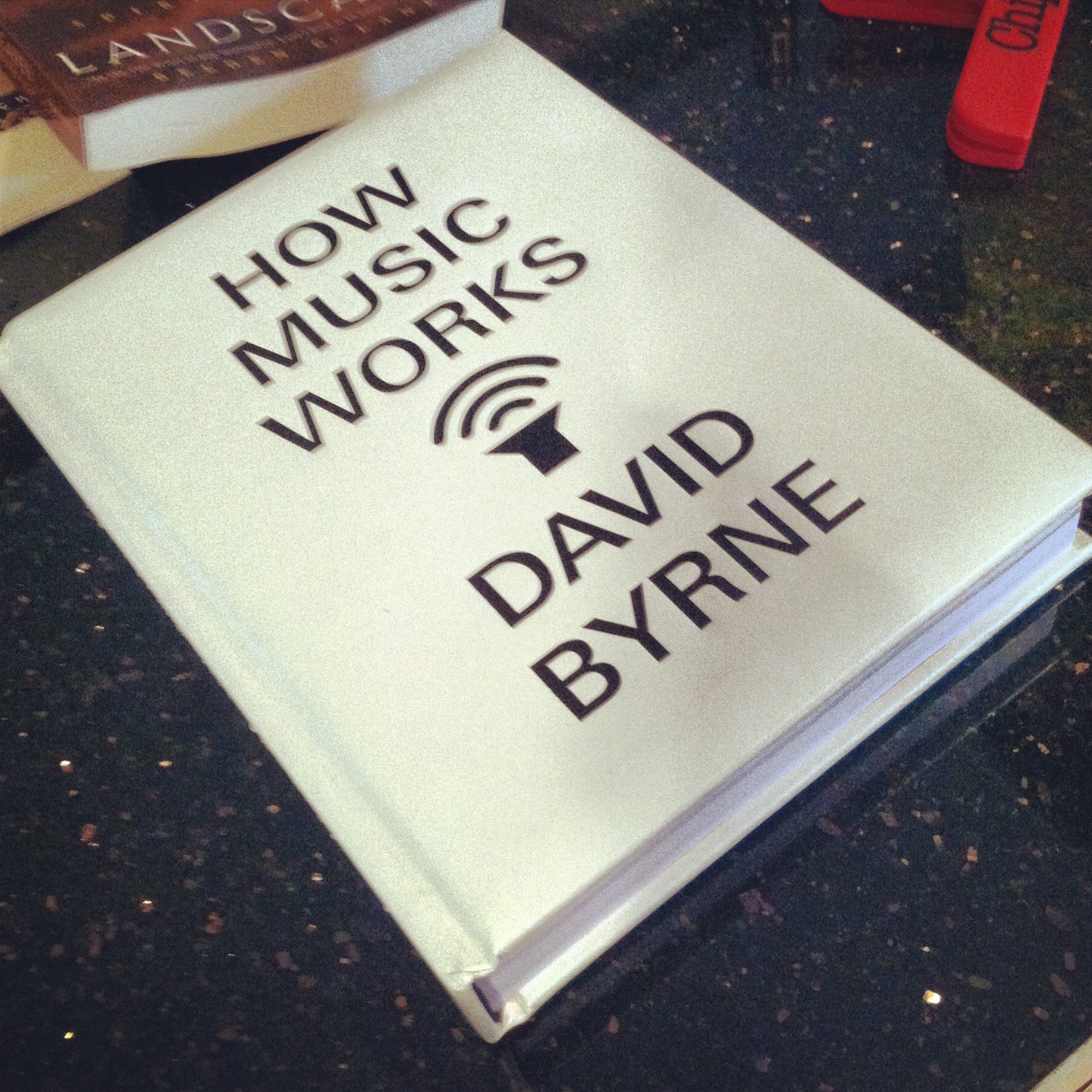
How Music Works

How Music Works

I’ve been so excited to get this book, and so far it’s been pretty rewarding. I’m actually not a huge David Byrne fan, but I just love people who pursue—and think and write about—creativity with few borders and labels. Byrne’s career has been awesome to watch, while he veered from New Wave and Alternative with the Talking Heads into some kind of Latin/dance explosion and then beyond.

Typical for me, I read something that struck me as related to spirituality. He describes preparing for a tour with a choreographer:

“Noémie began with an exercise I’ve never forgotten. It consisted of four simple rules:

  1. Improvise moving to the music and come up with an eight-count phrase. (In dance, a phrase is a series of moves that can be repeated.)
  2. When you find a phrase you like, loop (repeat) it.
  3. When you see someone else with a stronger phrase, copy it.
  4. When everyone is doing the same phrase the exercise is over.”

I think this is a great way to pursue a spiritual, Gospel-shaped life.

God sings this song; it’s a song of redemption and restoration. A song of absolute love and acceptance.

Music is meant for response. The best songs grab something inside of us.

For Believers, this Gospel-song is the highest form of musical expression we could hear.

All of us are called to this melody, this tune that has been sung through the ages.

But after responding, our job is not yet done.

Two things cause an exercise like what Byrne describes to fail:

  1. When you take no notice of anyone else’s dance.
  2. When you refuse to acknowledge the strength of someone else’s dance.

We do not do this dance alone. It’s not enough to celebrate our own response; we are knit together in these communities where others are responding, where we can notice and celebrate their responses as well as ours.

If we don’t notice other people’s response to the Gospel, it can become too easy to think that our dance is the best (only?) response to the Gospel-song.

We lose our perspective. Our dance is all we know, and we may be convinced that it is the only way to respond to the Song, but we also start to notice or suspect that something is not quite right: our sense of joy, or peace, or love seems lacking. Maybe we’ve noticed that it has become difficult to admit failure, or to ask for forgiveness from people we’ve hurt.

It’s times like these we need to maybe lift our heads and notice that others are dancing too.

They are dancing through consistent and fervent prayer; through passionate worship; through diligent study; through compassionate service; through committed community.

But even then job isn’t done, because we also have to be willing to—in the words of the exercise—notice the “strength” of someone else’s dance, and then submit to the strength of their dance. 

So often our ego gets in the way of our growth. We desire growth, but aren’t always willing to sacrifice our ideas of “how life works”—our dance—to someone else’s, even when we recognize the strength and success of that dance. 

As people of faith, we recognize that Jesus has the strongest dance of all, and we need to adopt his movement into our lives. But more immediately there are people in our midst who are responding and moving to the Gospel song, and we should readily recognize when their dance is stronger than ours, and then adopt it.

We think we know how to pray/worship/study/serve, but maybe we notice that someone else’s dance in this area is stronger than ours.

Are we willing to set aside our “dance”—the way we pray, or worship, or study, or serve—and adopt theirs? 

To admit that maybe we’re not as strong as we think we are in this area?

To say, “I want to know more. TEACH ME.” 

As we learn from each other, we respond to the Gospel Song in an organic dance of discipleship. It may not always be in unison, but it stems from the deep place of community. \

Who can you learn from this week?

… and now the multi-media portion… here’s some footage of David Byrne with some of the choreography…

… Here’s another track. Tacky fire suit, but great track; great energy.

… and lastly, classic Talking Heads

http://www.youtube.com/watch?v=I1wg1DNHbNU


Worship “Satisfaction”

I read this post last week…

At first—because I’m slightly neurotic—I was really convicted by it, if for no other reason than I, um, often play guitar solos during worship songs.

Forgive me.

But the more I read it, I actually got a little tweaked (full disclosure: if it’s not obvious already, I’m a worship pastor, so as my southern friends would say, I have at least a few “dogs in this hunt”).

As usual, I think of reality more in terms of a tension to be lived in, between the truth of what Bill says and another perspective.

Here are some thoughts from another perspective. Warning: possible frumpiness to follow.

  • I love me some hymns. Love ’em. Believe in them. But the church I serve in is not a hymn-heavy church. We do 3 or 4 a month. There are hymn-heavy churches in town, however, and there are also churches who worship through liturgy, through silence, through choirs.The point is practically all of our churches exist in the flow of a tradition, and this is a good thing. My non-denominational, evangelical church is not going to become high church Anglican. We will not become full gospel AME. While we do our best to learn from other traditions and to give people a wide(r) glimpse of the church, I think that when we constantly question our own tradition we cultivate a sort of eccesiological multiple personality disorder.

    I think there’s a certain amount of wisdom to looking at your church tradition and culture and acknowledging the truth of where it’s been and what it is. Now culture isn’t frozen; we are meant to grow and change, but God created culture. It is a gift, at least a partial recognition that humanity is so diverse. There’s no point in freezing or elevating one form of worship culture and saying, this is what we need to do. 

  • Sometimes, worship participation is simply a matter of discipleship, of the heart.There I said it.

    Now, I realize that I may need to cut my guitar solos short. I accept that chastisement. But I think responsibility needs to be spread evenly. If an individual isn’t willing to sing, “Holy is the Lord,” then I really can’t make them. Ultimately, I am not the worship leader, the Holy Spirit is, and if a person is unwilling to follow the Spirit to God, then so be it. It’s a reality of my call, but I accept it.

    A word about “seekers” (whoever they are): I once heard Erwin McManus say, “if your church doesn’t have problems of heresy and immorality, than you’re probably not missional enough.”

    If we are engaging the world, there will be a certain percentage of people who simply “aren’t there yet.” As I just mentioned, I acknowledge that’s a reality of my job. There will be people in our gathering space who actually don’t have a clue who Jesus is, much less what worship is, and I need to respect their journey.

    But for those of us who are “in the know,” I think there comes a time when we have to simply say, “I’m here to meet with God; I will open my mouth and worship—not only to remind myself of who He is and what He has done, but so that I can be an example to other folks who are at a different part of their journey.” My church is primarily young people: young(ish) families and some post-college and college kids. But we have some older folks as well. One day, an older gentleman (in his 70s) said to me, “You know, I really don’t like the music at all. But God is at work here, so I’m just happy to be here and be a part of something.”

  • Which leads me to my last point…It’s not about you.

    I once led worship in a multi-cultural, multi-ethnic church; our Sunday set lists included modern gospel, songs in spanish, rock stuff (and an occasional hymn lol). Our pastor once said, “Hey guess what you guys: no one here is going to be completely satisfied with worship. THAT’S NOT THE POINT. We don’t come here to just get. We come here to give.” Because that church was clearly diverse, it was easy to grasp the idea that we all need to give up something to worship cross-culturally, but I think the principal holds true for us in mono-cultural worship settings as well:

    worship is first for God, then for us. Worship often overflows into love back from Him to us, but that’s not the point.

    We worship first because of who He is and what He has done for us, not because of what we may get out of it right now.

When I have the rare opportunity to sit under someone else’s leadership, I have the same feelings:

  • “Man, I don’t like this song…”
  • “She’s repeating that chorus too many times…”
  • “The mix is HORRIBLE…”
  • “He’s going to kick that water bottle over…”

In other words, I’m not immune. But I remind myself in those times that this moment is what I’ve been given, and it’s up to me to direct my heart, soul, mind, and strength towards my Creator and Savior.

It’s my choice.

In closing, I’d say this: you don’t sing at my church because you don’t want to sing at my church. It’s really that simple. In a sense that’s okay. And also, I hear the corrections—I don’t want to be a rock star worship leader—and I realize that we need to create an environment that facilitates people meeting with God and tells the story of our faith.

But it’s never gonna be perfect.

Take it away, Mick…

Deeper Wells

An Australian business leader once told me when he shared his faith with a Japanese CEO, the response was dismissive: ‘Whenever I meet a Buddhist leader, I meet a holy man in touch with another world. Whenever I meet a Christian leader, I meet a manager at home only in this world like I am.’

I read this in Os Guiness’ The Call, and instantly, deeply connected with it.

Around 2006 I was living in Chicago, and saw a poster for this guy named Rob Bell. He was doing a tour called “Everything is Spiritual”, and something about it just struck me. Sometime, if you find yourself anywhere near community bulletin boards, notice how many posters there are for some form of eastern spirituality. Over and over again, you see flyers proclaiming the “secret of life”, or the “path of peace.”

Notice the claims that these practices are making.

Then, the next time you see a poster or flyer for a Christian church, notice the claims they make: “A Comfortable Atmosphere”; “Relevant Messages”; “Rockin Band.”

hmmmmmmm….

It seems odd to me that Christians have abandoned claims to any sort of deep spirituality. Where eastern forms of religion claim—and pursue—deep spiritual experiences, we seem to pursue comfortable atmospheres where people can “hear messages” and “hang out.” What struck me about Rob Bell’s poster was that it unabashedly claimed a depth of spirituality that many in “my tribe” seem to have abandoned.

In fact, I’d be so bold to say that over the years we’ve chosen to embrace a form of faith that focuses on the acceptance of our “sales message” (convert people) rather than the call to take up your cross and follow Jesus (discipleship). Acceptance of a sales message involves understanding it and deciding that you want to buy; a life of discipleship and transformation in to Christ-likeness involves a thorough rearranging of our life practices. Make no mistake: we are called to be salt and light, to go into the world, but I wonder if over the years this emphasis on “proclamation evangelism” hasn’t begun to exalt certain expressions of our faith (extroverted, systematic, and focused on a “point-of-decision”) over others (quiet, meditative, shepherding).

(Full disclosure: I consider myself on the quiet(er) side…)

The results I often see are pastors who are in fact, more at home in the managing world than in the spiritual world. This expression is no doubt necessary and effective, but I think we slip into error when we abdicate other forms of expression and then allow other faiths to occupy them.

To say it another way: The Christian faith is a profoundly spiritual, even mystical experience. The Eastern religions have no monopoly on meditation, peace, and a spiritual “presence.” We (the pastoral leaders of Christianity) have simply abandoned many practices that produce this way of life (or just abandoned talking about them). The result is that a lot of people in our modern culture assume that if you want a spiritual experience, look to the East. If you want “salvation”, look to the Christian church.

Over and over, in my interactions with young(er) Christ followers I tell them to “seek the deeper wells.”

  • Rather than merely reading the latest Rob Bell/Francis Chan/David Platt book, instead seek thoughts and books and practices that have decades—even centuries—of impact behind them.
  • Learn to pray.  And by “learning”, I mean learning. We assume we know how to do this, but we still feel awkward and tepid at “prayer time.” Why not get a book of prayers from the Puritans? or from the Church Fathers? People who knew what prayer was, and did it for hours. If you want to learn a skill, learn from a master, not from a hit-or-miss amateur.
  • Develop practices in your life that take you away from people, noise, and voices. Solitude, silence, and secret giving are transformational in ways that other, more prominent behaviors simply cannot touch.
  • Seek the people in your community who have walked—peacefully and humbly—with Jesus for a long time, and sit down with them to ask, “How do I walk a long time in the footsteps of Jesus?”
  • One more thing: listen to Emmylou … she’ll set you right.