Egalitarians Can Be Bible Thumpers Too

Once my wife and I were talking to a church about possibly going on staff with them. In our conversations with them we asked about their view of women in leadership.

Our contact responded, “Well, let me tell you guys, I am married to a really strong woman, and we run our marriage as completely equal; I would never deny my wife an opportunity to lead or teach. However our pastor—and therefore our church—doesn’t hold that view. Unfortunately, we don’t allow women elders or leaders here.”

We responded, “Hmmmm, well, that’s a bit of a challenge for us.”

He responded, “Yeah, our pastor just feels like it’s a matter of Biblical conviction for him.”

To which my (awesome) wife said, “And it’s not a matter of Biblical conviction for you?”

… Needless to say (maybe), we weren’t able to go on staff at that church.

It’s a matter of Biblical conviction for us.

It seems as if there’s a perception that those of us who hold to an egalitarian view of men and women in leadership come to that conviction through our understanding of culture, that it’s based a little more on the “fuzzy” area of what God is doing in the world.

However, to come to that confusion would be to ignore:

  • Genesis 1:27, where God says that man and woman are both made in His image.
  • The prophet Joel (and the book of Acts), where God says He will pour His Spirit out on men and women.
  • Romans 16:1, which mentions Priscilla as a deacon of the church (the only person out of the 27 people mentioned that is given that title).
  • Romans 16:7, where Paul tells us that Junia—a woman—is an apostle. 
  • 2 John, which is addressed specifically to a woman.
  • Multiple accounts in the Gospels, where Jesus entrusted his message (of life in John 4; of Resurrection) to women. 


Now, before I go on, let me mention something: I realize that a whole host of passages can be lined up that claim that women are somehow secondary to men and under their authority. I get that.

I don’t necessary agree with those interpretations, but I can’t deny that those passages are in the Bible.

In fact, I’ll even defend your right to interpret those passages that way (though I don’t necessarily agree with you).

But neither can you deny the passages that I base my egalitarian view on.

My only point here is that we egalitarians aren’t making this stuff up. We are sincerely trying to obey the revelation of God and Jesus through the Bible under the power of the Holy Spirit.

It’s a matter of Biblical conviction for us.


The “Other” Words

In my church, we talk a lot about words of life. They are meant to be words that encourage people and call them into a deeper, more joyful way of living. However, there’s another paradigm that sometimes enters into the words we listen to. There are other words out there that are much more difficult to hear, sometimes so much so that they don’t feel much like “words of life” at all. In fact, they feel a bit like.

Death.

At least, they hurt pretty bad.

Once I was with my family and I was wondering about how I hadn’t been more successful in my somewhat anti-climactic musical career, and my beloved sister just looked at me and said, “Well it’s probably because you were just too lazy and too unhealthy to be successful.”

Ouch.

But the thing is, even with words that direct, and that challenging (and trust me: I don’t really like to hear words like that), I wasn’t crushed. I didn’t yell, or lash back.

In fact, I realized that I was sitting in front of deep truth, and I had to choose whether to hear and embrace it, or turn away.

To that end, I chose to hear it, and some remarkable things happened:

  • That truth actually released me from some regret and some preoccupation with my past failures as an artist. I realized that I really was responsible—in a way—for my lack of success.
  • It led me to continue to confront those two themes—laziness and “un-health”—in my life, which has led to some cool healing.

Now, I take it as a given for Christians that we understand that sometimes death needs to happen before new life can take place.

Good Friday happens before Easter.

To that end, sometimes words of life don’t feel like words of life at all. They can feel like words of death: hard and challenging even sad. But when they are spoken by people we trust, and spoken in a manner that is designed for us to grow, these hard words can kill something inside of us that needs to die in order for growth, new life, and healing to take place.

However, I also know that words can be uttered with the intent to destroy, not resurrect; to reduce, not instruct; to hurt and not love. So before you decide to “hear” hard words, I’d offer a few suggestions:

  • Consider the source: do you trust them? Do you trust that they love you? Are they people of the light?
  • Consider the environment: were they angry when they said it (my sister was not)? Were you in a fight?
  • Consider the implications: what would happen if you took their words into your heart? In my case, I sensed that Beth’s words would set me free, and so I could allow them in.

I’ve heard other harsh words in my life, but what about you? Have you heard hard truths that ultimately invited you to grow in profound ways?

Follow @ericcase on Twitter

Seth Godin and a Gospel Life

Seth Godin is understandably one of the most popular and compelling writers and thinkers today. He’s been pretty influential in my circles, and I’ve definitely internalized some of his thoughts. I’ve seen him speak a couple times, and read 2 or 3 of his books.

All in all, it’s good stuff.

However, I’ve had on- and off-again tensions with some of the concepts, especially as they are confronted by, well, the gospel.

(Let me just say that I am “owning” that this is probably just my own baggage; I’m merely throwing these thoughts out there because they’ve been on my mind lately.)

Most recently, I’ve had to come to terms with how the desire to be “extraordinary” and a “linchpin” (some of Seth’s key concepts) intersect in my soul to do some not-very-good things…

You see, for someone who struggles with pride and arrogance, hearing the call to make your world all about doing “something amazing”, or “living your strengths”, etc., etc., can be a little like trying to control a modest outdoor fire in your backyard by pouring kerosene on it.

Even understanding that the point of “being extraordinary” is to serve people, or an organization or mission, feels remote.

For a narcissist (struggling or otherwise), the world ALWAYS revolves around them. They are ALWAYS seeking to be extraordinary, to be noticed, to be the smartest/cutest/strongest/most talented person in the room. It’s a normal (though pathological) state of mind.

For me, I need to balance “linchpin” thinking with the constant realization that I am sick. Recognition and accolades (that often come with being extraordinary) feed my false self, this scared, insecure child that needs to be reminded how special he is.

To counteract linchpin thinking, I need, to stare into the void, to quiet the obsessive and compulsive thoughts of my false self, and to return to the smaller, quieter voice of God that says, “You are enough.”

To learn humility.

To learn to serve.

To learn to focus on others.

To learn that being a linchpin is NOT all there is to life.

(Even though sometimes it’s fun.)

I still love Seth; and I will continue to read his books and wrestle with this stuff, but I just thought I’d put these out there.

+e

Eugene Peterson on Spiritual Direction

For a season now, I’ve been pursuing a spiritual direction, and trying to be a better “director” of people’s souls myself.

I was recently going through Peterson’s Working the Angles: The Shape of Pastoral Integritywhich has shaped me as a pastor as much as any other book I’ve ever read—with a friend, and re-read what he has to say about giving spiritual direction.

(Incidentally, I think that “spiritual direction”—or mentoring, or whatever you’d call personal, spiritual influence—is one of the most desperately needed activities in our culture. I think much of 21st century North American culture has no need for a bigger, better, faster worship gathering. We need a more sober, consistent spiritual direction and discipleship for God’s people).

So here’s what Peterson says:

  1. Cultivate an attitude of awe with and for every person you meet with. Every meeting is a privilege, and an opportunity to see God work.
  2. Cultivate an attitude of ignorance. We can make assumptions about peoples’ motives and feelings. Most of the time they are wrong. We do better to assume nothing and ask questions. (This is something I’m trying desperately to grow in.)
  3. Cultivate a predisposition to prayer. Prayer is the furnace, and oftentimes what people really want from us is to learn to run the furnace for themselves. They don’t want our advice; they want to learn how encounter God for themselves.

Tools for the New Year: Rails

The concept of a train is simple: wheels on rails. The rails constrain the wheels and prevent them from wandering, but they also give the wheels a smooth the path to travel. Unlike a car, a train can’t go

wherever it wants—it has to travel the path that the rails follow—but a train can trust the rails, and as long as they haven’t been destroyed or damaged, the rails will take the train where it needs to go.

A few days ago I wrote about how humility is the key to growth, and one further aspect of humility is admitting our need for “rails” in our lives.

If you’re anything like me, I’d prefer to think of myself as a free-ranging vehicle (a Jeep 4×4, especially): I can go anywhere and do anything I’d like, and I will continue to grow into the person that I need to be and that God wants me to be.

Nothing can be further from the truth.

After 40-something years on this earth, I am able to say with a fair amount of certainty that left to my own devices I will wander to and fro, and “growth” will remain far from the top of my “to do” list.

I don’t make such a good Jeep.

I need rails, things that keep me on track.

Maybe I make a better train.

Now, rails have other words too:

  • systems
  • routines
  • habits
  • disciplines
  • rules

These “rails”, as long as I follow them and choose to stay on them, tend to take me to the places I want to go spiritually. (To extend the metaphor just a bit, it’s important to remember that the point of a train is not to just “ride the rails”; trains go places; the destination is what’s important. When the rails become the point of everything, we’ve lost the point.) At first, they feel odd: constrain you; they cramp your “style”; they stretch you, and may challenge you to do things that aren’t in your “nature” (“Well, I’m not really a Bible reading person, ya know?!?!”). But, after a while, they don’t feel as odd or forced. You find yourself moving with them, anticipating their turns. You’re working with the rails now.

Specifically, here are some of the rails and “constraints” that I use:

  • a regular habit of focused prayer and mediation each morning
  • a discipline of regular Scripture reading and studying
  • a commitment to regularly (1-2 times a month) sit down with 1-2 older spiritual mentors and humbly submit to their leadership and suggestions (again with the humility)
  • a system of managing my time, projects and energy (I use both electronic and paper calendars, and a combination of OmniFocus and Apple’s Reminders)
  • a method of examining the overall direction and theme of my life

As some of these rails have become cemented into my character, I have had to rely on the externals a bit less, but the principles remain the same: I submit to the rails.

Because I have somewhere to go; a person to be; a redemptive movement to play a part in.

And I trust the rails to take me there.

Do you have any rails? What are they? Do you need to reevaluate any of them?

+e

The Key to Everything: Humility

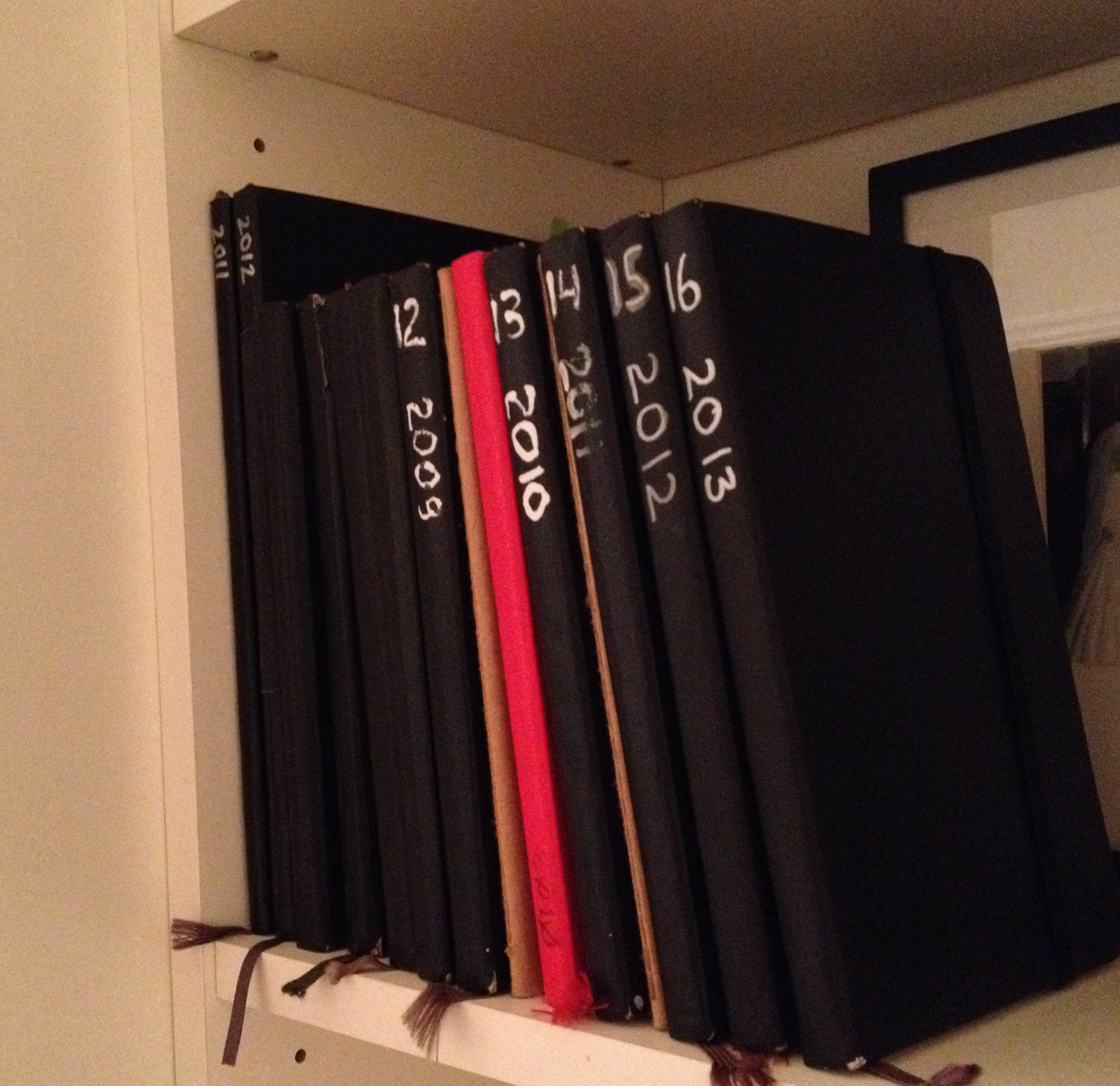
journalsYesterday, I took part in a panel discussion at church about “resetting” for the New Year. We talked about some of the rituals and systems we use to try and get ourselves for the New Year.

It was fun to talk about my journals and such, and some of my approach to this season of the year, but I was left wondering if anyone “got it”.

At one point I said from the stage, “If you don’t expect anything more out of 2014 than what you did in 2014, I’d challenge you to examine what you expect out of your faith.” 

Do people really believe in transformation?

Do you?

Do you believe you can change?

Do you believe you’re called to?

I think it actually boils down to some very basic beliefs, so let me ask you:

  • In John 4, Jesus says that he offers water that will become a spring of water that bubbles up (inside us) into eternal life…
  • In 1 Corinthians 2, Paul says that we have the mind of Christ…

Were they liars? 

Were they only talking to “super-Christians”? 

As one of my spiritual mentors says, “Either it is, or it isn’t.” 

So, if Jesus and Paul knew something about life; if they really meant what they said, then we are left to wrestle with their statements.

The burden is on us.

Question 1: Do you want to have the mind of Christ? to have a constant stream of living water inside you? 

Question 2: What are you prepared to surrender in order to gain it? 

This is the point where many of us get snagged, if for no reason than this: we have our lives, our systems of existence, and we don’t like to think that they maybe aren’t working. 

So where do we start?

We start with humility. We start with the admission that we actually don’t know what’s best for us. We declare as best we can, “I believe that there’s something more for me, but my life isn’t set up to obtain it. God help me.”

He wants to.

Someone asked a desert hermit once, “What is the way to make progress?” The hermit answered, “Humility. The more we bend ourselves to humility, the more we are lifted up to make progress.”

Humility declares, “I don’t know the way.”

Humility opens the door to learning. To growth. 

Humility says, “There must be more, and I am open to it.”

Humility says, “I cannot save myself.”

(By the way, humility is not merely self-deprecating or a way for us to belittle ourselves; it is a way to open ourselves up to growth and change. Feeling sorry for ourselves can actually merely be another way to be arrogant and self-centered. True humility is accompanied by a desire and willingness to change, to move, to reconsider.)

So, as 2013 begins, where are you with humility? Have you figured it all out, or are you still willing to acknowledge that you need to make more “progress”?

If you’re still learning, still growing, still changing, what are you doing to continue to learn and grow this year?

2013 in Review: Quotes

I love to collect quotes and sayings that challenge or inspire me, or just help me things differently. Here’s a list of things that warranted me writing them down in 2013:

Jan 

The only joy on earth is to escape from the prison of our own false self, and enter by love into union with the life Who dwells and sings within the essence of every creature and in the core of our own souls.  -Thomas Merton
“Faith does not simply account for the unknown, tag it with a theological tag and file it away in a safe place where we do not have to worry about it. This is a falsification of the whole idea of faith. On the contrary, faith incorporates the unknown into our everyday life in a living dynamic and actual manner. The unknown remains unknown. It is still a mystery, for it cannot cease to be one. The function of faith is not to reduce mystery to rational clarity, but to integrate the unknown and the known together in a living whole, in which we are more and more able to transcend the limitations of our external self. -Merton
“In fighting deliberate and evident vices a planned strategy of resolutions and penances is the best way—if not the only way… When it ends, and when you have a good habit to work with, do not forget the moments of battle when you were wounded and disarmed and helpless. Do not forget that, for all your efforts, you only won because of God, Who did the fighting in you.” -Merton
“We all want to be healed, but the staggering truth of our faith is that God’s presence with us is ultimately more important than our healing.” -Me 🙂
Feb
“We were innocent before we started feeling guilty; we were in the light before we entered into darkness; we were at home before we started to search for a home. Deep in the recesses of our minds and hearts there lies hidden treasure we seek.” -Nouwen
“The eyes of love had seen you as precious, as of infinite, as of eternal value. When loves chooses, it chooses with a perfect sensitivity for the unique beautify of the chosen one, and it chooses without making anyone else feel excluded.” -Nouwen
“There is little or no neutral territory between the land of the blessed and the land of the cursed. You have to choose where it is that you want to  live, and that choice is one that you have to keep making from moment to moment.” -Nouwen
“The great spiritual call of the Beloved Children of God is to pull their brokenness away from the shadow of the curse and put it under the light of the blessing.” -Nouwen
“Eternal life is not some great surprise that comes unannounced at the end of our existence in time; it is rather, the full revelation of what we have been and have lived all along.” -Nouwen
“You hit bottom when you stop digging.”
Jul
“My goal in life is not to ‘succeed’; it’s to live my life with humility.”
Aug
“Leadership is getting more out of people than the science of management says you can.” -Colin Powell
Sept
“The value of and interest of life is not so much to do conspicuous things… as to do ordinary things with the perception of their enormous value.” -Teilhard de Chardin
Nov
“The world needs more than the secret holiness of individual inwardness. It needs more than sacred sentiments and good intentions. God asks for the heart because He needs the lives. It is by lives that the world will be redeemed, by lives that beat in concordance with God, by deeds that outbeat the finite charity of the human heart.” -Abraham Joshua Heschel

2013 in Review: Music

Since I laid out my books, I thought I’d briefly go through some musical purchases that I enjoyed this year.

*NOTE 1: These aren’t necessarily 2013 releases; they are 2013 discoveries

*NOTE 2: I don’t listen to quite as much music as I used to, so don’t expect to be wowed. I just thought I’d share.

*NOTE 3: I still listen have a steady list of “older” favorites that were in heavy rotation in 2013 (though not purchased):

  • Live at Leeds. The Who.
  • El Camino. The Black Keys (one of Levi’s favorites)
  • Sevastapol. Jay Farrar (one of my top 5 driving CDs)
  • Most of Emmylou Harris’ catalog
  • Most of Sigur Rós’ cataglog
  • High Violet. The National

But anyway… here’s 2013 music:

  • Ode to Sunshine. The Delta Spirit. Maida Vale shared a stage with these guys in 2008 or 2009, and they blew us away with their raw intensity and musicianship. Reminded me of a much more angsty version of  The Band.
  • Sea of Cowards. The Dead Weather. When I first heard this band, they were just too creepy for me. Either they have gotten less creepy, or I’ve gotten moreso. Either way, Jack White and Alison Morehart are a potent duo, and they write killer riffs and haunting songs. Scary, but good.
  • Wise Up Ghost. Elvis Costello and the Roots. Oh my: this is virtually required. There’s not a super-catchy pop song on this collection, IMO, but just by virtue of the fact that it’s Costello (one of the most well-respected songwriters in this era) and The Roots (they should be declared a national treasure, the way Brazil declared Pele a national treasure back in the 70s), you should be listening to this. 
  • More Than Just a Dream. Fitz and the Tantrums. This was part of the summer soundtrack of the Case household. We collectively love these guys. Best if listened to loudly, while dancing.
  • Love in the Future. John Legend. I pretty much love everything John Legend does. So there.
  • Born and Raised. John Mayer. If there was a soundtrack to my sabbatical, this was it. This record just broke me down, and helped me heal. The title track also served as the inspiration for “My Redeemer Lives”, from my little release this summer. I haven’t been pierced by lyrics like this in a long while, and it felt good.
  • The Invisible Way. Low. This is “Where have I been?” Part 1. These guys are simply amazing. Gentle, rainy music. I found these guys through “Silver Rider” from Robert Plant’s Band of Joy disc, but boy I’m sure glad I found the rest.
  • Trouble Will Find Me. The National. Oh yes. Just as subtle, melancholy, and “New York” as the previous ones. Thank you.
  • Hesitation Marks. Nine Inch Nails. After Wilco’s Sky Blue Sky came out, a friend of mine remarked, “You know, I think that lyrically I like addicted Jeff Tweedy a little more than sober Jeff Tweedy.” Insensitive, I know, but I think I can relate: I like angry Trent Reznor a little bit better than married and content Trent Reznor. However, everything is relative: “content” Trent Reznor is still pretty dark and twisted. Hesitation Marks isn’t my favorite NIN record by far, but it still has its darkly groovy moments.
  • Woman. Rhye. This is another summer soundtrack in our house. This record is gently and sensuous. Definitely a cool, mellow, evening music. (P.S. the singer’s a dude!)
  • Kveikur. Sigur Rós. Creepy. Just creepy.

Well, there you have it. No links or anything, so if you want it … go snag it.

2013 in Review: Books

I’ve been out of pocket. Sorry.

Honestly, I’ve been in a funk, and haven’t been focused on writing so much.

(As I’m writing this I’m listening to Rush for crying out loud!)

But that being said, I’ve been kicking around a few ideas, and I figured I’d start by doing a somewhat haphazard book and music review of 2013.

I’m just going to list everything that I’ve bought and read/listened to, and throw out some notes where something strikes me.

Enjoy, and feel free to ask me questions about anything you see on the list.

Books

  1. Leadership Jazz. Max DePree. I’ve had this a long time, and just decided to review it for the heck of it.
  2. The War of ArtStephen Pressfield. If you do anything creative (and let’s face it: it’s all creative, isn’t it?), this is a must read. I’ve read it twice already, and I only bought it in 2012.
  3. Sabbath. Dan Allender
  4. Spiritual Direction and Meditation. Thomas Merton.
  5. Catching Fire. I have a daughter; deal with it.
  6. New Seeds of Contemplation. Thomas Merton. Very impactful book. God broke me down, grew me and stretched me in unbelievable ways in 2013, and this was one of the things that “primed the pump.”
  7. Giving Church Another Chance. Todd Hunter. An evangelical-turned-Anglican describes the impact of the liturgy on his spiritual life.
  8. Mockingjay. I still have a daughter; deal with it.
  9. Life of the BelovedNouwen. This was the first book I read when I started in vocational ministry. It still hits home with me every time. Highly recommended.
  10. Slam. Nick Hornby. Great fiction by my favorite modern English writer.
  11. Getting Things Done. David Allen. My approach to productivity; I try to read this once a year.
  12. Courageous Leadership. Bill Hybels. A great overview of leadership in ministry.
  13. Bread & Wine. A devotional for Lent. Variety of writers.
  14. The History of Christianity, Vol 2 (Gonzalez). Read it for Asbury, but it’s a great book.
  15. Reason and Religious Belief. Read for a philosophy of Christian religion class. Made my brain hurt.
  16. Philosophy of Religion. Same. Brain hurt more.
  17. The Wounded Healer. Nouwen. Another tiny book with heavy truth in it. Addresses empathy and openness in pastors.
  18. Last Argument of Kings. Joe Abercrombie. Fantasy/fiction.
  19. The Illumined HeartMathews-Green. This tiny book will rock your world if you let it. If you are looking for practical ways to make your faith a day-to-day (moment-to-moment?) experience, grab this and open your heart and mind.
  20. Born to Run. A great book on running. It inspired me to actually commit to a 5k.
  21. Ruthless Trust. Brennan Manning. I always make sure I read one Brennan Manning book per year. This is a brilliant, challenging book on trusting Jesus to love us in spite of brokenness.
  22. Open Heart, Open Mind. Thomas Keating. A game changer. Given to me by a spiritual mentor, and it’s changed the way I view prayer, and my spiritual journey. This is deep, deep stuff.
  23. The Way of Men. Martin Buber. I went through a brief fascination with hasidic writing. This is a very short book, but a good introduction.
  24. King Leopold’s Ghost. Inspired by a conversation with a good friend, combined with an episode of Anthony Bourdain’s Parts Unknown. It’s a recounting of the tragedy of the Belgian Congo. Millions of Africans murdered in the name of … well, nothing. Genocide. Sad, but necessary reading.
  25. Sacred Treason. Historical fiction.
  26. The Creative HabitTwyla Tharp. I’m always up for a good read on creativity, and this book is spot-on. Great, practical advice on developing habits for creativity.
  27. Introduction to Christian Doctrine. Lawson. Seminary reading.
  28. Introduction to Christian Theology. Gonzalez and Perez. Seminary reading, but a great basic intro to theology and doctrine.
  29. Leonardo and the Last Supper. Ross King. Ross King is a great historian and story-teller. Good study of Di Vinci’s efforts to paint the last supper. (Ross King’s book Michelangelo and the Pope’s Ceiling is a big inspiration for my on-again, off-again book on spiritual disciplines).
  30. Facing East. Mathewes-Green. This is about a family’s journey into the Orthodox faith.
  31. David and Goliath. Malcolm Gladwell. I’ve always been a fan of Gladwell’s, and this book is more of the same. Not quite as many brilliant insights as in some of his previous works, but great stories all the same.
  32. The Solace of Fierce LandscapesBeldon Lane. I really enjoyed this book. It’s about desert spirituality, and really impacted me this year. A lot of my reading came together around common themes, and desert monasticism loomed large for me. It was very healthy and healing.
  33. Managing Your Day-to-Day99U. This is a great collection of essays on creative productivity. Full of tips and strategies to stay focused on “getting stuff done.”
  34. Breathing Underwater. Richard Rohr. This book on recovery and 12-step spirituality had a deep impact on me. Rohr really has a grasp on spiritual growth.
  35. The Gospel of Mark: A Socio-Rhetorical Commentary. Ben Witherington. Witherington’s New Testament commentaries are really good and useful. Challenging, but also pretty solid scholarship.
  36. Divine Therapy. Thomas Keating.
  37. Spirituality of ImperfectionJust wow. A new perspective of life, and what it means to be human. One of my main influences this fall.
  38. 11/22/63. Stephen King. An odd book for me, but King is a great writer, and I decided to take a chance. About Kennedy’s assassination. And time travel. And creepy buildings.
  39. Gone Girl. Another odd choice, but a thriller. Well written.
  40. Heroes and HereticsThomas Cahill. I pushed to get this read before Jan 31. Cahill is a brilliant writer, and this is another book in his “Hinges of History” series. It’s all about identifying turning points in history—including social, spiritual, cultural, artistic movements—and showing how they came about and what kind of influence they had. I highly recommend any of them, but if you want to start somewhere, look at either The Desire of the Everlasting Hills or How the Irish Saved Civilization

Spiritual Growth Isn’t Sexy

I like new things. Curiosity is pretty hard-wired into my being, and I like it; it drives me to new subjects, to new perspectives, to a broader understanding of God’s world.

But there’s a point at which “new” starts working against you, particularly in regards to growing.

Over my years of following God, I have dabbled in charismatic faith, liturgical faith, post-modern worship, and more recently centering prayer and Eastern Orthodoxy.

Some of these movements—the more ancient ones in particular—are particularly attractive to me because they seem so alien. They use a language that I’m unused to, and that wakes me up and draws me in. The way monks and Orthodox folks refer to the spiritual world is compelling to me, and I respond by buying books and beginning to experiment.

Historically, however, I get bored; after a time the newness wears off. The words don’t seem as fresh anymore.

This is when curiosity becomes a problem.

I’m learning lately to work through the “boredom”, to stop looking for new words and language and concepts, and to merely accept the forms that God has given me (and millions of others) to find Him.

It’s really not that exciting, in the end. Words can’t stay new forever. Eventually you have to get to the thing-behind-the-words. That’s the thing that really matters.

Don’t get me wrong: Manning, Merton, Keating, John of the Cross can certainly turn a phrase. I will always appreciate that part of their gifting.

But the hard lesson I’m learning is that even when the phrases have been emptied of their “magic”, even when they are less poetic and more pragmatic, I still have to grow.

Ultimately, it’s not the poetry that makes me grow. It’s the Spirit behind the poetry that is the real thing.

What about you? Anyone else out there struggle with always pursuing the new? What have you sought out?