The Grammies and Satanic Goat Statues: Not Surprised

So I spent last week in a seminary class on Christian Ethics. The class began the morning after the grammies, and not surprisingly the class opened with some alarmed comments about the shenanigans of the night before.

(Disclosure: I declared the Grammies dead and irrelevant after the 1991 “Jethro Tull/Metallica” debacle, though I showed a brief revived interest with 2007’s “duets” idea.)

At any rate, some folks in the class were “shocked” and “appalled” at some of the performances.

Which made me think of satanic statues.

(As you do)

Lately, some pagan—and even straight up satanic—groups (I’m not using these terms pejoratively: they are self-identified pagans and satanists) have petitioned to have monuments and statues placed on courthouse and state lawns alongside “Christian” symbols (you can read the story here).

Ahem.

So I know that I’m supposed to be angry and indignant at this outrage, but I’m really not.

(Well, excepting the fact that the statue is actually quite hideous and ugly… THAT is quite disappointing.)

You see, I like it when people and institutions “show their cards.” When they take off the masks they wear and just declare, “This is who I am: deal with it.”

I like it because then I know a little more of the truth, and I can choose to accept it or walk away from it.

But at least I know.

In these two cases—the Grammies and these petitions—the music industry and our culture—are “showing their cards.”

Church (and I mean everybody): they are not our friends. We should not be surprised.

I don’t mean in a “get-scared-they’re-coming-to-take-me-away-and-oh-please-Jesus-come-back-it’s-the-Left-Behind-series-starting-where-is-Kirk-Cameron” way.

I mean a little more in the “raise-eyebrow-roll-your-eye-turn-off-the-TV-and-read-a-good-book-or-better-yet-have-a-conversation-with-your-actual-family” way.

Let me be really blunt:

  • The Grammies—and the music industry—exist for pretty much one reason: to make money. While they occasionally make a reference to “values”, and while people may occasionally thank God during an acceptance speach, if the industry has to choose between a dollar and Christian values, they will choose the dollar. They are obligated to.
  • The state exists to be a political entity. It has to perpetuate that system. If you know history—at least anything besides recent North American history—you’d discover that the “State” is no friend to faith. Because of the unique era of history that we’ve lived in, it’s easy to believe that our (awesome) political system is an ally of our faith, but that’s an illusion that most of the world does not live in (for that matter, it’s an illusion that most of the history of the Church doesn’t share, but see below).

(This is probably the time that I’d say I don’t believe in a “Christian nation.” I believe in Christians who may be part of shaping a nation, (but really, have you seen the “Jefferson Bible”?) but largely Christianity and politics have been disasters (#Calvin’sGeneva #Rwanda).

Now, in regards to the State, there is some good news:

This is not new.

Our New Testament was written in an era where the State and Roman culture dominated the landscape. But there are repeated reminders that culture, and in particular the State, do NOT have the same interests as Jesus (and His church).

Here are three of my favorites:

1.
In Matthew 2, the magi show up and tell Herod that the KING OF THE JEWS has been born. “When King Herod heard this, he was troubled, and everyone in Jeruslam was troubled with him.” (2v3) Why? Because if someone else (namely, Jesus) is King, it means Herod is not. It means that there’s a new king, and he’s coming to Jerusalem to shake things up. Things are about to change. You have to understand that the Jews (and the Christians) of the 1st century didn’t hear “King” like we do, as a private, faith-filled term. They knew their king ruled. Like really. Externally. Visibly. (It goes without saying that we should realize that Jesus is a real, ruling, living King.)

2.
Mark begins his gospel like this: The beginning of the good news about Jesus Christ, God’s Son…” (1v1) The Greek word for “good news” is euangelion which, oddly enough, was used by the Roman state to announce a military victory. It seems that what Mark is saying is that Jesus as the Messiah means that a visible, military victory is going to be one. It means that Jesus’ “kingdom” (state) is going to be the new reality.

3.
Saint Paul probably knew this more than any of the writer of the New Testament. He was a Roman citizen, after all, and so he was quite aware of its agenda, and he knew it was not Jesus’ agenda. In 1 Thessalonians he is writing to a church about the time when all things will be resolved, a final time when Jesus will bring all things visibly together. He writes this odd phrase: “When they are saying, ‘there is peace and security,’ at that time sudden destruction will attack them, like labor pains start with a pregnant woman, and they definitely won’t escape.”

Here’s the thing: “PEACE AND SECURITY” WAS A ROMAN SLOGAN. It was meant to remind people, “Hey, your peace, security, and well-being all come from Rome. (So keep supporting us.)” Paul is saying though, “Actually the folks—the state—who are saying we will provide your peace and security are deceived, and they are not your friends.”

For Paul, Rome was no friend of Jesus Christ and His church (though Paul was not above giving sensible advice to living under authority: see Romans 13).

I think the same is true for us today. We shouldn’t be shocked when we see ridiculous behavior on the Grammies, or ugly public art (though I’m sure we Christians have created our share).

To me it’s just those institutions showing their cards.

They are not my friend, and their agenda is not the Church’s agenda.

So get over the shock, and keep on walking, folks. We still have work to do.
+e

Stop Worrying…

Atheist Bus Campaign , via Dan Etherington from London, UK

Atheist Bus Campaign , via Dan Etherington from London, UK

An atheist organization started this bus campaign in England.

Frankly, I’m not too hung up on arguing or “evangelizing” them (how can you make “good news” good to those who don’t want to hear it?!?)

For those of us who’d claim some faith, however, I’d recast their slogan this way:

There is a God, now stop worrying and get on with your life.

Though God’s ways are sometimes strange and difficult to understand, I am coming to believe that God’s love somehow overflows to us, for us.

Consider Moses’ words in Deuteronomy 30:

Now listen! Today I am giving you a choice between life and death, between prosperity and disaster. For I command you this day to love the LORD your God and to keep his commands, decrees, and regulations by walking in his ways. If you do this, you will live and multiply, and the LORD your God will bless you and the land you are about to enter and occupy.

But if your heart turns away and you refuse to listen, and if you are drawn away to serve and worship other gods, then I warn you now that you will certainly be destroyed. You will not live a long, good life in the land you are crossing the Jordan to occupy.

Today I have given you the choice between life and death, between blessings and curses. Now I call on heaven and earth to witness the choice you make. Oh, that you would choose life, so that you and your descendants might live! You can make this choice by loving the LORD your God, obeying him, and committing yourself firmly to him. This is the key to your life. And if you love and obey the LORD, you will long in the land the LORD swore to give your ancestors Abraham, Isaac, and Jacob.

All Wham! references aside, Moses seems to practically beg Israel to “get it right”… The tone in this passage is such that you get the feeling that God (through Moses) is just cheering on his people to make the right decisions so that they can have a life of fullness and peace. Even when Moses cautions the people, he doesnt’ say, “God will destroy you; he says you will be destroyed.

What does it mean that God is inclined towards us, cheering us on to obedience and life?

Things You Didn’t Expect to Find in the Garden

If you’re anything like me, it’s tempting to think that, prior to Genesis 3, life was pretty good for Adam and Eve.

After all, my thinking goes, what did they have to do besides hang out with God and be super-spiritual.

Can you imagine the conversations?

“Why yes, Eve, that’s EXACTLY how I would interpret that scripture.”

However, I’m not really sure it was like that. In fact, Genesis 1v26 drops this uncomfortable bombshell:

Then God said, “Let us make humanity in our image to resemble us so that they may take charge of the fish of the sea, the birds in the sky, the livestock, all the earth, and all the crawling things on earth.”

That’s a lot to do. In fact, it sounds suspiciously like…

work. 

In other words, the garden wasn’t just about hanging out; it was about working.

In other words, this means work is not just a means for us to pay our bills; to get along in this broken world.

It means that God gave us work as a gift.

For me, there are two implications here:

1. My work is a gift.

2. Everyone has a right to work.

It’s tempting to think that my work is a curse, but Genesis implies that work is something noble, something given

It’s grace.

Somewhat relatedly, everyone has a right to this grace. It’s not up to us to deny someone the right to contribute, to feel a part of something.


Continue reading

Egalitarians Can Be Bible Thumpers Too

Once my wife and I were talking to a church about possibly going on staff with them. In our conversations with them we asked about their view of women in leadership.

Our contact responded, “Well, let me tell you guys, I am married to a really strong woman, and we run our marriage as completely equal; I would never deny my wife an opportunity to lead or teach. However our pastor—and therefore our church—doesn’t hold that view. Unfortunately, we don’t allow women elders or leaders here.”

We responded, “Hmmmm, well, that’s a bit of a challenge for us.”

He responded, “Yeah, our pastor just feels like it’s a matter of Biblical conviction for him.”

To which my (awesome) wife said, “And it’s not a matter of Biblical conviction for you?”

… Needless to say (maybe), we weren’t able to go on staff at that church.

It’s a matter of Biblical conviction for us.

It seems as if there’s a perception that those of us who hold to an egalitarian view of men and women in leadership come to that conviction through our understanding of culture, that it’s based a little more on the “fuzzy” area of what God is doing in the world.

However, to come to that confusion would be to ignore:

  • Genesis 1:27, where God says that man and woman are both made in His image.
  • The prophet Joel (and the book of Acts), where God says He will pour His Spirit out on men and women.
  • Romans 16:1, which mentions Priscilla as a deacon of the church (the only person out of the 27 people mentioned that is given that title).
  • Romans 16:7, where Paul tells us that Junia—a woman—is an apostle. 
  • 2 John, which is addressed specifically to a woman.
  • Multiple accounts in the Gospels, where Jesus entrusted his message (of life in John 4; of Resurrection) to women. 


Now, before I go on, let me mention something: I realize that a whole host of passages can be lined up that claim that women are somehow secondary to men and under their authority. I get that.

I don’t necessary agree with those interpretations, but I can’t deny that those passages are in the Bible.

In fact, I’ll even defend your right to interpret those passages that way (though I don’t necessarily agree with you).

But neither can you deny the passages that I base my egalitarian view on.

My only point here is that we egalitarians aren’t making this stuff up. We are sincerely trying to obey the revelation of God and Jesus through the Bible under the power of the Holy Spirit.

It’s a matter of Biblical conviction for us.


Eugene Peterson on Spiritual Direction

For a season now, I’ve been pursuing a spiritual direction, and trying to be a better “director” of people’s souls myself.

I was recently going through Peterson’s Working the Angles: The Shape of Pastoral Integritywhich has shaped me as a pastor as much as any other book I’ve ever read—with a friend, and re-read what he has to say about giving spiritual direction.

(Incidentally, I think that “spiritual direction”—or mentoring, or whatever you’d call personal, spiritual influence—is one of the most desperately needed activities in our culture. I think much of 21st century North American culture has no need for a bigger, better, faster worship gathering. We need a more sober, consistent spiritual direction and discipleship for God’s people).

So here’s what Peterson says:

  1. Cultivate an attitude of awe with and for every person you meet with. Every meeting is a privilege, and an opportunity to see God work.
  2. Cultivate an attitude of ignorance. We can make assumptions about peoples’ motives and feelings. Most of the time they are wrong. We do better to assume nothing and ask questions. (This is something I’m trying desperately to grow in.)
  3. Cultivate a predisposition to prayer. Prayer is the furnace, and oftentimes what people really want from us is to learn to run the furnace for themselves. They don’t want our advice; they want to learn how encounter God for themselves.

Gospel Artist and Rainer Maria Rilke

I picked up Rainer Maria Rilke’s Letters to a Young Poet, and I quickly stumbled across this:

I know no advice for you save this: go into yourself and test the deeps in which your life takes rise: at its source you will find the answer to the question whether you must create. Accept it, just as it sounds, without inquiring into it. Perhaps it will turn out that you are called to be an artist. Then take that destiny upon yourself and bear it, its burden and its greatness, without ever asking what recompense might come from outside.

Seen through the eyes of a Gospel Artist, and one who is called to change, this is a great quote. I actually we believe we are all called to create a gospel-shaped life. We take the destiny of Christ-likeness (or at least we do, if we choose), and begin our pilgrim path of change and evolution.

Have you ever considered that change is possible? That you are called to create (along with God through the Holy Spirit) a life that is shaped by God?

What would it look like if you were called? What could your life look like if you decided to create something wonderful and beautiful?

What would it look like if you chose to be an artist? 

The Bible Project, Pt 3: Enter Humanity (or, “I knew you were trouble when you walked in…”)

 Then God said, “Let us make humanity in our image to resemble us so that they may take charge of the fish of the sea, the birds of the sky, the livestock, all the earth, and all the crawling things on earth.”

God created humanity

In God’s own image,

  in the divine image

      God created them,

      male and female

        God created them.” (Genesis 1:26-27)

So God has this creation.

Day after day the rhythm is repeated: God creates, then sits back and enjoys it, and then evaluates it…

And it’s goooood. 

But, somehow, not good enough.

So after the world is complete, God decides to do one more masterfully creative thing…

He makes humanity.

This is no small thing.

With this moment of creation, the first glimpses of our biblical “spine” start to come into view.

Or, to put it another way, this God is up to something.

Broadly speaking, there are three things that we learn about humanity in the creation story. They’re not complicated, but these three things have profound significance for the rest of our story, so it’s important that we understand them.

One: Image

As verses say, we bear the imprint of God’s image on us. At this point in our story, what do we know about this god’s “image”?

  • He creates things
  • He enjoys His creation
  • He even creates human beings, and when He does it, He says it’s very good… 

So whatever human beings are, or whatever they become, one of the ingredients of our spine is that we are marked with the image of this creating, singing, celebrating God. We are called to measure our lives by our likeness to Him.

Two: Work 

In verse 28 of chapter one, God tells Adam (from the Hebrew ‘adam, which is not a proper noun, but rather a generic name for humanity; see Robert Alter’s book on the Pentateuch for more discussion), “Be fertile and multiply; fill the earth and master it. Take charge of the fish of the sea, the birds of the sky, and everything crawling on the ground.” In Genesis 2, we are told that God puts humanity in a garden (v8).

Here’s the thing about gardens: they take work. 

So God gives humanity work to do: they farm and keep the land (v8 and v15), and they name the animals (2:19-20).

So here’s another little piece of our spine that is beginning to take shape: this God invites—even expects—His creation to co-labor with Him. Whatever work there is to do, God allows humanity to be a part of it.

Work is a part of the divine plan. The garden isn’t all about sitting around, sipping lemonade and listening to lame angels’ songs.

It’s about making sure God’s creation is in balance…

… Oh, and also: don’t forget about the image thing. When we work, we have to work in God’s image. We have to do things the way He would do it (this becomes increasingly important).

Three: Freedom

“In the fertile land, the LORD God grew every beautiful tree with edible fruit, and also he grew the tree of life in the middle of the garden and the tree of the knowledge of good and evil.” (Genesis 2v9)

“The LORD God commanded the human, ‘Eat your fill from all of the garden’s trees; but don’t eat from the tree of the knowledge of good and evil, because on the day you eat from it, you will die!” (2v16-17)

So God creates a planet that He loves. He creates a creature to co-labor and create and steward this world. Then He tells the human to not eat of a certain tree…

… Then God retreats, and lets the human choose.

(… The outcome isn’t so good.)

This God gives us the freedom to choose, even when the results can be disastrous. 

Why?

I think it’s because of love.

After creating an entire universe and world, it would be a pretty small thing to put, say, a really tall hedge around the two trees. A fence. Anything.

But this God wants humanity to be able to choose.

Because you can’t love without a choice.

I think that if all God wanted was creatures to do His bidding, He could’ve easily eliminated choice or chance. But this God wants more. He wants community. He wants love.

Freely given.

And you can’t freely give something if you don’t have the option to not give. 

So here we stand, and in a way it’s quite simple:

  1. There’s a God.
  2. He created a something: a world.
  3. That world matters to Him. A lot. 
  4. He created someone. 
  5. That someone matters to Him an awful lot, but… 
  6. God is going to let that someone choose to be in relationship with Him.

And that’s going to cause an awful lot of trouble.

Next up: Genesis 3v1-4v16

Oh yeah… and of course I had to include this…

Tools for the New Year: Rails

The concept of a train is simple: wheels on rails. The rails constrain the wheels and prevent them from wandering, but they also give the wheels a smooth the path to travel. Unlike a car, a train can’t go

wherever it wants—it has to travel the path that the rails follow—but a train can trust the rails, and as long as they haven’t been destroyed or damaged, the rails will take the train where it needs to go.

A few days ago I wrote about how humility is the key to growth, and one further aspect of humility is admitting our need for “rails” in our lives.

If you’re anything like me, I’d prefer to think of myself as a free-ranging vehicle (a Jeep 4×4, especially): I can go anywhere and do anything I’d like, and I will continue to grow into the person that I need to be and that God wants me to be.

Nothing can be further from the truth.

After 40-something years on this earth, I am able to say with a fair amount of certainty that left to my own devices I will wander to and fro, and “growth” will remain far from the top of my “to do” list.

I don’t make such a good Jeep.

I need rails, things that keep me on track.

Maybe I make a better train.

Now, rails have other words too:

  • systems
  • routines
  • habits
  • disciplines
  • rules

These “rails”, as long as I follow them and choose to stay on them, tend to take me to the places I want to go spiritually. (To extend the metaphor just a bit, it’s important to remember that the point of a train is not to just “ride the rails”; trains go places; the destination is what’s important. When the rails become the point of everything, we’ve lost the point.) At first, they feel odd: constrain you; they cramp your “style”; they stretch you, and may challenge you to do things that aren’t in your “nature” (“Well, I’m not really a Bible reading person, ya know?!?!”). But, after a while, they don’t feel as odd or forced. You find yourself moving with them, anticipating their turns. You’re working with the rails now.

Specifically, here are some of the rails and “constraints” that I use:

  • a regular habit of focused prayer and mediation each morning
  • a discipline of regular Scripture reading and studying
  • a commitment to regularly (1-2 times a month) sit down with 1-2 older spiritual mentors and humbly submit to their leadership and suggestions (again with the humility)
  • a system of managing my time, projects and energy (I use both electronic and paper calendars, and a combination of OmniFocus and Apple’s Reminders)
  • a method of examining the overall direction and theme of my life

As some of these rails have become cemented into my character, I have had to rely on the externals a bit less, but the principles remain the same: I submit to the rails.

Because I have somewhere to go; a person to be; a redemptive movement to play a part in.

And I trust the rails to take me there.

Do you have any rails? What are they? Do you need to reevaluate any of them?

+e

The Bible Project, Pt 2: Genesis A

William Blake [Public domain], via Wikimedia Commons

William Blake [Public domain], via Wikimedia Commons

When God began to create the heavens and the earth—the earth was without shape or form, it was dark over the deep sea, and God’s wind swept over the waters—God said, “Let there be light.” And so light appeared. God saw how good the light was. God separated the light from the darkness. God named the light Day and the darkness Night. 

There was evening and there was morning: the first day. (Genesis 1:1-5)

… And so our Story begins.

And with it, the controversy: how long did it take God to form the Earth? How old is our planet? In North America, there are whole museums dedicated to proving that creation closely follows the Genesis account, and that the Earth is significantly younger than most geologists would claim (10,000 years vs roughly 4.5 billion). The debate goes on and on (if you want to read a poignant account of it, check out A.J. Jacobs’ Year of Living Biblically).

But the troubles with Genesis don’t end there.

Over the years, scholars have become aware of other ancient near eastern “creation stories” that bare troubling similarities to Genesis, and these similarities have given rise to troubling questions:

* What do these other stories do to the claim of the Bible’s uniqueness? 

* Is Genesis plagiarized?

… And so on.

Without getting into too many details, there are multiple stories that have remarkable similarities to Genesis, including the same sequence of days in creation, the same association and rhythm of light and darkness, etc; there are other stories of floods (not to mention Hammurabi’s Code, which has a lot of similarities to the 10 Commandments).

Broadly speaking there are two extreme responses to these facts: either you throw the Bible (and in particular, Genesis) as myth and irrelevant, or you try to intellectually justify and “conquer” the other myths as somehow inferior or “stolen” from Genesis.

As a person of faith, I can’t do the former; as a thinking human, I can’t do the latter. Bluntly, it’s difficult to be intellectually honest and say that those other stories ripped off Genesis (and not vice-versa).

So where does that leave me?

But what if there was another way to look at Genesis? A way that “liberates” the text from having to be utterly unique? 

What if this approach to Genesis is also intrinsically related to what Genesis may actually be trying to tell us?

Hint: It’s all about YHWH. 

The best way to understand things at this point is to understand that Genesis isn’t written in a vacuum: it’s written (and still read) in a culture where everyone has an origin story…

Who started this whole thing off? Zeus? Marduk? Geology? It’s almost like a “my dad can beat up your dad situation”, and into the mix comes this people (the Jews) with a story that says, “Well we have a God too—in fact just one—but that’s all we’re going to need.” They seem to look at the cultures around them and say, “We agree with you on the basics of the story: stuff surely got created and put here, but what we are disagreeing with is simply the who behind the what.” 

What’s more, the folks who wrote Genesis weren’t newspaper people, historians, or journalists.

They were God-people.

Priests, prophets, spiritual leaders.

They were consumed with this God—this YHWH—they’d encountered, and they wanted to explain the world in terms of who He was/is.

Some people say that in God’s eyes there’s really only ever one sin, and it’s idolatry (we’ll here more about this in Exodus), and Genesis seems to start the story off in a similar way. Genesis is saying, in a sense, you have to get this one thing right: there’s God… Just. One. God. He’s the One who did all this. 

Now this is saying plenty.

Genesis may not be so much interested in the details of creation, but it’s highly interested in the author. Indeed, a lot of the details in Genesis can be found in other origin stories of the ancient near east, except for one small detail:

God. 

Can we solve the debate of the age of the earth? Did Adam have a belly button? Was there a serpent?

Ultimately, I don’t know, but I know there was a God…

And somehow He is a creator, and He made a planet that was good, and then He made human beings… 

And they were VERY good…

(Well, mostly…)

Next up: Genesis B (or the Great Challenge of Humanity)

The Key to Everything: Humility

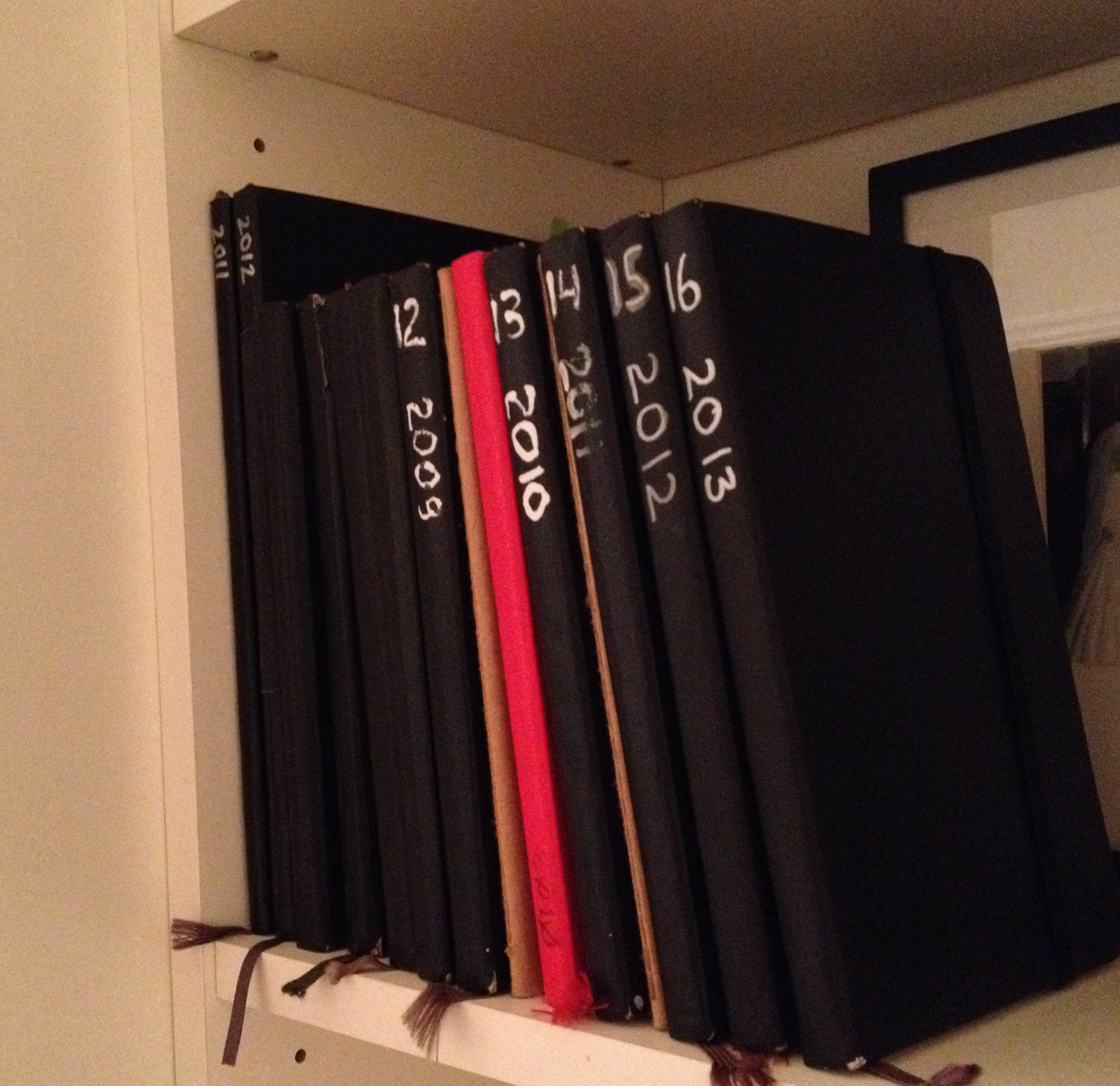
journalsYesterday, I took part in a panel discussion at church about “resetting” for the New Year. We talked about some of the rituals and systems we use to try and get ourselves for the New Year.

It was fun to talk about my journals and such, and some of my approach to this season of the year, but I was left wondering if anyone “got it”.

At one point I said from the stage, “If you don’t expect anything more out of 2014 than what you did in 2014, I’d challenge you to examine what you expect out of your faith.” 

Do people really believe in transformation?

Do you?

Do you believe you can change?

Do you believe you’re called to?

I think it actually boils down to some very basic beliefs, so let me ask you:

  • In John 4, Jesus says that he offers water that will become a spring of water that bubbles up (inside us) into eternal life…
  • In 1 Corinthians 2, Paul says that we have the mind of Christ…

Were they liars? 

Were they only talking to “super-Christians”? 

As one of my spiritual mentors says, “Either it is, or it isn’t.” 

So, if Jesus and Paul knew something about life; if they really meant what they said, then we are left to wrestle with their statements.

The burden is on us.

Question 1: Do you want to have the mind of Christ? to have a constant stream of living water inside you? 

Question 2: What are you prepared to surrender in order to gain it? 

This is the point where many of us get snagged, if for no reason than this: we have our lives, our systems of existence, and we don’t like to think that they maybe aren’t working. 

So where do we start?

We start with humility. We start with the admission that we actually don’t know what’s best for us. We declare as best we can, “I believe that there’s something more for me, but my life isn’t set up to obtain it. God help me.”

He wants to.

Someone asked a desert hermit once, “What is the way to make progress?” The hermit answered, “Humility. The more we bend ourselves to humility, the more we are lifted up to make progress.”

Humility declares, “I don’t know the way.”

Humility opens the door to learning. To growth. 

Humility says, “There must be more, and I am open to it.”

Humility says, “I cannot save myself.”

(By the way, humility is not merely self-deprecating or a way for us to belittle ourselves; it is a way to open ourselves up to growth and change. Feeling sorry for ourselves can actually merely be another way to be arrogant and self-centered. True humility is accompanied by a desire and willingness to change, to move, to reconsider.)

So, as 2013 begins, where are you with humility? Have you figured it all out, or are you still willing to acknowledge that you need to make more “progress”?

If you’re still learning, still growing, still changing, what are you doing to continue to learn and grow this year?