Noticed in November, 6 :: “Queen of California”

Here’s the latest; hear the rest here.

For a long time, I had a … “tension” with John Mayer. The guy could play guitar; I mean really play. The guy could write songs; I mean really write songs. 

In a word, I was probably jealous. As someone said once, I felt like Mayer was a version of me, only better.

However, there was something else. Though I had tremendous respect for him as a player and writer, there was something about him that just seemed to rub me the wrong way. He had a certain wry wit about his success, and at times he said all the right things about art and music and humility and respect and all that… but frankly, I just didn’t by it. I opened the door slightly on 2006’s Continuum, largely because I felt like it was slightly more stripped down and more “open and honest” (fuzzy words, I know, but they are the ones who really fit).

Then something happened. First, Mayer fell from grace due to a few really mis-handled interviews (warning: that interview is not very pleasant to read) and very public romantic disasters. These really just seemed to confirm everything I discerned about him.

But then, something else happened. Basically he lost his voice for about two years.

Two years. 

I told everyone I knew that I thought he was done.

But I was wrong.

In 2012, Mayer released Born and Raised, which sounded like some kind of love child between George Harrison, Neil Young’s Harvest, and a whole lot of 70s California rock.

(This is a good thing.)

What’s more, his writing had changed—at least to my ears—a lot. 

He could still turn a phrase without much effort at all, but now there was something else present in his songs…

I call it humility. 

Admittedly, I was going through some pretty tough times during 2012-2013, so I could have just been  hearing what I wanted to, but I heard depths of honesty and humility (again that word: there’s just not a good substitute for it) that, to my ears, weren’t there before. That record—in particular Shadow Days and Born and Raised—became lifelines and inspiration of sorts for me during that time:

I’m a good man, with a good heart
Had a tough time, got a rough start
But I finally learned to let it go
Now I’m here, and I’m right now
And I’m open, knowing somehow
My shadow days are over now, my shadow days are over now…


Then all at once it gets hard to take
It gets hard to fake what I won’t be
Cuz one of these days I’ll be born and raised
And it’s such a waste to grow up lonely…

Those words. Wow. They were my life.

“Queen of California” starts the record off, and it definitely sets the tone for the rest of the release: sonically it’s like a big pleasant pillow of restraint and warmth. Great tones. Lyrically, I hear wonder and gratitude.

I need more of that.

Noticed in November 4 :: “Head On”

The latest song in November is by The Jesus and Mary Chain. Hear it (and the others) on Spotify.

In so many ways, and for better or for words, I “came of musical age” in the 1990s. Even then, my musical tastes were pretty wonderfully diverse: from Pearl Jam to Paul Simon, and lots in between.

Musically, I’m decidedly an anglophile—slap an English accent and sensibility on it, and I’m prone to give it a second listen.

In 1989 or 1990, I picked up Automatic, from The Jesus and Mary Chain, largely on the strength of the music video for “Blues From a Gun”. For some unknown reason, I’ve always been fascinated by music that brings together electronic and decidedly human elements. The Jesus and Mary Chain did just that: they layered loud, distorted guitars over really basic drum machine patterns. From a songwriting perspective, they sounded like they were reinterpreting the Velvet Underground and classic rock and roll melodies and themes through much louder amps.

I was listening to this the other day for the volume and energy of the whole thing, but I also got to thinking about that point of intersection between humanity and electronic elements. It reminds me a lot of my own spirituality, in a way.

“Being human” is always a dance between divine and being, well, “not-so-divine.” That’s an uncomfortable notion for some of us: we’d rather be all of one thing (or the other), but life just isn’t that. We are electronics-meeting-guitars; divinity meeting blood-and-guts. Saints meeting sinners.

(Ironically, my first band didn’t realize that a human drummer doesn’t sound the way a drum machine sounds; we tried to cover a few of the songs on Automatic, and just couldn’t figure out why they didn’t sound right.)

The collision is exhilarating, but sometimes frustrating. I really wish I could just get the whole “saint thing” right and be done with it, or just surrender the “saint thing” and just admit my humanity, giving up on the idea of ever changing.

For some reason I can’t. I have to keep heading back into that tension.

Makes you wanna feel // makes you wanna try
Makes you wanna throw the stars from the sky…


Noticed in November 3 :: Gimme Something Good

My ongoing effort to blog about music I’m listening to in November. You can check out my list on Spotify.

Generally, I don’t like to listen to loud music in the morning. It may seem counter-intuitive, but I actually like to “wake up slow” and start quiet. I don’t usually hit my stride, rock-wise, until about 10:30 or 11:00AM. Early morning drives are usually accompanied by Sigur Ros; maybe The National if I feel like pushing the boundaries.

But the way my week has been—and considering I had to drive an hour to class this week—I decided to bend those rules a bit.

Ryan Adams has long been an inspiration to me. His run of releases—11 between 2000 and 2014—is simply amazing. The man knows how to “to the work.” (In fact, it’s a fairly known fact that he and Stephen King, another guy who knows how to sit down and get to work, are fans of each other.)

I’d venture to say that not one of those records was a flop. Maybe there were some “B-” records, with some C- songs on them, but on the whole the whole catalogue is just solid. 

(BTW, this is no way mean to say that the man cannot turn a phrase; he’s an absolute master at it.)

When I was writing for Maida Vale, Adams was my bar: each year I’d set out to write somewhere between 25 and 30 songs, starting around 5:30 or 6 in the morning and taking advantage of every spare minute. When Maida Vale stopped playing in 2011 (?), I stopped listen to Ryan Adams; the association was too strong.

But I started again when he released his latest, and I haven’t been disappointed. He has a way of making music that I’m convinced I’ve heard before, but really haven’t. Someone once told me that the best music is like that: it simultaneously sounds like classic rock and yet utterly new at the same time. It’s simple, and just solid, and consistent.

I’ve been moved by a couple of his songs—”Dear Chicago” maybe, and “Friends” probably the most—but mostly what Adams does for me is inspire as an artist/creative person to sit down and write. Not care too much about “innovating” or making something radically new. Just get it out the door… 

… And for where I’m at in my life right now, this is healing. Music is still very much my craft, my release, and when I get to make something, to create it, it touches something deep inside me that is still pure and youthful and innocent. It is relatively untouched by all the egoism and self-laden burdens that plague so much of my life.


Noticed in November 2 :: Discipline

Again, inspired by my sister, I ‘m taking a season to write about songs that I am “noticing”. Here’s the Spotify list of the songs (in development).

I think it’s one of the great truths of music and art that the best songs are generally written by folks who are either running firmly towards God or firmly away from God.

(Bono said that, by the way, so you know it has to be true.)

I don’t know really know Trent Reznor, but at the very least he (a) has the reputation of running away from God, and (b) writes some awesome, forceful and violent songs.

Most of them are very much NSFW; police yourselves.

I wrote that I was pretty much in the pit on Nov 3, and on Nov 4 I woke up still fighting a bit of shame and sadness.

But then I got mad.

I’m not proud of my temper; most of the time it expresses itself in hurtful and even embarrassing ways. Nevertheless, it’s there. It’s a part of me.

And on November 4 I decided to get pissed off at the things that drug me into that pit.

Whoever Reznor really is, he writes pretty profoundly about (what I consider to be) spirituality and even health. He kicked a pretty rough heroin addiction back around 2005. Since then he’s created some pretty insightful songs about some of the emotional and psychological demons that haunt some of us.

The chorus of “Discipline” is,

“I need your discipline // I need your help
I need your discipline // I know that once I stop I cannot stop myself…”

Doesn’t get any more real than that.

I cannot and will not vouch for all of Nine Inch Nails’ work, but there are sometimes that I need to hear something that is loud, intelligently aggressive, and also grooving. 

So as I drove around central Florida (still in Orlando for class), I just blasted NIN’s music and allowed some of my anger and frustration to fuel my crawl out of the depths.

Johnny Rotten once sang (well, sort of, Rotten never really “sings”), “Anger is an energy.”

Sometimes our anger can help us fight against the “dark stuff” in our lives.


Into the Desert: Place of Faith

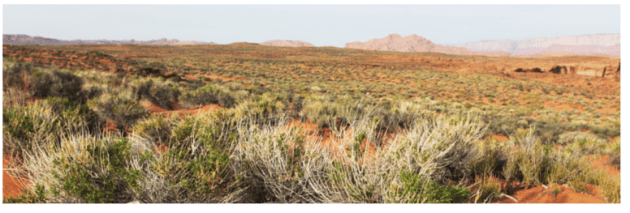
The Desert-2After a series of plagues, pharaoh finally tells the nation of Israel, “Get up! Get away from my people, both you and the Israelites! Go!” (Exodus 12:31), and so the people do just that, and they take off.

However, Pharaoh quickly realizes that he is saying goodbye to his free labor force and quickly changes his mind (as dictators occasionally do), so he sends a military force after Moses and the children of Israel. Exodus 14 tells the story of Israel being pinned between the “Sea of Reeds” and Pharaoh’s army. (It’s instructive to remember that the Egyptian army represents the pinnacle of military technical superiority at this point; for Moses and a group of escaped slaves, fighting wasn’t really an option.)

The people understandably freak out, and accuse Moses of leading them to this point only so they can die in the desert. They then ask if they could go back to Egypt (more on these points later), but instead Moses responds to them by saying, “‘Don’t be afraid. Stand your ground, and watch the LORD rescue you today. The Egyptians you see today you will never see again. The LORD will fight for you. You just keep still.’” Fighting will do know good in this battle; this is something that only God can do.

Then God’s “messenger” appears, first as a cloud, then as darkness falls as a pillar of fire, and we are told that the cloud/fire moves from in front of the camp to behind them, in between Egypt and Israel (14:19-20). At that point Moses stretches out his hand and the sea in front of the nation parts. Exodus 14:22 says very matter-of-factly, “The Israelites walked into the sea on dry ground. The waters formed a wall for them on their right hand and on their left.” To be honest, I really don’t know what this must have looked like. I believe that something happened, but I don’t know that it really needed to look like Charlton Heston’s (Cecil B. DeMille’s) version.

Besides, that’s not the point: to me, the point is where the fire was, and where Israel was walking. The text says that this all happened at night, and that the pillar of fire is behind the nation, between them and Egypt. So they are told to start walking, by Moses.

Into—as far as they know—the sea.

When light is behind you, what does it do? It casts a shadow, right in front of you. Where you are stepping.

In other words, the people can’t. See. Anything.

This is what faith looks like.

Going into the desert requires a moment when you finally say, “Okay, I cannot see what’s in front of me, but I am ready to take a step.”

What most of us call “faith” in our world isn’t really faith at all, because most of the time we live comfortably, and can see right in front of us. We “know” what God is up to; we feel safe and secure in our faith, or if we do not we can easily identify the problem and “fix” things.

But occasionally God does something different. When we are called into a true desert to address something deeply meaningful and life-changing, we are called to a moment of “sheer faith,” where we may not be able to see anything ahead of us. In this moment, all we have is knowledge and belief that we are being called through the waters to “something else.” This moment of sheer faith is similar—but not necessarily identical—to the concept of “The Dark Night of the Soul,” when God withdraws His presence in order to call His followers into deeper levels of faith and trust.

In the Exodus moment, there may be an awareness of some kind of “protection” so we can make our walk to freedom, but other than that we are walking in darkness into the unknown. Everything inside us wants to see. We may pray for the fire to come around in front of us so we can have our way lit, but in this case we left with a promise and a call forward. The text says that the land was dry, but Israel wouldn’t have known that until they started walking forward.

And this is just the beginning of the desert!

Into the Desert: Intro

 The Desert

Welcome to “The Dry”…

This spring, I dreamed up a teaching series for my church called, “Fierce Landscapes” (inspired by the book by Belden Lane of the same name). It was a journey through “desert spirituality”, which continues to be a really powerful idea in my life. I thought I’d turn it into a blog series, so for the next few weeks I’m going to explore what Israel’s journey through the desert means to us today. Please let me know how you like it. 

The Exodus is, without a doubt, the central event of the Old Testament. If you remove the actual freeing of Israel from Egypt, pretty much the whole story of God’s people will come unhinged. It is the center, the spoke, that holds Israel’s self-identity together. Remove the fact that God—YHWH—tangibly intervened in history at one point, and you the whole operation is in jeopardy. It’s simply that important.

So it’s worth thinking about.

If you’re not familiar with the story, here’s a brief summary. After God calls this one man—Abram—and his subsequent family to become a part of this great rescue operation, God’s great redemptive plan, at one point (namely, at the end of Genesis the first book of the Bible) that family ends up living in Egypt. Most Genesis 37-50 tells the story of how Israel’s sons—first Joseph and then the rest—end up living in Egypt. Joseph rises from a place of imprisonment to a place of power in pharaoh’s household, and at that point, even though the “rescue operation” isn’t necessarily moving forward, the family is safe and secure and waiting for the next unfolding of God’s plan.

Unfortunately, things veer south, and the book of Exodus opens up with this phrase:

“Now a new king came to power in Egypt who didn’t know Joseph… The Egyptians put foremen of foxed work gangs over the Israelites to harass them with hard work” (1:8, 11a).

Basically, Israel, the descendants of Abraham and thus the focal point of God’s work in the world, has been made captive by the Egyptian empire, and things in no way look good for their release any time soon.

One day, Moses, a Hebrew who has been basically raised as an Egyptian, is out tending the flocks of his father-in-law when he has a supernatural encounter with God. Appearing in a bush that is burning but is somehow not consumed, God tells Moses that He has heard the cries of Israel, and that He is about to act to free them. He is going to step into history in a very real and tangible way, and get the rescue operation back on track. (Along the way he gives Moses the first details of how He is going to do this: “Now the Israelites’ cries of injustice have reached me. I’ve seen just how much the Egyptians have oppressed them. So get going, I’m sending you to Pharaoh to bring my people, the Israelites, out of Egypt; 3:9-10).

Through a series of miraculous and devastating plagues, YHWH forces Pharaoh to relent and release Israel. They are free to head towards a land that God will show them: a place of security, of peace. A place where they will be free.

In other words, the place that every slave desperately wants to get to.

However, in between Egypt and this “promised land” is the desert. The wilderness. The unknown.

And Israel has to go through it. Like it or not, there is no detour, no shortcut around the blistering sands and freezing nights of the desert.

It’s also the same for us.

God promises the same things to us that He promised the Israelites: rest, peace, and mission (note that I didn’t say “a Cadillac, a new house, and a great job”). God absolutely wants us to have, as Jesus puts it, “the eternal life now.” He wants to see His Kingdom come in our lives and in our world.

But only if we are willing to go into the desert and allow ourselves to be shaped by it. 

The desert is decidedly “in between”. It is neither-here-nor-there. It is not slavery, but it is not the promised land. It is not bricks, but it is not rest. It is a wilderness, a frontier.

Why?

Why doesn’t God just take the Israelites straight into Canaan, the place He promises them?

Why doesn’t He just instantly change us into peaceful, compassionate people?

Succinctly, because what God wants most of all is for His children to grow and mature. To be ready for the promises (land, freedom, rest, peace, etc.)

The desert is what’s known as “liminal space.” It is frontier space, borderland. It’s the place where the old no longer makes sense, but the new is not yet realized.

Liminal space is the place of change. The governing image is that of a threshold and an open door. As you stand in the frame of the door, you are between two rooms, or between inside and outside. You are (quite literally) neither here nor there.

It’s the space where things happen, where we are the most open to change and growth (if for nothing else than nothing seems to make sense any more).

Later in Israel’s story, God compares His people to His bride, and says this about her and the desert:

“Therefore, I will charm her,
And bring her into the desert,
And speak tenderly to her heart.
“From there I will give her vineyards,
And make the Achor Valley a door of hope.
There she will respond to me
As in the days of her youth,
Like the time when she came out
Of the land of Egypt” (Hosea 2:14-15)

What this scripture is saying essentially is that in the spiritual life the desert is a place of positive change, of growth, of spiritual encounter.

Of course, this doesn’t mean that it’s comfortable, only necessary. 

Do you want to grow? Do you want to be free? Do you want to change? To mature, to grow up? Then the simple invitation rolls out to you: come into the desert. Come into the “space between”, and get ready. Sure, it’s dusty. And dry. And confusing. And anything but comfortable.

But if you were to be honest, the alternative is simply to stay in Egypt, to stay a slave, the “same old way you’ve always been.”

Most of us don’t really want that. We want what Moses and the children of Israel wanted: a life that’s somehow a bit bigger, a bit more peaceful, a bit more engaged, a bit more “on mission” than what we are currently experiencing.

But to do that, we have to be willing to go through the place where we may really not want to go.

Are you willing?


+e


Jesus Walked

Jesus logged lots of miles.

I started running this year, and I’ve been able to track my progress by using a couple different apps on my phone. Currently I’ve run about 120 miles, which kind of blows mind (no wait, actually it really blows my mind!).

But my progress is not much considering how much Jesus and his disciples must have logged around Palestine and Judea. If you read the gospels, Jesus is forever taking his little band of followers on day trips, teaching and telling stories as they go.

They must have walked for hours every day.

I was thinking this morning about what that says about following Jesus. I think in many peoples’ minds “being a Christian” is something that you do on Sunday morning, or when you’re at church, or in your small group, or whatever. The picture that the gospels show us, however, is a faith that is worked out while you’re walking.

It’s as if Jesus goes to great lengths to show that the spiritual life is infinitely practical: it can be lived out amidst the dusty roads of Palestine, or the cubical walls of your job, or the desks of your classroom.

Unfortunately, this sometimes run counter to how many churches approach the spiritual life. Institutionalized religion says that the spiritual life can only be lived out through “safe places” like Sunday school classrooms, baptism services, or comforting worship services. In this model, Jesus never would have left the Temple or the synagogue: he would have kept his disciples in the safe, “spiritual” places where “God lived.”

But he didn’t. He was constantly saying, “You know what would be awesome right now? To take a walk! Let’s go!!”

(I’m sure Peter rolled his eyes; trust me.)

At this point in my life I’m really not interested in spirituality that has no daily, ground-level expression. Not interested in doctrines that are merely abstract. If there are truths about God (and I believe there are), they should have tangible expression in our lives. Our doctrines and beliefs—the incarnation; the resurrection; a God of mercy, grace and transformation; the Church—don’t belong in seminaries or temples. They belong at our breakfast tables, in our cars, in our meetings, in our workouts, etc. etc.

One of the most challenging questions we can ask ourselves is, “How do my beliefs impact my daily, moment-to-moment life?

  • Am I living as if I have the mind of Christ?
  • Am I truly living out the resurrection?
  • Am I upholding the value of the “called people of God” (the church)?
  • Am I treating my physical reality—creation, my body, etc.—as if God really did come to earth and become a human being just like me?

Jesus didn’t keep his spirituality tucked away in the “God-places.” He brought the God into the every day places.

And yes, this song still rocks.

Do Not Seek the Whirlwind

In 1990 I walked to campus reciting this prayer: 

“God bring me the whirlwind. Bring the me the storm. Tear me up. Bring the pain.” 

Though this particular prayer was a response to a ridiculous relationship that was ending, it also reflected what was a deeper truth for me at the time: 

That pain and trauma was necessary to art. 

As an angst-y 20-something musician (and let’s face it: what 20-something musician isn’t angst-y?), I cultivated and curated pain like a miser. It was virtually the only emotion that I could easily recognize, and that fact alone made it the most accessible to me as a guitar player and fledgling songwriter. 

I was reading this article today on the Huffington Post and it made me think of that prayer, and that time in my life. 

It was hell. 

It was hell, and it makes me sad to think about the myth that is still so pervasive: that only tortured/addicted/troubled/solitary (the list goes on and on, but you get the point) make art. 

What’s even more troubling to me is when I think about how I actually sought out pain and drugs and rejection because I thought it would make me a better musician. 

Eventually, somehow I started to wake up. I realized that the rock and roll mythology that I believed in was not quite accurate, and that:

  1. there are quite stable people who actually make quite exceptional art, and
  2. there are actually quite troubled “artists” who make horrible, unexceptional art. 

In other words, there is no correlation. 

Now, what I do still maintain is that great struggle can produce great art: when you read the stories of Michelangelo, di Vinci, the Beatles, or U2, or Wilco, etc., it’s easy to see that some kind of struggle occurs in the midst of producing art, but that struggle does not have to be emotional. 

It can be a struggle with pushing the boundaries of technology, whether it’s the number of tracks available in a recording studio or the types of paint pigment that are available. 

It can be a struggle with keeping a band together in the midst of losing record deals or changing consumer tastes. 

It can be the internal struggle of a writer who is struggling to put into words the vision that is burning inside of her. 

But it does not have to mean personal drama. 

It does not have to mean pain. 

It does not have to mean depression. 

(Obviously, for those of us who struggle with depression, we know that sometimes the isolation and melancholy that swirls around us can sometimes give rise to thoughts and feelings that lead to songs or books or poems or paintings… but the point is we don’t need to seek it out.)

Don’t cultivate the pain for the sake of “art”.

Don’t pray for the whirlwind just because you think you need to suffer to create. 

Sometimes life is indeed hard; the whirlwind will come on its own, and art may or may not come out of it, but that’s another question.

These Days.

These days I’m tired. It’s funny how fast the wind can leave my sails and a deep, soul-level fatigue can set in.

I know myself well enough to know the things that trigger it, and this past season has been full of multiple events.

I. BOUNDARY ISSUES

I am, by nature, a “gray-thinker.” Life (and thus human beings) is a mystery, and infinitely complex. This type of thinking helps me craft a “middle way” through variety of issues, and find ways to diffuse controversies in order to invite people into dialogue.

Occasionally, however, I am confronted by issues that are not nearly so easy to navigate: different aspects of spirituality or church life sometimes contain some kind of absolute that has to be dealt with.

Usually, when an absolute is involved, someone is going to get hurt. Insiders have the potential to become instant outsiders. The accepted can come to feel the pain of the rejected, in just a few short minutes.

This tears away at my soul.

I know that life is difficult. I know that “gray thinking” can, in and of itself, be a form of “black-and-white thinking”, a way to avoid the messiness of disagreement and confrontation.

But it still tends to send me into a tailspin.

II. FATIGUE

I pride myself on being a “workhorse”, particularly in the arena of public ministry. At 46, I still try to be the musician who can play the longest, most consecutive Sundays (or whatever). There is something in me that says, “Put the burden–of music, of teaching, whatever–on me; I can handle it. As Bruce said, “Baby, I’m tougher than the rest.”

(BTW, I realize that this isn’t healthy.)

Even more, this simply is no longer the case. I get tired. This Sunday marks the second Sunday I’ve been off since Easter, and a number of those Sundays have been days where I’ve both lead music and taught as well.

I started to notice the fatigue about 6 weeks ago, when I’d wake up on Monday morning with the thought, “Oh man, I have to do Sunday in 6 more days.” (Worse yet, sometimes the thought would strike me on Sunday afternoon/evening before I’d even had a chance to catch my breath from the morning.)

Fortunately, I have two Sundays off (more or less, but that’s another story), so maybe there’s a way forward through this part of the forest.

III. QUESTIONS OF CALLING

At this point I’ve been in ministry, more or less full-time for 17 years. Roughly speaking, that’s 800 Sundays of music or teaching (I left out a whole year, and used 50 Sundays/year as an estimate).

That’s a lot of stuff.

Whether it’s just getting older, or something else that’s going on, right now I am FEELING those Sundays.

Put another way, sometimes I ask myself, “Is it time to do something else? What else might God want to do?”

Relatedly, it doesn’t escape me that time keeps rolling on, and I have more years behind me, vocationally-speaking, then I do ahead.

(Not being morbid; this is simply a fact.)

In a way, this is invevitable: horizons begin to narrow: I can no longer contemplate going on tour, or entertaining all the crazy dreams that I used to.

Now is the time, for practicality, isn’t it?

Trouble is, practicality was never very motivating for me.

I’ve been reading a lot of monastic literature lately, and there’s a part of me that resonates deeply with that life: rhythm, simple work, prayer and reading.

However, I’m pretty sure you can’t take your family into a monastery.

So I’m restless. I’m hungry, but not much looks inviting or intriguing right now. I seek rhythm and peace, and hope that the light shines through that rhythm and peace, and I wait.

Waiting’s not so bad, after all.


+e

The True Power of the Church (… And why we largely ignore it)

“The local church is the hope of the world.”

As an employee of Willow Creek Community Church that was a slogan that was ingrained into my psyche. I heard Bill Hybels passionately invoke that idea over and over again, at conference after conference. Later, I heard other evangelical leaders take up the phrase, until it was common evangelical parlance.

But I’ve had my doubts.

I remember Hybels talking about being in an aiport, and vividly describing a scene in which two brothers were pummeling each other mercilessly. Hybels basically asserted that NO other organization in the world could address those kids’ challenges. Relatedly, I hear many church leaders claim that only the church is equipped to deal with the totality of a human being’s needs.

But is that really the case?

Maybe a small group or a really close friend could have offered the parents of those children some valuable advice on parenting, but it seems to me that there are a lot of organizations who can do a better job of addressing certain needs of people better than the church can. Health clubs do a much better job of helping people exercise. Professional financial planners, counselors, and doctors are better equipped to help people deal with their finances, their emotional issues and health questions.

Pastors aren’t really financial counselors (FPU excluded), therapists, or doctors.

So first of all, just what are we?

Eugene Peterson says that ultimately pastors are in people’s lives to prepare them for “a good death.”

Wow. I don’t know about that. But I like the idea that Peterson is getting at: pastors should be equipped to deal with the heaviest questions that life has to offer. We confront the Mystery that is God and existence on this planet. With revelation and transformation, with life and death.

Now, the church is full of a lot more people than just the pastors, and this is where things get interesting, because with so many people in one community who are (theoretically, at least) experiencing life altering encounters with God, there is a huge potential for really good things to happen…

* entrepreneurs can be inspired to create socially- and ethically-conscious businesses (that make money!)
* artists can be inspired to create great works of art in community that speak of the deep needs of humanity (and not be kicked out of the church!)
* hurting people can come together to share each others’ burdens (and make recommendations on professionals and specialists who can help them further!)
* people can share resources with those in their community that don’t have as much

… In other words, a lot of problems can be solved. That’s a lot of potential.

But there’s a catch.

In another post, I mentioned that Steven Johnson is one of my favorite authors. In his book Future Perfect, he discusses the phenomenon of collaboration and how collaboration (and thus, problem solving) is drastically, significantly enhanced or limited by the presence or absence of diversity.

University of Michigan professor Scott Page compared the problem-solving capabilities of groups with high-IQ individuals with that of a group of diverse individuals. Referencing Page’s work, here’s what Johnson says: “Diversity does not just expand the common ground of consensus. It also increases the larger group’s ability to solve problems… when it came to solving problems as a group, diversity matters more than individual brainpower.”

Well now.

To transfer Page’s work into a church context, is it possible that the American church’s lack of diversity is critically limiting our ability to solve the problems that our communities face?

I have worked in an intentionally multi-cultural, multi-ethnic church. It was simultaneously one of the most exciting, difficult, messy and rewarding times of my life. Prior to that and since then, however, the churches I have worked at were not really interested in confronting the challenging topic of bringing different racial and ethnic groups together in a faith community in order to really come together and figure out what it means to be the church in 21st century North America (full disclosure: as a leader in my current church, I share the blame for not advancing this topic in my context).

The point is simply this: most churches are trying to solve horrendously complex problems: self-harm, addiction, poverty, abuse, depression, etc. without employing perhaps the ONE concept that would help them the most: the diversity of thought and perspective that (most likely) exists in their congregations. I’d venture to say that most “white” churches are anything but, however their leadership very well may be entirely mono-cultural.

Are we inviting multiple voices into our leadership? Are we bringing a plurality of thought into our efforts to help and serve people? Or does the input and counsel we receive come from people who look (and therefore, think) more or less exactly like we do?

In his letter to the church at Ephesus, Paul has a powerful message about ethnic diversity, most powerfully stated in chapter 2;

11 So remember that once you were Gentiles by physical descent, who were called “uncircumcised” by Jews who are physically circumcised. 12 At that time you were without Christ. You were aliens rather than citizens of Israel, and strangers to the covenants of God’s promise. In this world you had no hope and no God. 13 But now, thanks to Christ Jesus, you who once were so far away have been brought near by the blood of Christ.

14 Christ is our peace. He made both Jews and Gentiles into one group. With his body, he broke down the barrier of hatred that divided us. 15 He canceled the detailed rules of the Law so that he could create one new person out of the two groups, making peace. 16 He reconciled them both as one body to God by the cross, which ended the hostility to God.

17 When he came, he announced the good news of peace to you who were far away from God and to those who were near. 18 We both have access to the Father through Christ by the one Spirit. 19 So now you are no longer strangers and aliens. Rather, you are fellow citizens with God’s people, and you belong to God’s household. 20 As God’s household, you are built on the foundation of the apostles and prophets with Christ Jesus himself as the cornerstone. 21 The whole building is joined together in him, and it grows up into a temple that is dedicated to the Lord. 22 Christ is building you into a place where God lives through the Spirit.

The gospel is not just about reconciliation between God and humanity; it’s about reconciliation across racial and ethnic lines as well.

Perhaps the true power of the local church is the fact that we’ve been called to come across racial and ethnic lines and bind together in the name of Jesus. He died to create ONE body out of two bitter enemies (Jews and Gentiles).

Maybe Jesus knew that we’d need all the help we could get.


+e