Introducing the “Deep Well”

“The Deep Well” is born out of a few threads that emerged during a Sabbatical in 2013.

The first came out of Isaiah 55, where God is reminding his people that they have spent resources—a lot of resources—on “food that is not really food” and “drink that is not really drink.” Folks have wasted their time chasing after things that don’t really satisfy. In contrast, God says, “All of you who are thirsty, come to the water! Whoever has no money, come, but food and eat! Without money, at no cost, buy wine and milk… Listen carefully to me and eat what is good; enjoy the richest of feasts” (vv1, 2a).

The idea that came to me was to just set up some space where God’s people could “feast” on Him. Not really much of an agenda—just provide an arc and a space where people could throw themselves into God and He could satisfy their deep thirsts and hunger.

The second came out of the idea of our “belovedness” in God’s eyes. This theme, echoed in a few writers for me, is necessary (to my mind) because sometimes the very reason we run after so many other things that do not satisfy us is because we are terrified what God may actually think about us—that He actually may not like us.

It occurred to me that reminding folks that they are beloved in God’s eyes would be a good thing to do.

These two ideas—to let people feast on God, and to remind them that they are the beloved—form the backbone of this thing I’m calling “Deep Well”. There are other thoughts and inspiration mixed in as well, but these form the spiritual core of what I’m doing.

It’s pretty simple; I’m thinking that most good ideas are. I’m thinking I’d like to see just how many folks out there are hungry, and thirsty and how many need to be reminded that God’s forgiveness (and love) precedes their repentance. Right where they’re at.

For now, if you want to know about this thing called “Deep Well” you can come here and follow me, or stay posted on Twitter.

The first “Deep Well” event will be happening on June 7 at Element3 Church in Tallahassee. Doors will be at 7:00, and the music will start at 7:30. I’d love for you to come and invite as many friends as you care to.

Let’s see what happens.

Actually, Cover Bands DO Change the World…

via Wikipedia

via Wikipedia

One of the great slogans in the Seth Godin/Linchpin world (which I actually enjoy poking around in) is, “Cover bands don’t change the world.”

It’s a call to be unique to seek to strike out to do something bold and new in the world, to be disruptive, to reach for something that’s never been done.

It’s also obviously a bit of a slap in the face to anyone who may be a feeling slightly more conservative or iterative. Folks who are not as “disruptive.”

(It’s also an insult to cover bands, but who’s counting?)

As usual, the truth behind the slogan is a bit more cloudy, because in a sense cover bands have changed the world, and actually continue to do so, primarily because many of the most iconic and world-changing bands in rock history started out as cover bands.

Beatles? Cover band.

Stones? Covered blues.

The Who? They called their versions of Motown songs they covered, “Maximum R&B”.

The Band? Started out playing rockabilly covers in honkey tonks all over the midwest.

James Brown? yup.

(Now, I get that these artists are all “old guy” bands, but I’m taking the approach that the verdict is still out on how much Arcade Fire, The National, Coldplay, etc. are going to change rock and roll. That being said, I know the Black Keys at least know blues really deeply, and I’ve heard at least a couple covers from them.)

Now,I get what Seth is saying: you really do need to find your own unique voice. But here’s the deal: all these artists who later changed the world were cover artists for a significant and formative time in their career.

So what’s the point? Well, I’m not just being contrarian. Being in a cover band has its advantages, and in fact provides critical experience for working your craft.

Because when you’re in a cover band, you get to learn

You get to learn what makes a great song…

You get to learn how to work in a group with others…

You get to learn how to work a crowd…

What gear works in a bar, versus in your bedroom…

What outfit looks ridiculous on you…

Don’t get me wrong: aspiring to something great is absolutely critical and something to be encouraged.

But before you change the world you might want to be good at your craft. Lots of bands start out wanting to change the world, but their ambition greatly (and almost tragically) outstrips their ability.

So maybe you’re in a “cover band” right now…

… Maybe the organization you’re in isn’t as wildly creative as you’d like;

… Maybe the position you’re in isn’t the perfect fit;

… Maybe your platform isn’t in front of the “right people” yet.

If this is the case, than here’s what you do:

  • You get better. 
  • You dig in and learn. 
  • You figure out how to with others (particularly a drummer who doesn’t keep time well and a singer who doesn’t always sing on pitch).
  • You learn what “excellence” looks and feels (tastes and sounds?) like. 

Your “cover band moments” are not wasted. They can be the crucible, the workshop that helps you develop and hone your craft for the moment when the world comes calling, and needs you to give something to it.

… Now go practice.

=============================================

Worship Leading Throughout the Room

For awhile I’ve been telling the folks on the worship team at my church to remember that they are always leading worship.

In fact, I prefer the negative form:

You are never not leading worship. 

You see, once you embrace your role as a leader, you no longer always get to choose when and how people respond to you.

In fact, I think it’s just best to assume that—on Sundays especially—people are always observing you, and therefore you always have the chance to “lead worship”, whether you’re on stage or not. You are always leading, so here’s a few ways to lead worship from “around the room”:

  • In the Parking Lot or Lobby: How do you conduct yourself before people know your gifts? Do you make an effort to get to know people? If “Leadership” is a part of “Worship Leading”, than we have to keep in mind that leadership is inherently relational. Saying “hi” to people far away from the stage increases people’s relational connection to you, which leads to trust, which increases your ability to help facilitate their experience with God.
  • In the Back of the Room: Or the side. Or in the front pew. How do you worship when you are not on stage? Is your experience of God as dynamic and vital off the stage as it is on the stage? Because people may be watching you. It’s about authenticity; it’s about saying, “This time—this response to God—is really this important whether I’m on stage or not.”

    (p.s. This means that you’re actually in the room, and not hiding in the green room or sleeping in…)

  • Backstage: What attitudes are you fostering among your band members? Are you bringing to life the same things within your team that you sing about in front of your community? What do rehearsals feel like? Are they relational, gospel-centered?
  • In the Tech Booth: When I visit churches, I carefully watch the tech teams: the audio, lighting, and graphics people. These individuals are usually the best barometer of the spiritual and emotional health of your worship team. How are you leading them? Are you treating them with respect, and seeking to understand their needs and perspective?

Like it or not, once you embrace leadership, you step into a spotlight that seldom dims. People are watching you, and you will influence—lead them—their response to God in every interaction that you have with people.

You are never not leading worship. This is a great opportunity; steward it well.

*e

===============================

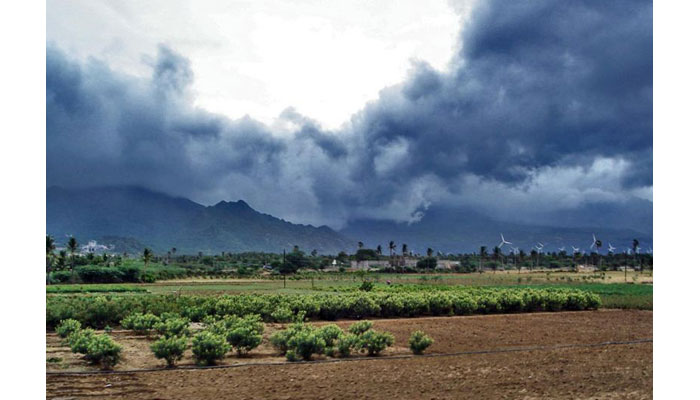
Exile on Faith Street: Rain

monsoon_rain_clouds

I’ve been talking so much about exile lately; it seems like it’s a constant theme with me and my friends. Not only was it a theme for folks in the 1st century, it’s an applicable concept today.

Exile is what happens when all the questions no longer apply; it’s the place where nothing makes sense.”

So we find ourselves in places where everything we thought we knew about the world is no longer important, and we have to simply put one foot in front of the other and trust that somehow we’ll get through it and somehow God has not deserted us in the midst of it.

But surprising things happen in exile.

Life, for instance, goes on (this may or may not be good news to you).

Though it seems like eternity, in most cases “exile” doesn’t go on forever. There is a time when God says, “Come home,” and we enter into rest.

It’s in those times that we realize that exile can prepare us for rest.

I was reading this the other day, and I thought about life in exile:

“When the LORD changed Zion’s circumstances for the better, it was like we had been dreaming.
Our mouths were suddenly filled with laughter; our toungues were filled with joyful shouts.
IT was even said, at that time, among the nations, “The LORD has done great things for them!”
Yes, the LORD has done great thigns for us, and we are overjoyed.
LORD change our circumstances for the better, like dry streams in the desert waste!
Let those who plant with tears reap the harvest with joyful shouts.
Let those who go out, crying and carrying their seed, come home with joyful shouts, carrying bales of grain!” (Psalm 126)


Here’s the deal about exile: rain keeps falling, the sun keeps shining, and that means even when you can’t see it or feel it, things may still be growing.

Exile may feel like a kind of death to you; a kind of barrenness, and it may be tempted to give up hope and embrace nihilism and cynicism. It may be tempting to surrender to the darkness and begin to burn and destroy, since everything seems empty and worthless.

But it also may be a time of planting, so that when you “return home” you find that things have grown up that you can now enjoy.

So what can it look like?

  • Maybe it starts with being able to say at some place in your soul, “The LORD has done great things for us.” Somewhere, sometime in the past God has spoken good things for you. He will again.
  • Ask yourself, “What can I plant right now? Assuming that someday I will come out of this with a harvest, what do I want that to look like?

Maybe the seed is a friendship that you build into or rely on.

Maybe it’s the effort to pray—maybe the Lord’s prayer or something—once a day.

Maybe it’s to read the Bible in some kind of systematic fashion.

Maybe it’s to invest in serving some folks who have really immediate, physical needs.

All of these things are seeds.

And the thing about seeds is that most of the time, you don’t really see any fruit or anything worth harvesting for a long time.

But even while you are in exile, the sun shines and the rain falls.

And someday, someday when you come home again, you’ll find that there’s a harvest to pick up and carry home.

=================================

Gospel Artist :: Enjoy the Silence

photoMaybe we just talk way too much.

It’s not surprising, considering out environment… How quiet is the space you’re in, right now?

How much music is there?

How loud is the traffic?

Is the TV on?

Do we even know what “silence” is? (Never mind what it can actually do in our lives).

A few months ago, I was blessed to be able to spend 2 days in silence and solitude. Don’t get me wrong it was really pretty freaky at times (At times, I was the only person in the entire retreat facility: The Shining, anyone?)

But during those few days confirmed what I’ve been gradually learning more and more in my life:

Sometimes we just need to shut up. 

I just noticed something recently about a familiar story. It’s about a guy named Elijah, and how God reveals himself to him. Through some stuff that happens, Elijah finds himself hanging out by himself in a cave, pretty beat up and at his wits’ end. God decides to show up:

The Lord said, “Go out and stand at the mountain before the LORD. The LORD is passing by.” A very strong wind tore through the mountains and broke apart the stones before the LORD. But the LORD wasn’t in the wind. After the wind, there was an earthquake. But the LORD wasn’t in the earthquake. But the LORD wasn’t in the earthquake. After the earthquake, there was a fire. But the LORD wasn’t in the fire. After the fire, there was a sound. Thin. Quiet. When Elijah heard it, he wrapped his face in his coat. He went out and stood at the cave’s entrance. A voice came to him and said, “Why are you here, Elijah?”

The thing that stood out to me is the description of the voice. In English we miss how small this “small voice” was. The Hebrew for small is a word that references the thickness of a hair or a grain of sand. One Rabbi said that the voice could be described literally as “a voice of silence.”

Easy to miss.

As Elijah is looking for something, the biggest and flashiest events that God can muster roll by him. But God isn’t there. And only when Elijah is quiet enough to hear the “voice of silence” can he come to the edge of the cave and hear what God wants to ask him.

So I have two questions for you:

1. What might God want to ask you? 

2. Can you hear the voice of silence? 

So many of us desire direction. So many of us are hungry to hear that centering Spirit, that voice. We are in caves, and we don’t want to be there.

We are waiting to be called.

But we also just won’t. stop. talking. 

We muster our own wind, and earthquakes, and fires by the things we say about God, about what we want from him, when all the time He is waiting for us to just be quiet, so that we can hear that “grain-of-sand voice”.

Are you willing to be silent to hear God? Are you willing to trade your “earth, wind and fire” (never gets old, but just try to watch that video without smiling) for the voice of silence?

Oh yeah, and THIS.

=======================================